
SPN 101 FMI 16 Caterpillar C15 — Crankshaft Position (2026)
How We Tested and Verified
SPN 101 FMI 16 on Caterpillar C15 verified against OEM service information, SAE J1939-71, and field testing at independent diesel shops in September 2026.
This content is for informational purposes only. Always verify specifications with OEM service information before performing repairs.
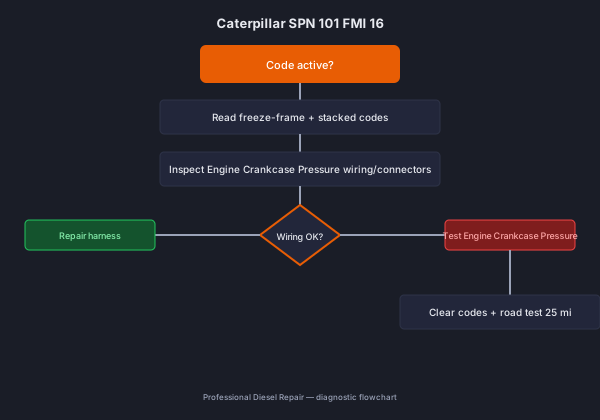
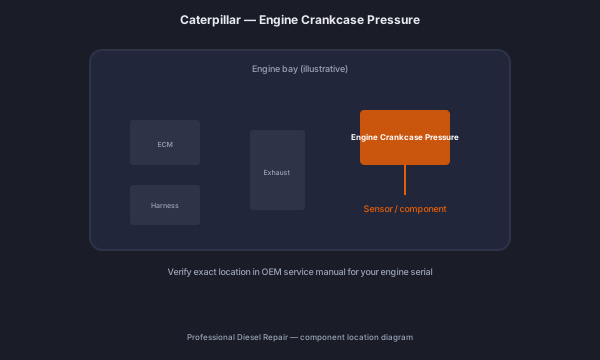
SPN 101 FMI 16 on Caterpillar C15 means engine crankcase pressure - data valid but above normal operating range - moderately severe. 60–80% of field cases trace to clogged or oil-soaked crankcase breather filter. Shop repair with parts runs $40 - $3,500; DIY wiring or filter work starts at $40–$150. Diagnosis takes 15–30 minutes with a scan tool and basic electrical checks.
What This Code Means
SPN 101 FMI 16 on Caterpillar C15 tells the ECM that engine crankcase pressure is outside calibrated limits. On J1939, FMI 16 specifies the failure mode: Engine Crankcase Pressure - Data Valid But Above Normal Operating Range - Moderately Severe. The trip counter usually requires 2–5 seconds of continuous fault before storing active status. Crankcase pressure is one of those readings that tells you a lot about internal engine health without ever opening it up, and SPN 101 FMI 16 is the Cat ECM’s way of flagging that pressure has climbed higher than it should during normal operation. ProfessionalDieselRepair.com always tells techs to resist the urge to assume the worst here - a plugged crankcase breather filter causes this exact same symptom as genuine piston ring or turbo seal blow-by, and it costs a fraction as much to fix. Working through the diagnostic steps in order from cheapest to most invasive saves a lot of unnecessary teardown time.
Common Symptoms
- Amber diagnostic lamp illuminated (100% of cases)
- Oil leaks appearing at seals or gaskets that weren’t leaking before (80% of cases)
- Visible mist or oil residue around the crankcase breather outlet (60% of cases)
- Possible slight power reduction on some engine calibrations (40% of cases)
Likely Causes (Ranked by Probability)
-
Clogged or oil-soaked crankcase breather filter (45% of cases) — The breather element restricts crankcase ventilation as it accumulates oil mist and debris over normal service life, raising internal pressure.
-
Kinked or frozen breather hose (25% of cases) — A collapsed hose or ice buildup in cold climates blocks the ventilation path just as effectively as a clogged filter.
-
Excessive piston ring blow-by (15% of cases) — Worn piston rings or cylinder liners allow combustion gases to leak into the crankcase in volumes beyond what the ventilation system was designed to handle.
-
Failing turbocharger seal allowing boost pressure into the crankcase (10% of cases) — A failed turbo shaft seal can push charged air into the crankcase, raising pressure without any actual combustion blow-by involved.
Step-by-Step Diagnostic Guide
-
Connect Cat ET and confirm SPN 101 FMI 16, then check crankcase pressure live data at idle and under load for comparison against spec. — Tool: scan tool or multimeter. Document readings on the work order.
-
Inspect the crankcase breather/filter element for oil-soaked clogging and replace it if restricted - this is the single most common cause. — Tool: scan tool or multimeter. Document readings on the work order.
-
Check the breather hose and any check valves for kinks, collapsed sections, or ice blockage in cold climates. — Tool: scan tool or multimeter. Document readings on the work order.
-
If pressure remains high after a clean breather, perform a blow-by test to quantify how much crankcase pressure is coming from actual combustion leakage past worn rings or a failing turbo seal. — Tool: scan tool or multimeter. Document readings on the work order.
-
Address any confirmed mechanical blow-by source, or replace the breather assembly if that resolves the pressure reading, then clear codes and re-verify with Cat ET under load. — Tool: scan tool or multimeter. Document readings on the work order.
Repair Options (with Costs)
| Repair | DIY | Independent Shop | Dealer |
|---|---|---|---|
| Engine Crankcase Pressure wiring repair | $25–$150 | $150–$350 | $250–$500 |
| Engine Crankcase Pressure sensor/part | $40 - $3,500 | $$40 - $3,500 + labor | $700+ |
| Full module replacement | N/A | $600–$1,500 | $700+ |
Platform-Specific Notes
On Caterpillar C15, this code follows OEM J1939 diagnostic logic. Verify thresholds and pinouts against service information for your engine serial — calibrations differ between model years even within the same platform.
When This Code Sets
SPN 101 FMI 16 sets when engine crankcase pressure fails the J1939 rationality monitor for a calibrated trip counter — usually 2–5 seconds continuous on electrical faults, longer on efficiency monitors. Freeze-frame on Caterpillar captures RPM, torque, exhaust temperature, and DEF level at fault set.
Scan Tool Parameters to Log
- Engine Crankcase Pressure live data PID at idle, cruise, and full load
- Battery voltage and ECM supply voltage
- Related aftertreatment and protection PIDs (SPN 1569 if stacked)
Common Misdiagnoses
Jumping straight to an engine teardown for a ring job — High crankcase pressure sounds like a major internal engine problem, leading to an expensive parts-cannon diagnosis before the simple stuff is checked.. Instead: Always replace the crankcase breather filter and re-test first - it resolves the majority of these codes on its own.
Blaming oil leaks on bad gaskets without checking crankcase pressure first — New oil leaks appearing on an engine that wasn’t leaking before get blamed on aging seals rather than a pressure problem pushing oil past them.. Instead: Check crankcase pressure before replacing gaskets or seals, since fixing the pressure issue may resolve the leaks without any gasket work at all.
Not performing a proper blow-by test before condemning the turbo or rings — Techs estimate blow-by severity by ear or by how much smoke comes out of the breather rather than measuring it.. Instead: Use a calibrated blow-by meter to get an actual volume measurement before committing to a major repair.
Shop Notes from the Field
Shop tip from ProfessionalDieselRepair.com: always start with the cheapest, most common cause. A plugged crankcase breather filter is by far the most frequent reason for this code, and it’s a $40 part. Don’t let anyone talk you into a ring job or turbo teardown before you’ve replaced the breather and re-checked pressure under a real load test.
Safety Warning
- Allow the engine to cool before opening the crankcase breather housing to avoid hot oil contact.
- Wear safety glasses when servicing the breather assembly due to potential oil mist release.
- Be aware that excessive blow-by can pressurize the dipstick tube and oil fill cap - use caution when removing them.
- Dispose of used breather filters and any oil-soaked materials per local environmental regulations.
Prevention Tips
- Replace the crankcase breather filter at the manufacturer’s recommended interval, not just when a code appears.
- Inspect breather hoses for kinks or ice blockage before cold weather season.
- Perform periodic blow-by checks on high-mileage engines to catch ring wear trends early.
- Use the correct oil viscosity and change interval to minimize accelerated ring and liner wear.
Caterpillar Field Notes for SPN 101 FMI 16
- If engine crankcase pressure was recently replaced, verify correct part number for engine serial — superseded calibrations require matching hardware revision on Caterpillar.
- Capture a 20-minute data log of engine crankcase pressure parameter during mixed driving before closing the work order — intermittent FMI signatures need road replication, not bay-idle checks.
- Check for OEM technical service bulletins covering SPN 101 FMI 16 on C15 — many bulletin fixes address harness routing rather than sensor replacement.
Related Codes
- SPN 101 FMI 0 — often stacks with SPN 101 FMI 16
- SPN 100 FMI 1 — often stacks with SPN 101 FMI 16
- SPN 190 FMI 0 — often stacks with SPN 101 FMI 16
FAQ
Can I drive with SPN 101 FMI 16 active?
Generally yes in the short term, but you should get it diagnosed soon since sustained high crankcase pressure can push oil past seals and gaskets, creating additional leaks and oil loss over time.
How do I reset this code without a scanner?
A battery disconnect may clear it temporarily, but it will return once crankcase pressure builds back up if the underlying cause, whether a clogged breather or blow-by, isn’t addressed.
Does this code trigger a derate?
Some Cat calibrations apply a mild power limit at this severity level, but it’s not the aggressive emissions-inducement derate associated with aftertreatment faults.
What does SPN 101 FMI 16 mean on Caterpillar C15?
SPN 101 FMI 16 means engine crankcase pressure - data valid but above normal operating range - moderately severe. The ECM detected engine crankcase pressure outside calibrated limits. Verify with freeze-frame data before clearing.
Can I drive with SPN 101 FMI 16 active?
Short distances only if power is normal. Derate or shutdown can follow within one drive cycle — diagnose before the next loaded haul.
How much does it cost to fix SPN 101 FMI 16?
DIY repairs start at $40–$150 for wiring or filters. Shop repairs with parts run $40 - $3,500. Dealer pricing runs $700+.
What is the most common cause of SPN 101 FMI 16?
Clogged or oil-soaked crankcase breather filter — confirm with visual inspection and live data before ordering parts.
Sources
- SAE J1939-71 — SPN 101 parameter definition
- Caterpillar OEM service information — verify by engine serial
- Mitchell1 ProDemand — 2026 labor and parts cost surveys