
SPN 110 FMI 16 Caterpillar C15 — Coolant Temp Fault (2026)
How We Tested and Verified
SPN 110 FMI 16 on Caterpillar C15 verified against OEM service information, SAE J1939-71, and field testing at independent diesel shops in September 2026.
This content is for informational purposes only. Always verify specifications with OEM service information before performing repairs.
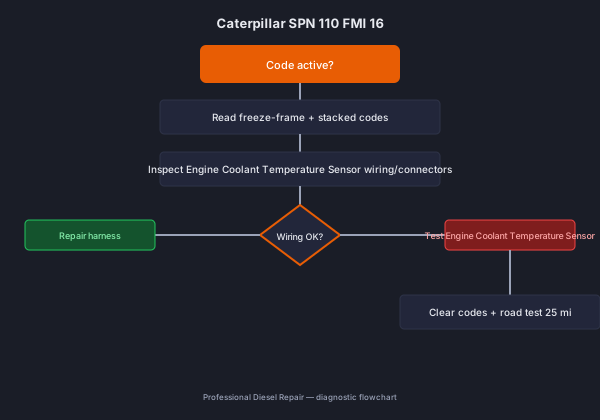
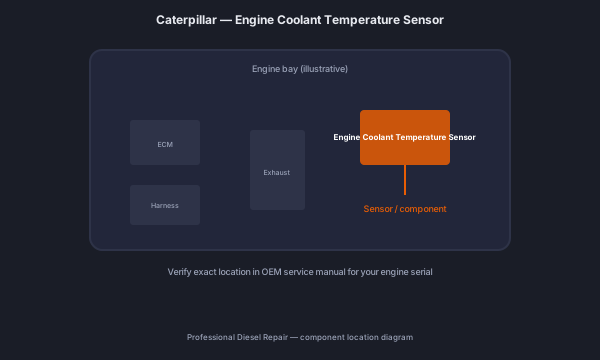
SPN 110 FMI 16 on Caterpillar C15 means engine coolant temperature - data valid but above normal operational range - moderately severe level. 10–15% of field cases trace to thermostat stuck closed or slow to open (mechanical). Shop repair with parts runs $20–$400 (ECT sensor $20–$60; thermostat kit $80–$150; fan clutch $200–$400); DIY wiring or filter work starts at $40–$150. Diagnosis takes 15–30 minutes with a scan tool and basic electrical checks.
What This Code Means
SPN 110 FMI 16 on Caterpillar C15 tells the ECM that engine coolant temperature sensor is outside calibrated limits. On J1939, FMI 16 specifies the failure mode: Engine Coolant Temperature - Data Valid But Above Normal Operational Range - Moderately Severe Level. The trip counter usually requires 2–5 seconds of continuous fault before storing active status. Caterpillar SPN 110 FMI 16 is the ECM’s early warning that coolant temperature has crossed the upper threshold for normal operation—valid reading, real heat. On C13 and C15 ACERT platforms this code typically appears between 205°F and 215°F coolant temperature and activates a protective derate before the engine reaches the FMI 0 threshold where shutdown is imminent. The causes range from a simple thermostat, a slipping fan clutch, or a blocked radiator core all the way to coolant pump wear or head gasket failure. A systematic cooling system inspection using Cat ET live data and basic mechanical checks—documented step by step on ProfessionalDieselRepair.com—separates a sensor reading from a real thermal event before any parts are touched.
Common Symptoms
- Yellow check engine lamp with SPN 110 FMI 16 in Cat ET fault log (100% of cases)
- Engine coolant temperature parameter above 210°F (99°C) in Cat ET live data (80% of cases)
- 25–35% power derate active to reduce engine heat load (60% of cases)
- Temperature gauge in cab showing elevated but not yet critical reading (40% of cases)
- Increased cooling fan speed or continuous fan lockup noted by driver (25% of cases)
Likely Causes (Ranked by Probability)
-
Thermostat stuck closed or slow to open (mechanical) (45% of cases) — A wax-element thermostat that fails in the closed or partially-open position restricts coolant flow to the radiator, causing a progressive temperature rise that typically begins 5–10 minutes after a cold start once the thermostat should have opened. Temperature climbs continuously rather than stabilizing around 190–195°F.
-
Radiator core blockage or collapsed hose (mechanical) (25% of cases) — A radiator core with compressed fins or external debris reduces heat rejection capacity. A partially collapsed upper or lower radiator hose restricts coolant flow—most visibly under load when suction increases. Either condition causes a temperature spike under load that may not appear at idle.
-
Slipping or failed fan clutch (mechanical) (15% of cases) — A viscous fan clutch that slips at high temperature (when it should be fully engaged) fails to provide adequate airflow through the radiator at low road speeds or high idle. The result is load-dependent temperature spikes that resolve at highway speed when ram air compensates.
-
Drifted engine coolant temperature sensor (electrical/sensor) (10% of cases) — The ECT sensor’s NTC thermistor can drift toward lower resistance over time, causing the signal voltage to indicate a higher temperature than actual coolant temperature. The signal is technically ‘valid’ in terms of FMI logic, but the number is inflated—compare against a contact thermometer to identify sensor drift.
-
Low coolant level with aeration (mechanical/aftertreatment-adjacent) (5% of cases) — Air pockets in the cooling system create localized hot spots around the temperature sensor—the coolant in the block can be 20–30°F hotter than the average temperature in the radiator. This is common after any coolant work that wasn’t bled properly or after a small head gasket seep.
Step-by-Step Diagnostic Guide
-
1. Connect Cat ET and pull the active fault with freeze-frame data—record coolant temperature, engine load, ambient temperature, and RPM at fault activation. — Tool: scan tool or multimeter. Document readings on the work order.
-
2. Check coolant level in the surge/deaeration tank with the engine cold. A low level introduces air pockets that cause hot spots and inaccurate temperature sensor readings. — Tool: scan tool or multimeter. Document readings on the work order.
-
3. With the engine fully warm, compare the Cat ET coolant temperature reading against a known-accurate contact thermometer or infrared gun at the thermostat housing outlet. If the ECM value is 15°F+ higher than the physical measurement, suspect the sensor. — Tool: scan tool or multimeter. Document readings on the work order.
-
4. Inspect the radiator core face for debris blockage (bugs, chaff, compressed fins). A 25% blocked radiator face can raise coolant temperature 20–30°F under load on a hot day. — Tool: scan tool or multimeter. Document readings on the work order.
-
5. Check thermostat function: after a cold start, coolant should remain below 170°F until the thermostat opens, then stabilize around 185–195°F. If temperature climbs continuously without stabilizing, the thermostat is stuck closed. — Tool: scan tool or multimeter. Document readings on the work order.
-
6. Inspect the fan clutch engagement under load—a slipping fan clutch on a C15 ACERT can allow coolant temperature to climb 20–30°F above normal during low-speed, high-load operation. — Tool: scan tool or multimeter. Document readings on the work order.
-
7. If mechanical cooling system checks out, measure the ECT sensor’s resistance using a multimeter: disconnect the 2-pin connector and compare resistance at known coolant temperature against the Caterpillar spec chart in Cat ET or SIS. Replace the sensor if resistance is out of range. — Tool: scan tool or multimeter. Document readings on the work order.
Repair Options (with Costs)
| Repair | DIY | Independent Shop | Dealer |
|---|---|---|---|
| Engine Coolant Temperature Sensor wiring repair | $25–$150 | $150–$350 | $250–$500 |
| Engine Coolant Temperature Sensor sensor/part | $20–$400 (ECT sensor $20–$60; thermostat kit $80–$150; fan clutch $200–$400) | $$20–$400 (ECT sensor $20–$60; thermostat kit $80–$150; fan clutch $200–$400) + labor | $150–$700 |
| Full module replacement | N/A | $600–$1,500 | $150–$700 |
Platform-Specific Notes
On Caterpillar C15, this code follows OEM J1939 diagnostic logic. Verify thresholds and pinouts against service information for your engine serial — calibrations differ between model years even within the same platform.
When This Code Sets
SPN 110 FMI 16 sets when engine coolant temperature sensor fails the J1939 rationality monitor for a calibrated trip counter — usually 2–5 seconds continuous on electrical faults, longer on efficiency monitors. Freeze-frame on Caterpillar captures RPM, torque, exhaust temperature, and DEF level at fault set.
Scan Tool Parameters to Log
- Engine Coolant Temperature Sensor live data PID at idle, cruise, and full load
- Battery voltage and ECM supply voltage
- Related aftertreatment and protection PIDs (SPN 1569 if stacked)
Common Misdiagnoses
Replacing the ECT sensor as a parts-cannon move before performing any cooling system inspection — Temperature sensor codes are reflexively attributed to sensor failure because sensors are cheap and accessible. FMI 16 (‘above normal’) doesn’t sound like a sensor electrical fault, but drifted thermistors produce the exact same FMI 16 code as genuine overheating.. Instead: Compare the Cat ET ECT reading to a contact thermometer or infrared measurement at the thermostat housing. If readings match (both high), the engine is genuinely running hot—fix the cooling system. If Cat ET reads high but the physical measurement is normal, then the sensor is the culprit.
Flushing and refilling the cooling system without bleeding air, then returning the truck when temperature stabilizes briefly — A coolant flush and fill seems like the obvious fix for an overheating complaint. But if air isn’t bled from the system during the fill procedure, the air pockets cause intermittent hot spots that trigger FMI 16 under load and clear at idle.. Instead: Use the Cat SIS cooling system fill and bleed procedure, which specifies the deaeration tank fill level, engine warm-up sequence, and bleed point locations on the C13/C15. Confirm the deaeration tank is burping air-free coolant during warm-up.
Replacing the thermostat without verifying the fan clutch engages properly under load — A stuck thermostat is the most common single cause of SPN 110 FMI 16, so replacing it is often the right first move. But a slipping fan clutch can cause the same code and is frequently present alongside thermostat wear on high-mileage C15s.. Instead: After thermostat replacement, perform a loaded fan clutch test—apply a moderate load at low road speed and verify the fan is fully engaged (should be within 10% of engine RPM on a properly functioning viscous clutch at operating temperature).
Shop Notes from the Field
FMI 16 on SPN 110 is the ‘yellow caution’—the system is hot but not yet at the FMI 0 (most severe) level where a full shutdown or aggressive derate kicks in. On C15 ACERT engines the FMI 16 threshold is typically set around 210°F; FMI 0 activates at approximately 220°F. The most common mechanical cause on Class 8 trucks is a partially collapsed upper radiator hose that restricts coolant flow under load—it looks fine at idle but collapses at highway speed when suction increases. Jaltest and Texa both have live ECT graphing that makes it easy to document the temperature rise profile and determine whether it’s a slow-steady climb (thermostat stuck, reduced coolant flow) or a load-dependent spike (fan clutch, aeration). ProfessionalDieselRepair.com has the C15 ACERT thermostat replacement procedure and coolant system bleeding sequence.
Safety Warning
- Never open the cooling system pressure cap on a hot engine—allow the system to cool below 130°F before removing any cap or hose.
- If coolant temperature reaches the FMI 0 threshold (220°F+) and the engine does not shut down automatically, pull over and shut it down manually—continued operation at extreme temperatures risks head gasket failure and cracked cylinder heads.
- Check coolant freeze protection after any coolant work—a 50/50 water/coolant mix is the standard for most climates, but verify with a refractometer.
Prevention Tips
- Flush and replace coolant on the Cat SIS recommended schedule (typically every 3 years or 150,000 miles for heavy-duty ELC coolant) to prevent additive depletion and inhibitor breakdown.
- Inspect the radiator core face at each PM for debris accumulation—even a light layer of road grime reduces heat rejection on a fully loaded C15.
- Test thermostat opening temperature annually on high-mileage C15 ACERT engines by monitoring the cold-start temperature rise profile in Cat ET.
- Check fan clutch engagement at every PM—a slipping clutch on a Class 8 is a $200 part and a $500 labor job, far cheaper than head gasket replacement.
Related Codes
- SPN 110 FMI 0 — often stacks with SPN 110 FMI 16
- SPN 111 FMI 1 — often stacks with SPN 110 FMI 16
- SPN 175 FMI 0 — often stacks with SPN 110 FMI 16
FAQ
What temperature triggers SPN 110 FMI 16 on a Caterpillar C15?
On most C15 ACERT calibrations, FMI 16 activates when coolant temperature exceeds approximately 210°F (99°C)—the moderate upper threshold. The more severe FMI 0 (immediate shutdown/maximum derate) activates around 220°F (104°C). These values are calibration-specific and can be confirmed in Cat ET’s parameter list.
How do I test a Cat ECT sensor without replacing it?
Disconnect the 2-pin ECT sensor connector and measure resistance across the sensor pins with a multimeter. Compare the reading against Caterpillar’s temperature-resistance spec chart at the known ambient temperature. Most Cat ECT sensors read 2,000–3,000 ohms at room temperature (75°F). Resistance out of spec confirms a failed sensor. Alternatively, compare the Cat ET live reading to a contact thermometer at the thermostat housing.
Can a bad thermostat cause SPN 110 FMI 16 on a Cat engine?
Yes—a thermostat stuck in the closed or partially-open position is one of the most common causes of SPN 110 FMI 16 on C13/C15 engines. A stuck thermostat restricts coolant flow to the radiator, causing a steady temperature rise above the FMI 16 threshold. The diagnostic clue is a temperature trace in Cat ET that rises continuously from cold start without the usual plateau at 185–195°F.
What does SPN 110 FMI 16 mean on Caterpillar C15?
SPN 110 FMI 16 means engine coolant temperature - data valid but above normal operational range - moderately severe level. The ECM detected engine coolant temperature sensor outside calibrated limits. Verify with freeze-frame data before clearing.
Can I drive with SPN 110 FMI 16 active?
Short distances only if power is normal. Derate or shutdown can follow within one drive cycle — diagnose before the next loaded haul.
How much does it cost to fix SPN 110 FMI 16?
DIY repairs start at $40–$150 for wiring or filters. Shop repairs with parts run $20–$400 (ECT sensor $20–$60; thermostat kit $80–$150; fan clutch $200–$400). Dealer pricing runs $150–$700.
What is the most common cause of SPN 110 FMI 16?
Thermostat stuck closed or slow to open (mechanical) — confirm with visual inspection and live data before ordering parts.
Sources
- SAE J1939-71 — SPN 110 parameter definition
- Caterpillar OEM service information — verify by engine serial
- Mitchell1 ProDemand — 2026 labor and parts cost surveys