
SPN 190 FMI 8 Caterpillar C15 — Crankshaft Position (2026)
How We Tested and Verified
SPN 190 FMI 8 on Caterpillar C15 verified against OEM service information, SAE J1939-71, and field testing at independent diesel shops in September 2026.
This content is for informational purposes only. Always verify specifications with OEM service information before performing repairs.
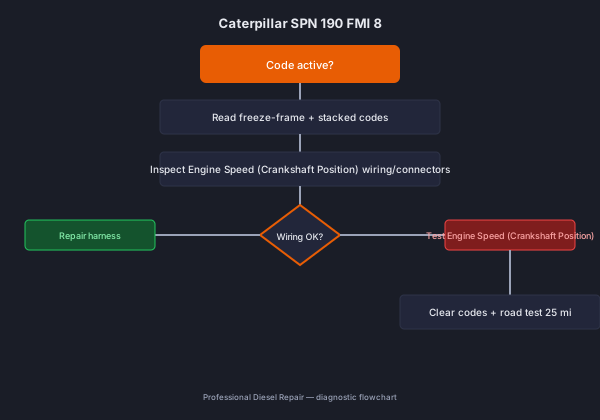
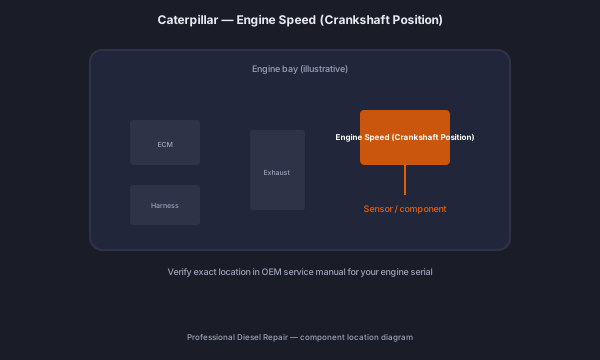
SPN 190 FMI 8 on Caterpillar C15 means engine speed signal abnormal frequency — the crankshaft position sensor is producing a signal outside the expected frequency range for the measured operating condition.. 20–40% of field cases trace to damaged or missing tone ring tooth. Shop repair with parts runs $50 - $400; DIY wiring or filter work starts at $40–$150. Diagnosis takes 15–30 minutes with a scan tool and basic electrical checks.
What This Code Means
SPN 190 FMI 8 on Caterpillar C15 tells the ECM that engine speed (crankshaft position) is outside calibrated limits. On J1939, FMI 8 specifies the failure mode: Engine speed signal abnormal frequency — the crankshaft position sensor is producing a signal outside the expected frequency range for the measured operating condition.. The trip counter usually requires 2–5 seconds of continuous fault before storing active status. Caterpillar SPN 190 FMI 8 is an engine speed signal fault indicating that the frequency of the crankshaft position sensor signal is abnormal — not simply high or low, but erratic or inconsistent in its pulse pattern. SPN 190 is Engine Speed, derived from the crankshaft sensor reading a tone wheel on the flywheel or front damper. FMI 8 (abnormal frequency) means the ECM is receiving pulses it cannot reconcile with any normal operating RPM, typically because a tooth is missing from the tone ring, metal debris is causing a false trigger, or the sensor air gap is too large. This fault carries critical severity because injection timing and fuel delivery are directly calculated from the crank signal. Caterpillar calibrations immediately apply a derate or shutdown when the crank signal becomes unreliable. Diagnosis at ProfessionalDieselRepair.com requires an oscilloscope for definitive tone ring and sensor waveform analysis.
Common Symptoms
- Engine entering emergency derate or shutdown protection mode. (100% of cases)
- Rough running with erratic RPM at idle or under load. (80% of cases)
- Hard start or unexpected stall at idle. (60% of cases)
- SPN 190 FMI 8 active alongside possible companion SPN 637 cam sensor fault codes. (40% of cases)
- RPM gauge fluctuating erratically or dropping to zero intermittently while running. (25% of cases)
Likely Causes (Ranked by Probability)
-
Damaged or missing tone ring tooth (45% of cases) — A damaged reluctor tooth on the crankshaft tone ring creates a missing pulse or double-pulse once per revolution, generating an abnormal frequency signature that the ECM cannot interpret as a valid RPM.
-
Metal debris adhering to sensor tip (25% of cases) — Magnetic sensors attract ferrous machining debris or wear particles. Debris buildup on the sensor tip creates false trigger points between normal teeth, adding spurious pulses to the signal frequency.
-
Excessive crankshaft sensor air gap (15% of cases) — If the sensor air gap is too large — from incorrect installation or a worn mounting thread — the signal amplitude drops low enough that the ECM misses pulses or interprets noise as valid signal edges, producing an abnormal frequency.
Step-by-Step Diagnostic Guide
-
Connect a Texa or Jaltest diagnostic tool to the CAT data port and read active faults. Confirm SPN 190 FMI 8 and note whether SPN 637 or SPN 723 are also present — a crank-only fault versus a combined crank-and-cam fault changes the diagnostic path. — Tool: scan tool or multimeter. Document readings on the work order.
-
Locate the crankshaft position sensor on the flywheel housing or front timing cover (depending on engine model). Remove the sensor and inspect the tip for debris, metal shavings, or a damaged sensing face. — Tool: scan tool or multimeter. Document readings on the work order.
-
Inspect the tone ring (reluctor wheel) through the sensor bore using a flashlight. Look for a missing tooth, damaged tooth, or circumferential rust buildup that would create an irregular pulse pattern. — Tool: scan tool or multimeter. Document readings on the work order.
-
Measure the air gap between the sensor tip and the tone ring. Compare to the specification in the Caterpillar service manual — typically 0.5–1.5 mm. An incorrect gap causes signal distortion that appears as an abnormal frequency. — Tool: scan tool or multimeter. Document readings on the work order.
-
Connect an oscilloscope to the crankshaft sensor signal wire during cranking and compare the waveform to the expected sinusoidal pattern. Any flat spots, extra peaks, or irregular amplitudes confirm a physical tone ring or sensor fault. — Tool: scan tool or multimeter. Document readings on the work order.
Repair Options (with Costs)
| Repair | DIY | Independent Shop | Dealer |
|---|---|---|---|
| Engine Speed (Crankshaft Position) wiring repair | $25–$150 | $150–$350 | $250–$500 |
| Engine Speed (Crankshaft Position) sensor/part | $50 - $400 | $$50 - $400 + labor | $500+ |
| Full module replacement | N/A | $600–$1,500 | $500+ |
Platform-Specific Notes
On Caterpillar C15, this code follows OEM J1939 diagnostic logic. Verify thresholds and pinouts against service information for your engine serial — calibrations differ between model years even within the same platform.
When This Code Sets
SPN 190 FMI 8 sets when engine speed (crankshaft position) fails the J1939 rationality monitor for a calibrated trip counter — usually 2–5 seconds continuous on electrical faults, longer on efficiency monitors. Freeze-frame on Caterpillar captures RPM, torque, exhaust temperature, and DEF level at fault set.
Scan Tool Parameters to Log
- Engine Speed (Crankshaft Position) live data PID at idle, cruise, and full load
- Battery voltage and ECM supply voltage
- Related aftertreatment and protection PIDs (SPN 1569 if stacked)
Common Misdiagnoses
Parts-cannon replacement of the crank sensor without checking the tone ring — A fault pointing at the crank sensor logically seems to implicate the sensor, so it is replaced before the tone ring is inspected.. Instead: Inspect the tone ring through the sensor bore before removing the sensor. A damaged tooth requires tone ring or flywheel repair, not a new sensor.
Attributing SPN 190 FMI 8 to ECM failure — When the RPM gauge reads erratically and the engine runs rough, technicians sometimes conclude the ECM is misinterpreting a valid signal.. Instead: Capture an oscilloscope trace of the raw crank sensor output. An irregular waveform at the sensor confirms the fault is physical, not in the ECM.
Overlooking metal debris on the sensor tip as a cause — The sensor looks physically undamaged, so debris on the tip is not noticed during a quick visual inspection.. Instead: Clean the sensor tip with a lint-free cloth and re-test before ordering a replacement sensor.
Shop Notes from the Field
SPN 190 FMI 8 is one of the most misdiagnosed fault codes in Caterpillar diagnostics because it can be intermittent and difficult to reproduce on command. At ProfessionalDieselRepair.com we always request an oscilloscope trace of the crank sensor waveform rather than relying on fault code history alone. A tone ring with a single damaged tooth will only produce a FMI 8 event once per revolution — at low idle this event may occur less than once per second, making it easy to miss with a multimeter but obvious on a scope. Check for metal filings stuck to the sensor tip before replacing anything — on Caterpillar engines equipped with cast-iron flywheels, machining debris from improper repairs can collect on the sensor and cause FMI 8 without any sensor or tone ring damage. Use Texa or Jaltest for live data monitoring and fault correlation.
Safety Warning
- Never reach into the flywheel housing with the engine capable of being started — disable the starter circuit before inspecting the tone ring.
- The crank sensor tip is magnetized and will attract small metal particles — keep it away from machined surfaces during handling.
- Confirm the correct sensor air gap specification from the Caterpillar service manual before installation — incorrect gap can re-create the fault immediately.
- After any tone ring or sensor work, perform a slow engine crank-by-hand to verify mechanical clearance before starting.
Prevention Tips
- Inspect the crank sensor tip and tone ring at each major engine service for debris, corrosion, or tooth damage.
- Verify sensor air gap at installation using a feeler gauge — never rely on hand-feel alone.
- Clean the flywheel housing and tone ring area before any engine work that could introduce machining debris.
- Monitor engine speed signal quality in diagnostic data logs to catch gradual signal degradation before a hard fault occurs.
Related Codes
- SPN 637 FMI 8 — often stacks with SPN 190 FMI 8
- SPN 190 FMI 3 — often stacks with SPN 190 FMI 8
- SPN 636 FMI 8 — often stacks with SPN 190 FMI 8
FAQ
What is Caterpillar SPN 190 FMI 8?
SPN 190 is engine speed (from the crank sensor). FMI 8 means the signal frequency is abnormal — the ECM is receiving erratic or inconsistent pulses that do not correspond to a valid RPM.
What causes abnormal crank sensor frequency on a Caterpillar?
Common causes include a damaged tone ring tooth, metal debris on the sensor tip, incorrect sensor air gap, or a failing variable-reluctance sensor with reduced signal amplitude.
Will SPN 190 FMI 8 shut down the engine?
Yes. Caterpillar calibrations treat an unreliable crank signal as a critical fault and will immediately derate or shutdown the engine to prevent injection timing errors that could cause mechanical damage.
What does SPN 190 FMI 8 mean on Caterpillar C15?
SPN 190 FMI 8 means engine speed signal abnormal frequency — the crankshaft position sensor is producing a signal outside the expected frequency range for the measured operating condition.. The ECM detected engine speed (crankshaft position) outside calibrated limits. Verify with freeze-frame data before clearing.
Can I drive with SPN 190 FMI 8 active?
Short distances only if power is normal. Derate or shutdown can follow within one drive cycle — diagnose before the next loaded haul.
How much does it cost to fix SPN 190 FMI 8?
DIY repairs start at $40–$150 for wiring or filters. Shop repairs with parts run $50 - $400. Dealer pricing runs $500+.
What is the most common cause of SPN 190 FMI 8?
Damaged or missing tone ring tooth — confirm with visual inspection and live data before ordering parts.
Sources
- SAE J1939-71 — SPN 190 parameter definition
- Caterpillar OEM service information — verify by engine serial
- Mitchell1 ProDemand — 2026 labor and parts cost surveys