
SPN 3246 FMI 3 Caterpillar C15 — DPF Restriction (2026)
How We Tested and Verified
SPN 3246 FMI 3 on Caterpillar C15 verified against OEM service information, SAE J1939-71, and field testing at independent diesel shops in September 2026.
This content is for informational purposes only. Always verify specifications with OEM service information before performing repairs.
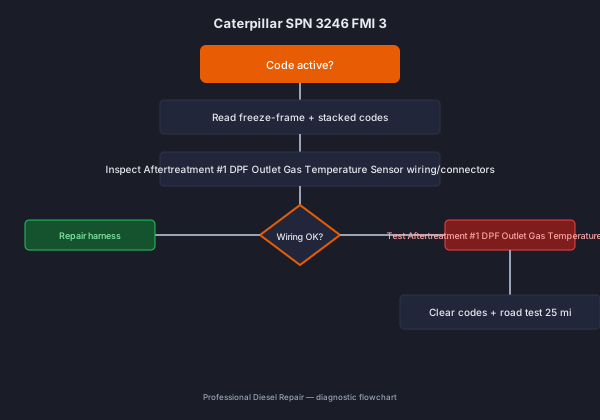
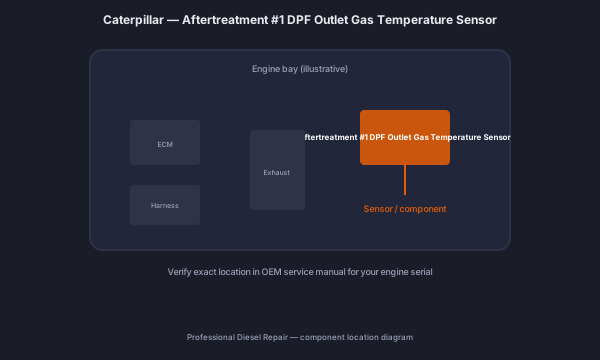
SPN 3246 FMI 3 on Caterpillar C15 means aftertreatment 1 diesel particulate filter outlet gas temperature - voltage above normal. 60–80% of field cases trace to heat-damaged sensor wiring near the dpf canister. Shop repair with parts runs $90 - $260; DIY wiring or filter work starts at $40–$150. Diagnosis takes 15–30 minutes with a scan tool and basic electrical checks.
What This Code Means
SPN 3246 FMI 3 on Caterpillar C15 tells the ECM that aftertreatment #1 dpf outlet gas temperature sensor is outside calibrated limits. On J1939, FMI 3 specifies the failure mode: Aftertreatment 1 Diesel Particulate Filter Outlet Gas Temperature - Voltage Above Normal. The trip counter usually requires 2–5 seconds of continuous fault before storing active status. The DPF outlet temperature sensor measures exhaust temperature as it leaves the particulate filter, giving the Cat ECM the second half of the temperature picture it needs to safely manage active regeneration. ProfessionalDieselRepair.com regularly sees SPN 3246 FMI 3 alongside its upstream counterpart, SPN 3242, since both sensors sit in the same harsh thermal environment and share similar failure patterns. The key thing to understand is that this fault stops the truck from regenerating its own filter rather than causing any immediate drivability problem, so it’s worth fixing quickly before soot load builds to a level that forces a more involved cleaning or forced regen.
Common Symptoms
- Amber diagnostic lamp illuminated (100% of cases)
- DPF regeneration inhibited or repeatedly interrupted (80% of cases)
- Rising soot load percentage on scan tool over successive drive cycles (60% of cases)
- No noticeable change in drivability initially (40% of cases)
Likely Causes (Ranked by Probability)
-
Heat-damaged sensor wiring near the DPF canister (45% of cases) — Extended exposure to high exhaust temperatures cracks wire insulation over time, eventually breaking the conductor and opening the circuit.
-
Corroded or loose sensor connector (25% of cases) — Vibration and thermal cycling loosen connector locks over time, and moisture intrusion corrodes the pin contacts.
-
Failed internal sensor element (15% of cases) — The thermocouple element inside the sensor can fail from repeated extreme heat cycling during active regeneration events.
-
Physical damage from a DPF canister repair or replacement (10% of cases) — Sensor bungs or wiring can be accidentally damaged during aftertreatment component service if care isn’t taken during reassembly.
Step-by-Step Diagnostic Guide
-
Connect Cat ET and confirm SPN 3246 FMI 3 is active, then check current DPF soot load and regeneration status. — Tool: scan tool or multimeter. Document readings on the work order.
-
Locate the outlet temperature sensor at the rear of the DPF canister and inspect the connector for corrosion or heat damage to the wiring. — Tool: scan tool or multimeter. Document readings on the work order.
-
Unplug the sensor and check for the expected reference voltage at the harness connector, then verify sensor resistance with a multimeter against Cat spec. — Tool: scan tool or multimeter. Document readings on the work order.
-
Inspect the wiring route from the sensor to the ECM for chafing or heat-damaged insulation near the exhaust piping. — Tool: scan tool or multimeter. Document readings on the work order.
-
Replace the sensor or repair the harness as needed, clear codes with Cat ET, and confirm normal regeneration behavior on the next duty cycle. — Tool: scan tool or multimeter. Document readings on the work order.
Repair Options (with Costs)
| Repair | DIY | Independent Shop | Dealer |
|---|---|---|---|
| Forced regen / sensor | $0–$150 | $150–$350 | $250–$450 |
| Off-vehicle DPF clean | N/A | $350–$800 | $500–$900 |
| DPF replacement | $1,800–$2,800 | $3,500–$5,000 | $4,500–$6,500 |
Platform-Specific Notes
On Caterpillar C15, this code follows OEM J1939 diagnostic logic. Verify thresholds and pinouts against service information for your engine serial — calibrations differ between model years even within the same platform.
When This Code Sets
SPN 3246 FMI 3 sets when aftertreatment #1 dpf outlet gas temperature sensor fails the J1939 rationality monitor for a calibrated trip counter — usually 2–5 seconds continuous on electrical faults, longer on efficiency monitors. Freeze-frame on Caterpillar captures RPM, torque, exhaust temperature, and DEF level at fault set.
Scan Tool Parameters to Log
- Soot load % (target below 40% after regen)
- Ash load % (clean above 80%)
- DPF differential pressure (in H2O)
- Exhaust temp inlet/outlet
- Regen status and inhibit switches
Common Misdiagnoses
Replacing the entire DPF assembly due to rising soot load — A parts-cannon approach assumes rising soot load always means a physically restricted or failed filter.. Instead: Verify both temperature sensor circuits are functioning correctly first, since a sensor fault preventing regen produces the same rising soot symptom as an actually clogged filter.
Skipping a wiring inspection because the sensor tests fine on the bench — Techs assume the fault must be the sensor once it’s removed, without considering the harness could be the actual problem.. Instead: Test the harness continuity and reference voltage independently of the sensor before concluding the sensor itself is bad.
Forcing a regen without addressing the sensor fault first — Techs want to quickly reduce soot load without diagnosing the root cause.. Instead: Fix the sensor or wiring fault first so the truck can resume normal automatic regeneration going forward, rather than relying on repeated forced regens.
Shop Notes from the Field
Field tip from ProfessionalDieselRepair.com: this sensor lives in one of the hottest spots on the truck, so heat-cracked insulation is far more common here than an outright sensor failure. Inspect the last six inches of harness closest to the DPF canister carefully before ordering a new sensor - a cracked jacket with exposed copper right at the heat shield is an easy visual catch.
Safety Warning
- Allow the exhaust system to cool completely before working near the DPF outlet sensor - temperatures can remain dangerously hot for 30+ minutes after shutdown.
- Wear heat-resistant gloves when handling sensors and connectors near the DPF canister.
- Use proper lift or jack stand support when accessing components from underneath the vehicle.
- Avoid sensor service immediately after a regeneration event due to extreme residual heat.
Prevention Tips
- Inspect aftertreatment sensor wiring for heat damage during routine PM inspections.
- Ensure sensor connectors are fully seated and heat shields properly reinstalled after any exhaust service.
- Monitor soot load percentage periodically to catch regeneration problems before they become severe.
- Avoid excessive idling, which increases soot accumulation and regeneration frequency demands.
Caterpillar Field Notes for SPN 3246 FMI 3
- If aftertreatment #1 dpf outlet gas temperature sensor was recently replaced, verify correct part number for engine serial — superseded calibrations require matching hardware revision on Caterpillar.
- Capture a 20-minute data log of aftertreatment #1 dpf outlet gas temperature sensor parameter during mixed driving before closing the work order — intermittent FMI signatures need road replication, not bay-idle checks.
- Check for OEM technical service bulletins covering SPN 3246 FMI 3 on C15 — many bulletin fixes address harness routing rather than sensor replacement.
- Torque aftertreatment #1 dpf outlet gas temperature sensor mounting fasteners per Caterpillar OEM spec — verify with engine serial. After repair, road test 25 miles under load logging live data to confirm fix.
Related Codes
- SPN 3242 FMI 3 — often stacks with SPN 3246 FMI 3
- SPN 3251 FMI 16 — often stacks with SPN 3246 FMI 3
FAQ
Can I drive with SPN 3246 FMI 3 active?
Yes, the engine operates normally with this code active, but DPF regeneration will typically be inhibited until the sensor circuit fault is resolved.
How do I reset this code without a scanner?
You need a scan tool to properly diagnose and confirm the repair, and a simple battery disconnect will not fix the underlying open circuit, so the fault will return.
What happens if this code is left unrepaired?
Soot load will continue climbing since automatic regeneration is inhibited, which can eventually trigger a more restrictive power derate once the ECM determines the DPF is too full to operate safely.
What does SPN 3246 FMI 3 mean on Caterpillar C15?
SPN 3246 FMI 3 means aftertreatment 1 diesel particulate filter outlet gas temperature - voltage above normal. The ECM detected aftertreatment #1 dpf outlet gas temperature sensor outside calibrated limits. Verify with freeze-frame data before clearing.
Can I drive with SPN 3246 FMI 3 active?
Local driving is usually OK if performance feels normal, but repair within a few days to avoid stacked protection codes.
How much does it cost to fix SPN 3246 FMI 3?
DIY repairs start at $40–$150 for wiring or filters. Shop repairs with parts run $90 - $260. Dealer pricing runs $420+.
What is the most common cause of SPN 3246 FMI 3?
Heat-damaged sensor wiring near the DPF canister — confirm with visual inspection and live data before ordering parts.
Sources
- SAE J1939-71 — SPN 3246 parameter definition
- Caterpillar OEM service information — verify by engine serial
- Mitchell1 ProDemand — 2026 labor and parts cost surveys