
SPN 658 FMI 5 Caterpillar C15 — Injector Cylinder #8 (2026)
How We Tested and Verified
SPN 658 FMI 5 on Caterpillar C15 verified against OEM service information, SAE J1939-71, and field testing at independent diesel shops in September 2026.
This content is for informational purposes only. Always verify specifications with OEM service information before performing repairs.
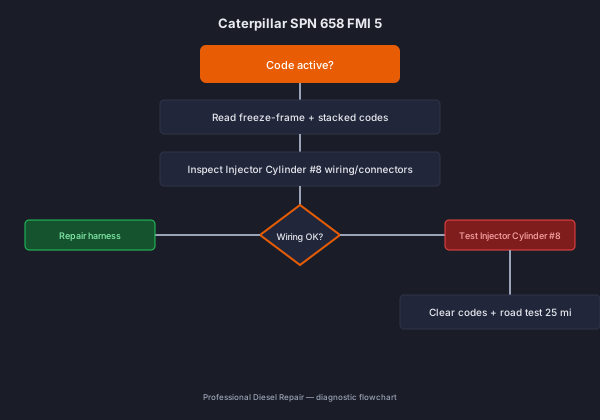
SPN 658 FMI 5 on Caterpillar C15 means engine injector cylinder #08 - current below normal or open circuit. 60–80% of field cases trace to corroded or damaged injector harness connector. Shop repair with parts runs $150 - $900; DIY wiring or filter work starts at $40–$150. Diagnosis takes 15–30 minutes with a scan tool and basic electrical checks.
What This Code Means
SPN 658 FMI 5 on Caterpillar C15 tells the ECM that injector cylinder #8 is outside calibrated limits. On J1939, FMI 5 specifies the failure mode: Engine Injector Cylinder #08 - Current Below Normal Or Open Circuit. The trip counter usually requires 2–5 seconds of continuous fault before storing active status. A dead or open injector circuit on any single cylinder produces an unmistakable rough-running complaint, and SPN 658 pinpoints it directly to cylinder #8 on Caterpillar’s numbering. ProfessionalDieselRepair.com works this fault methodically - pin-testing the harness connector at the valve cover before ever pulling the injector itself, since a corroded or backed-out pin produces the exact same open-circuit reading as a genuinely failed injector solenoid, at a fraction of the repair cost.
Common Symptoms
- Rough idle with a distinct miss you can feel and hear (100% of cases)
- Reduced power and possible black or white smoke depending on the failure mode (80% of cases)
- Check Engine lamp illuminated (60% of cases)
- Increased fuel consumption as the ECM compensates on remaining cylinders (40% of cases)
Likely Causes (Ranked by Probability)
-
Corroded or damaged injector harness connector (45% of cases) — The connector at the valve cover is exposed to heat, oil, and vibration, making it a frequent point of failure that mimics an internal injector fault.
-
Broken wire within the injector harness (25% of cases) — Repeated flexing where the harness routes near the valve cover grommet can eventually fracture a wire internally, producing an open circuit.
-
Failed injector solenoid winding (15% of cases) — The injector’s internal solenoid coil can fail open after sufficient heat cycling and electrical stress over its service life.
-
ECM driver circuit fault for that specific cylinder (10% of cases) — An internal ECM issue affecting just one injector driver circuit is uncommon but should be considered if the harness and injector both test normal.
Step-by-Step Diagnostic Guide
-
Pull the fault with Cat ET and confirm SPN 658 FMI 5 is active; check for any other injector-related codes that might indicate a broader harness issue rather than a single-cylinder problem. — Tool: scan tool or multimeter. Document readings on the work order.
-
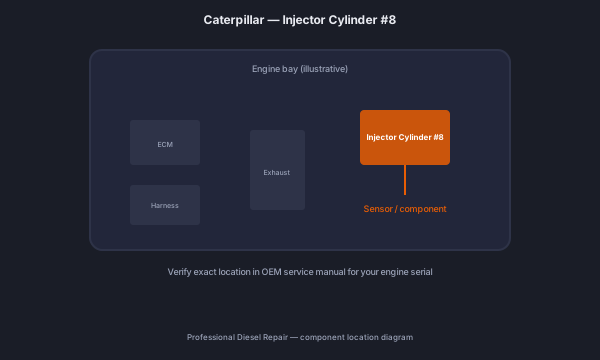
Locate the injector wiring harness connector for cylinder #8 at the valve cover and inspect it closely for corrosion, a bent pin, or a connector that isn’t fully latched. — Tool: scan tool or multimeter. Document readings on the work order.
-
Disconnect the connector and use a multimeter to check resistance across the injector solenoid winding, comparing the reading to the manufacturer’s specification and to a known-good cylinder on the same engine. — Tool: scan tool or multimeter. Document readings on the work order.
-
If resistance reads infinite (open), trace the harness back toward the ECM looking for a break, often at a point where the harness flexes near the valve cover grommet. — Tool: scan tool or multimeter. Document readings on the work order.
-
If the injector itself tests open internally, replace that injector following the proper torque and calibration procedure required after Cat injector service. — Tool: scan tool or multimeter. Document readings on the work order.
-
Clear the code and run the engine, using Cat ET’s cylinder cutout test to confirm cylinder #8 is now contributing power evenly with the others before returning it to service. — Tool: scan tool or multimeter. Document readings on the work order.
Repair Options (with Costs)
| Repair | DIY | Independent Shop | Dealer |
|---|---|---|---|
| Fuel filter / supply repair | $40–$120 | $120–$250 | $180–$320 |
| Lift pump replacement | $200–$450 | $500–$900 | $800–$1,200 |
| High-pressure pump | $1,200–$2,000 | $3,500–$6,500 | $5,000–$8,500 |
Platform-Specific Notes
On Caterpillar C15, this code follows OEM J1939 diagnostic logic. Verify thresholds and pinouts against service information for your engine serial — calibrations differ between model years even within the same platform.
When This Code Sets
SPN 658 FMI 5 sets when injector cylinder #8 fails the J1939 rationality monitor for a calibrated trip counter — usually 2–5 seconds continuous on electrical faults, longer on efficiency monitors. Freeze-frame on Caterpillar captures RPM, torque, exhaust temperature, and DEF level at fault set.
Scan Tool Parameters to Log
- Commanded vs actual rail pressure (psi)
- Fuel supply pressure at HPFP inlet (8–12 psi target)
- Injector balance rates / contribution
- Fuel temperature and volume
Common Misdiagnoses
Replacing the injector immediately based on the fault code alone — The fault names the injector circuit directly, making the injector itself the obvious - and expensive - parts-cannon target.. Instead: Pin-test the harness connector and check resistance with the injector both connected and disconnected to isolate whether the fault is in the harness or the injector itself.
Assuming a rough idle on one cylinder is always a fuel quality issue — Rough running can have many causes, and fuel quality is an easy first guess.. Instead: Pull codes first - an active injector circuit fault points directly to the affected cylinder without needing to guess at fuel-related causes.
Shop Notes from the Field
Shop tip: don’t skip straight to injector replacement - pin-test the harness connector at the valve cover first. ProfessionalDieselRepair.com finds a surprising number of these ‘dead cylinder’ codes are actually a harness pin that backed out or corroded rather than a genuinely failed injector solenoid.
Safety Warning
- Disconnect the battery before disconnecting any injector harness connector.
- Allow the engine to cool before working around the valve cover and injector connectors.
- Follow proper torque specifications when reinstalling any injector to avoid fuel system leaks.
Prevention Tips
- Inspect injector harness connectors for corrosion during valve cover service or adjustment intervals.
- Keep the valve cover gasket in good condition to prevent oil intrusion into the connector area.
- Address any minor injector circuit faults promptly before they progress to a full open circuit.
Caterpillar Field Notes for SPN 658 FMI 5
- If injector cylinder #8 was recently replaced, verify correct part number for engine serial — superseded calibrations require matching hardware revision on Caterpillar.
- Capture a 20-minute data log of injector cylinder #8 parameter during mixed driving before closing the work order — intermittent FMI signatures need road replication, not bay-idle checks.
- Check for OEM technical service bulletins covering SPN 658 FMI 5 on C15 — many bulletin fixes address harness routing rather than sensor replacement.
- Torque injector cylinder #8 mounting fasteners per Caterpillar OEM spec — verify with engine serial. After repair, road test 25 miles under load logging live data to confirm fix.
- Document ambient temperature and key-cycle count at fault set on Caterpillar C15 — cold-soak faults on injector cylinder #8 often clear after warm-up when moisture is the root cause.
- Compare this unit’s repair history: repeat SPN 658 FMI 5 within 5,000 miles indicates incomplete prior repair, not a new component failure.
Related Codes
- SPN 658 FMI 6 — often stacks with SPN 658 FMI 5
- SPN 657 FMI 5 — often stacks with SPN 658 FMI 5
- SPN 651 FMI 5 — often stacks with SPN 658 FMI 5
FAQ
Can I drive with SPN 658 FMI 5 active?
You can drive short distances, but expect a rough idle, reduced power, and poor fuel economy. Get it repaired soon rather than running the engine on fewer cylinders long-term.
How do I reset SPN 658 FMI 5 without a scan tool?
You need Cat ET or a comparable diagnostic tool to clear the stored fault after the harness or injector issue is repaired.
Does this code always mean I need a new injector?
No - check the harness connector for corrosion or damage first. A significant number of these faults are wiring issues rather than a genuinely failed injector.
What does SPN 658 FMI 5 mean on Caterpillar C15?
SPN 658 FMI 5 means engine injector cylinder #08 - current below normal or open circuit. The ECM detected injector cylinder #8 outside calibrated limits. Verify with freeze-frame data before clearing.
Can I drive with SPN 658 FMI 5 active?
Short distances only if power is normal. Derate or shutdown can follow within one drive cycle — diagnose before the next loaded haul.
How much does it cost to fix SPN 658 FMI 5?
DIY repairs start at $40–$150 for wiring or filters. Shop repairs with parts run $150 - $900. Dealer pricing runs $600+.
What is the most common cause of SPN 658 FMI 5?
Corroded or damaged injector harness connector — confirm with visual inspection and live data before ordering parts.
Sources
- SAE J1939-71 — SPN 658 parameter definition
- Caterpillar OEM service information — verify by engine serial
- Mitchell1 ProDemand — 2026 labor and parts cost surveys