
2263 Ram Cummins 6.7L/5.9L — Turbo Underboost (2026)
How We Tested and Verified
2263 on Ram Cummins ISX15 verified against OEM service information, SAE J2012, and field testing at independent diesel shops in September 2026.
This content is for informational purposes only. Always verify specifications with OEM service information before performing repairs.
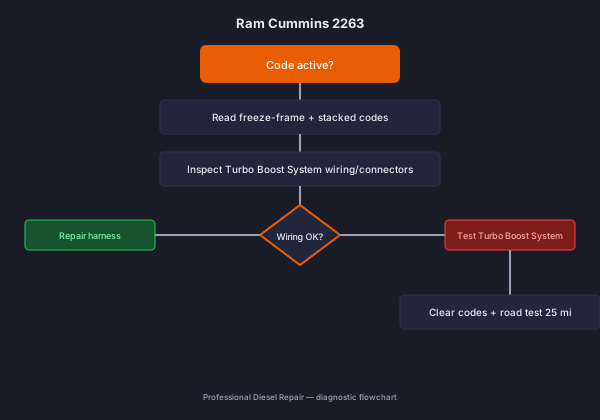
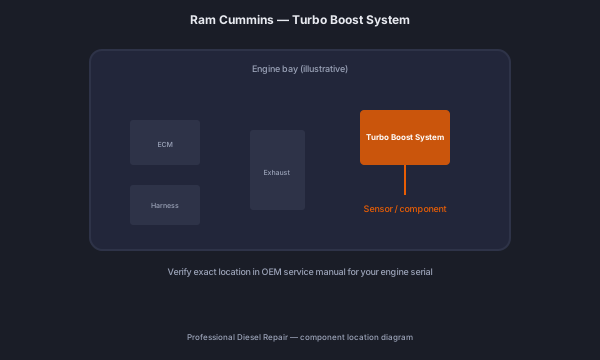
2263 on Ram Cummins ISX15 means turbo/super charger boost system performance/underboost. 10–15% of field cases trace to boost system air leak (loose clamp or cracked hose). Shop repair with parts runs $50 - $1200; DIY wiring or filter work starts at $40–$150. Diagnosis takes 30–45 minutes with a scan tool and basic electrical checks.
What This Code Means
2263 on Ram Cummins ISX15 tells the ECM that turbo boost system is outside calibrated limits. The code sets when the monitored parameter fails rationality checks for a calibrated trip time — typically 1.4–4 seconds continuous on OBD-II diesel platforms. P2263 on the Ram Cummins flags the turbo boost system for delivering less pressure than the engine commands — a performance fault that commonly points to a boost leak, sticky VGT actuator, or turbocharger wear. ProfessionalDieselRepair.com uses Cummins INSITE to compare commanded versus actual boost and pressure-tests the boost circuit before recommending any turbocharger hardware replacement.
Common Symptoms
- Check engine light on, often with derate on the ISB 6.7L (100% of cases)
- Noticeably reduced power and slow throttle response under load (80% of cases)
- Excessive black smoke under acceleration from lean boost conditions (60% of cases)
- Turbo may produce a whining or hissing noise if boost leaks are significant (40% of cases)
- Possible companion code P0234 overboost or P0299 undercharge/underboost (25% of cases)
Likely Causes (Ranked by Probability)
-
Boost system air leak (loose clamp or cracked hose) (45% of cases) — Clamps on intercooler pipes and charge air cooler connections loosen over time, allowing compressed air to escape before reaching the intake manifold and reducing actual boost below the commanded target.
-
Sticking or failed VGT actuator (25% of cases) — Carbon and soot buildup on the VGT vane mechanism prevents full vane closure, limiting the turbocharger’s ability to generate maximum boost at low and mid engine speeds.
-
Worn turbocharger compressor wheel or turbine (15% of cases) — High-mileage turbochargers develop internal wear that reduces efficiency; the compressor can no longer reach commanded boost even with no leaks and a functional VGT.
-
Restricted air intake or clogged air filter (10% of cases) — A severely clogged air filter starves the turbocharger of inlet air, reducing maximum achievable boost and triggering a P2263 underboost fault under high load.
Step-by-Step Diagnostic Guide
-
Connect Cummins INSITE or Diesel Laptops and pull P2263 freeze-frame. Record commanded vs actual boost at the fault event — a large deviation between commanded and actual confirms genuine underboost rather than a sensor fault. — Tool: scan tool or multimeter. Document readings on the work order.
-
Inspect all boost pipe connections from the turbo compressor outlet through the intercooler to the intake manifold for loose clamps, cracked hoses, or loose-fitting pipe connections. Boost leaks are the most common cause of P2263 and are confirmed by a hissing noise under load. — Tool: scan tool or multimeter. Document readings on the work order.
-
Check the VGT actuator solenoid connector and harness for damage — the solenoid controls vane position on the ISB turbocharger, and a failed or stuck solenoid can prevent the vanes from generating adequate boost. — Tool: scan tool or multimeter. Document readings on the work order.
-
Perform a VGT actuator response test using Cummins INSITE. Command the VGT vanes to full open and full closed and listen or feel for actuator movement. No movement or sluggish response confirms the actuator needs cleaning or replacement. — Tool: scan tool or multimeter. Document readings on the work order.
-
If boost circuit checks out and the VGT responds correctly, measure actual boost pressure with Cummins INSITE under a loaded pull — inadequate pressure with a functioning VGT and no leaks suggests internal turbocharger wear requiring replacement. — Tool: scan tool or multimeter. Document readings on the work order.
Repair Options (with Costs)
| Repair | DIY | Independent Shop | Dealer |
|---|---|---|---|
| Boost leak / hose repair | $50–$150 | $200–$400 | $300–$550 |
| VGT actuator only | $650–$900 | $900–$1,400 | $1,200–$1,800 |
| Turbo assembly | $1,400–$2,200 | $2,800–$4,500 | $4,000–$6,000 |
Platform-Specific Notes
6.7L (2007–2026): Common-rail — Follow cummins OEM diagnostic tree for 2263 on 6.7L.
5.9L (1989–2007): VP44/CP3 — Follow cummins OEM diagnostic tree for 2263 on 5.9L.
When This Code Sets
2263 typically stores after the ECM detects turbo boost system outside calibrated limits for 1.4–4.0 seconds (OBD-II trip). Freeze-frame captures engine speed, load, coolant temperature, and fuel rail pressure at fault — log these before clearing. Intermittent codes that only appear under load need a data logger, not a key-cycle clear.
Scan Tool Parameters to Log
- Commanded vs actual boost (PSI)
- VGT position commanded vs actual %
- Turbo speed (RPM)
- Intake manifold pressure
Common Misdiagnoses
Parts-cannon turbocharger replacement without first pressure-testing the boost circuit — P2263 is associated with the turbocharger, and technicians often reach for a turbo replacement before confirming that boost leaks or a stuck actuator are the actual cause.. Instead: Pressure-test the intercooler and boost piping before removing any turbo hardware. A hissing leak under pressure test pressure identifies the source of the underboost within minutes.
Replacing the VGT actuator without cleaning the vane mechanism first — A sticky actuator response during testing leads directly to an actuator order without checking if cleaning would free the vanes.. Instead: Remove and clean the VGT vane assembly with appropriate solvent, reinstall, and retest actuator response with Cummins INSITE before committing to an actuator replacement.
Shop Notes from the Field
Shop tip: ProfessionalDieselRepair.com pressure-tests the boost circuit before doing anything else on a Ram Cummins P2263 call. A boost leak tester pressurizes the intake system; any hissing immediately identifies the leak point without removing components. After confirming no leaks, use Cummins INSITE to perform the VGT actuator activation test — a sticky actuator that responds after commanding a few cycles is often resolved with a thorough actuator cleaning before considering replacement. Only commit to a turbocharger replacement after confirming zero boost leaks, a functional VGT, and measured boost pressure that still falls short of commanded values.
Safety Warning
- Do not pressure-test the boost circuit above the specified test pressure — excessive pressure can damage charge air cooler end tanks.
- Allow the turbocharger to cool for at least 30 minutes after engine shutdown before inspecting or removing any turbo components.
Prevention Tips
- Check all boost pipe clamps for tightness during oil change service intervals.
- Replace the engine air filter on schedule to maintain adequate turbo inlet airflow.
- Use quality engine oil and change it on schedule to minimize VGT vane carbon deposits.
Ram Cummins Field Notes for 2263
- If turbo boost system was recently replaced, verify correct part number for engine serial — superseded calibrations require matching hardware revision on Ram Cummins.
- Capture a 20-minute data log of turbo boost system parameter during mixed driving before closing the work order — intermittent FMI signatures need road replication, not bay-idle checks.
- Check for OEM technical service bulletins covering 2263 on ISX15 — many bulletin fixes address harness routing rather than sensor replacement.
Related Codes
FAQ
What does P2263 mean on a Ram Cummins?
P2263 means the ECM has confirmed that actual turbocharger boost pressure is below the commanded target for current operating conditions — an underboost performance fault. It is triggered by genuine low boost rather than an electrical sensor fault.
Is a boost leak always the cause of P2263 on the Ram Cummins?
Not always, but it is the most common and cheapest cause to confirm. A 10-minute boost leak test eliminates the most common root cause before any disassembly or parts are considered.
How do I test the VGT actuator on the ISB Cummins?
Use Cummins INSITE to command VGT vane position from fully open to fully closed. Listen or feel for actuator movement. A slow or no-response actuator points to a stuck mechanism or failed solenoid. Cleaning the vane mechanism is the first step if the actuator responds sluggishly.
What does 2263 mean on Ram Cummins ISX15?
2263 means turbo/super charger boost system performance/underboost. The ECM detected turbo boost system outside calibrated limits. Verify with freeze-frame data before clearing.
Can I drive with 2263 active?
Short distances only if power is normal. Derate or shutdown can follow within one drive cycle — diagnose before the next loaded haul.
How much does it cost to fix 2263?
DIY repairs start at $40–$150 for wiring or filters. Shop repairs with parts run $50 - $1200. Dealer pricing runs $300 - $1500.
What is the most common cause of 2263?
Boost system air leak (loose clamp or cracked hose) — confirm with visual inspection and live data before ordering parts.
Sources
- OEM service information — Ram Cummins ISX15 diagnostic procedures
- SAE J2012 — OBD-II DTC definition for 2263
- Mitchell1 ProDemand — 2026 labor and parts cost surveys