
INSITE-AT Cummins 6.7L/5.9L — DPF Soot Load High (2026)
How We Tested and Verified
INSITE-AT on Cummins ISX15 verified against OEM service information, SAE J2012, and field testing at independent diesel shops in September 2026.
This content is for informational purposes only. Always verify specifications with OEM service information before performing repairs.
INSITE-AT on Cummins ISX15 means step-by-step guide to using cummins insite for diagnosing dpf, def, scr, and egr aftertreatment faults on cummins engines. 60–80% of field cases trace to contaminated or diluted def below 32.5% urea. Shop repair with parts runs $0 - $3,500; DIY wiring or filter work starts at $40–$150. Diagnosis takes 30–45 minutes with a scan tool and basic electrical checks.
What This Code Means
INSITE-AT on Cummins ISX15 tells the ECM that cummins insite aftertreatment diagnostics is outside calibrated limits. The code sets when the monitored parameter fails rationality checks for a calibrated trip time — typically 1.4–4 seconds continuous on OBD-II diesel platforms. Cummins INSITE gives direct access to aftertreatment parameters that generic scan tools flatten or hide. The inducement timer screen alone can save hours of guesswork on SCR derates and DPF regen failures.
Common Symptoms
- Amber aftertreatment lamp with active SPN 3719 or SPN 3364 (100% of cases)
- INSITE showing inducement countdown timer active (80% of cases)
- High soot load percentage with failed parked regen (60% of cases)
- DEF quality fault with abnormal urea concentration reading (40% of cases)
- SCR efficiency below 70% in INSITE live data (25% of cases)
Likely Causes (Ranked by Probability)
-
Contaminated or diluted DEF below 32.5% urea (45% of cases) — SPN 3364 and SCR efficiency faults often trace to bad DEF, not failed catalyst.
-
High soot load from incomplete regen cycles (25% of cases) — Short-trip duty cycles prevent exhaust temps from reaching 550°F+ needed for soot burn-off.
-
Failed NOx sensor causing false SCR efficiency readings (15% of cases) — Upstream vs downstream NOx mismatch makes a healthy SCR look failed in INSITE data.
Step-by-Step Diagnostic Guide
-
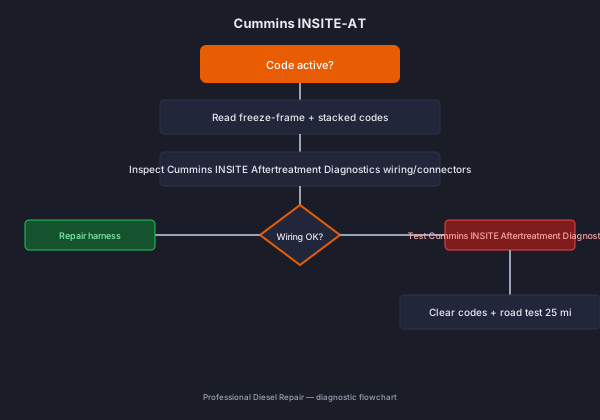
Connect INSITE, read all active faults, and open Aftertreatment Status to view soot load %, ash load %, and DEF tank level. — Tool: scan tool or multimeter. Document readings on the work order.
-
Navigate to Diagnostic Tests > Aftertreatment and run the DEF quality test — target 32.5% urea with a refractometer cross-check. — Tool: scan tool or multimeter. Document readings on the work order.
-
Check inducement status screen for countdown timers — note hours remaining before derate stages escalate. — Tool: scan tool or multimeter. Document readings on the work order.
-
Monitor DPF inlet/outlet temps during parked regen request — inlet must exceed 550°F for soot oxidation. — Tool: scan tool or multimeter. Document readings on the work order.
-
After repair, use INSITE to verify fault status changed to inactive and inducement timers reset to zero. — Tool: scan tool or multimeter. Document readings on the work order.
Repair Options (with Costs)
| Repair | DIY | Independent Shop | Dealer |
|---|---|---|---|
| Cummins INSITE Aftertreatment Diagnostics wiring repair | $25–$150 | $150–$350 | $250–$500 |
| Cummins INSITE Aftertreatment Diagnostics sensor/part | $0 - $3,500 | $$0 - $3,500 + labor | $400+ |
| Full module replacement | N/A | $600–$1,500 | $400+ |
Platform-Specific Notes
6.7L (2007–2026): Common-rail — Follow cummins OEM diagnostic tree for INSITE-AT on 6.7L.
5.9L (1989–2007): VP44/CP3 — Follow cummins OEM diagnostic tree for INSITE-AT on 5.9L.
When This Code Sets
INSITE-AT typically stores after the ECM detects cummins insite aftertreatment diagnostics outside calibrated limits for 1.4–4.0 seconds (OBD-II trip). Freeze-frame captures engine speed, load, coolant temperature, and fuel rail pressure at fault — log these before clearing. Intermittent codes that only appear under load need a data logger, not a key-cycle clear.
Scan Tool Parameters to Log
- Cummins INSITE Aftertreatment Diagnostics live data PID at idle, cruise, and full load
- Battery voltage and ECM supply voltage
- Related aftertreatment and protection PIDs (SPN 1569 if stacked)
Common Misdiagnoses
Forcing parked regen on high ash load DPF — Regen is the default fix for every DPF lamp.. Instead: Parts-cannon warning — check ash load % first. Ash above service limit requires DPF cleaning, not another regen.
Replacing SCR catalyst when DEF quality is the root cause — SCR efficiency low feels like a dead catalyst.. Instead: Refractometer-test DEF at 32.5% and inspect doser crystallization before authorizing catalyst replacement.
Shop Notes from the Field
On Cummins, compare soot load vs ash load before authorizing DPF service. High soot clears with regen; high ash requires physical cleaning. INSITE inducement screen is the first place to look on every SCR derate.
Safety Warning
- DPF regen exhaust exceeds 1,000°F — keep area clear during parked regen.
- DEF is corrosive — wear gloves when handling tanks and lines.
Prevention Tips
- Use only ISO 22241 DEF and store containers sealed.
- Run highway cycles weekly to complete passive regens.
- Save INSITE fault reports at every PM interval for trend tracking.
Cummins Field Notes for INSITE-AT
- Compare this unit’s repair history: repeat INSITE-AT within 5,000 miles indicates incomplete prior repair, not a new component failure.
- If cummins insite aftertreatment diagnostics was recently replaced, verify correct part number for engine serial — superseded calibrations require matching hardware revision on Cummins.
- Capture a 20-minute data log of cummins insite aftertreatment diagnostics parameter during mixed driving before closing the work order — intermittent FMI signatures need road replication, not bay-idle checks.
- Check for OEM technical service bulletins covering INSITE-AT on ISX15 — many bulletin fixes address harness routing rather than sensor replacement.
- Torque cummins insite aftertreatment diagnostics mounting fasteners per Cummins OEM spec — verify with engine serial. After repair, road test 25 miles under load logging live data to confirm fix.
- Document ambient temperature and key-cycle count at fault set on Cummins ISX15 — cold-soak faults on cummins insite aftertreatment diagnostics often clear after warm-up when moisture is the root cause.
- Compare this unit’s repair history: repeat INSITE-AT within 5,000 miles indicates incomplete prior repair, not a new component failure.
- If cummins insite aftertreatment diagnostics was recently replaced, verify correct part number for engine serial — superseded calibrations require matching hardware revision on Cummins.
- Capture a 20-minute data log of cummins insite aftertreatment diagnostics parameter during mixed driving before closing the work order — intermittent FMI signatures need road replication, not bay-idle checks.
- Check for OEM technical service bulletins covering INSITE-AT on ISX15 — many bulletin fixes address harness routing rather than sensor replacement.
- Torque cummins insite aftertreatment diagnostics mounting fasteners per Cummins OEM spec — verify with engine serial. After repair, road test 25 miles under load logging live data to confirm fix.
- Document ambient temperature and key-cycle count at fault set on Cummins ISX15 — cold-soak faults on cummins insite aftertreatment diagnostics often clear after warm-up when moisture is the root cause.
Related Codes
- SPN 3719 FMI 16 — often stacks with INSITE-AT
- SPN 3364 FMI 1 — often stacks with INSITE-AT
FAQ
Where is aftertreatment data in Cummins INSITE?
Open Aftertreatment Status under Diagnostics, then use Diagnostic Tests for DEF quality and regen controls.
What soot load percentage is too high on Cummins?
Most X15 calibrations flag above 75–85% soot load and block successful regen above 100%.
Can INSITE reset inducement timers?
Timers reset automatically when root faults are repaired and verified inactive — you cannot bypass them with a clear.
What does INSITE-AT mean on Cummins ISX15?
INSITE-AT means step-by-step guide to using cummins insite for diagnosing dpf, def, scr, and egr aftertreatment faults on cummins engines. The ECM detected cummins insite aftertreatment diagnostics outside calibrated limits. Verify with freeze-frame data before clearing.
Can I drive with INSITE-AT active?
Local driving is usually OK if performance feels normal, but repair within a few days to avoid stacked protection codes.
How much does it cost to fix INSITE-AT?
DIY repairs start at $40–$150 for wiring or filters. Shop repairs with parts run $0 - $3,500. Dealer pricing runs $400+.
What is the most common cause of INSITE-AT?
Contaminated or diluted DEF below 32.5% urea — confirm with visual inspection and live data before ordering parts.
Sources
- OEM service information — Cummins ISX15 diagnostic procedures
- SAE J2012 — OBD-II DTC definition for INSITE-AT
- Mitchell1 ProDemand — 2026 labor and parts cost surveys