
SPN 1381 FMI 18 Cummins ISX15 — Fuel Supply Pump Inle (2026)
How We Tested and Verified
SPN 1381 FMI 18 on Cummins ISX15 verified against OEM service information, SAE J1939-71, and field testing at independent diesel shops in September 2026.
This content is for informational purposes only. Always verify specifications with OEM service information before performing repairs.
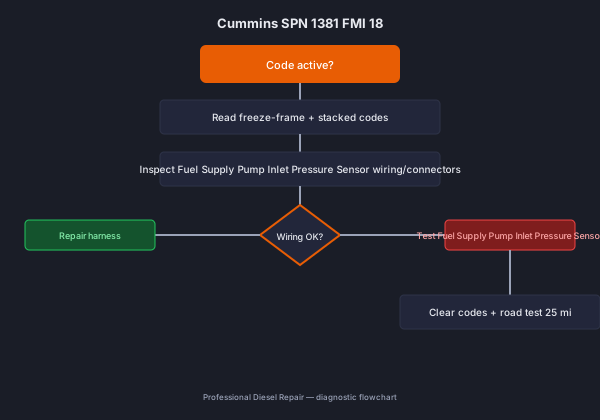
SPN 1381 FMI 18 on Cummins ISX15 means engine fuel supply pump inlet pressure - data valid but below normal operating range - moderately severe level. 60–80% of field cases trace to plugging primary fuel filter or water separator element. Shop repair with parts runs $40 - $180; DIY wiring or filter work starts at $40–$150. Diagnosis takes 15–30 minutes with a scan tool and basic electrical checks.
What This Code Means
SPN 1381 FMI 18 on Cummins ISX15 tells the ECM that fuel supply pump inlet pressure sensor is outside calibrated limits. On J1939, FMI 18 specifies the failure mode: Engine Fuel Supply Pump Inlet Pressure - Data Valid But Below Normal Operating Range - Moderately Severe Level. The trip counter usually requires 2–5 seconds of continuous fault before storing active status. ProfessionalDieselRepair.com treats this code as the fuel system’s early smoke detector. It’s set well ahead of a true low-pressure fault, which means catching it now with a simple filter change avoids the harder starts and power loss that show up once suction restriction gets bad enough to starve the high-pressure pump.
Common Symptoms
- Amber check engine lamp, no derate at this stage (100% of cases)
- Slight hesitation or power dip that may not yet be obvious to the driver (80% of cases)
- Fuel filter housing showing early signs of restriction on a vacuum gauge (60% of cases)
- Possible harder starts if restriction has progressed (40% of cases)
Likely Causes (Ranked by Probability)
-
Plugging primary fuel filter or water separator element (45% of cases) — Contaminated fuel or extended service intervals gradually restrict flow through the filter media, increasing suction-side vacuum.
-
Restricted fuel tank vent or pickup screen (25% of cases) — A blocked vent creates a vacuum inside the tank itself, starving the pump regardless of filter condition.
-
Collapsed or kinked suction hose (15% of cases) — A soft or damaged hose section can collapse under suction, especially at higher fuel demand.
-
Faulty suction pressure sensor (10% of cases) — A drifting sensor can report low pressure without an actual restriction, though this is uncommon compared to genuine filter plugging.
Step-by-Step Diagnostic Guide
-
Install a fuel pressure/vacuum gauge on the suction side ahead of the primary fuel filter, per OEM test port location. — Tool: scan tool or multimeter. Document readings on the work order.
-
Run the engine at idle and moderate RPM, comparing suction-side vacuum against the OEM specification (typically no more than 6-8 in-Hg maximum vacuum on most Cummins platforms). — Tool: scan tool or multimeter. Document readings on the work order.
-
Replace the primary fuel filter and water separator element if vacuum exceeds spec or the filter shows visible contamination. — Tool: scan tool or multimeter. Document readings on the work order.
-
Check fuel tank vent caps to ensure they aren’t clogged and drawing a structural vacuum inside the fuel tank. — Tool: scan tool or multimeter. Document readings on the work order.
-
Inspect suction-side hose and fitting connections for collapsed hose walls or loose clamps that can restrict flow under load. — Tool: scan tool or multimeter. Document readings on the work order.
-
Clear the code with Cummins INSITE and retest suction pressure under load to confirm the repair holds. — Tool: scan tool or multimeter. Document readings on the work order.
Repair Options (with Costs)
| Repair | DIY | Independent Shop | Dealer |
|---|---|---|---|
| Fuel filter / supply repair | $40–$120 | $120–$250 | $180–$320 |
| Lift pump replacement | $200–$450 | $500–$900 | $800–$1,200 |
| High-pressure pump | $1,200–$2,000 | $3,500–$6,500 | $5,000–$8,500 |
Platform-Specific Notes
6.7L (2007–2026): Common-rail — Follow cummins OEM diagnostic tree for 1381 on 6.7L.
5.9L (1989–2007): VP44/CP3 — Follow cummins OEM diagnostic tree for 1381 on 5.9L.
When This Code Sets
SPN 1381 FMI 18 sets when fuel supply pump inlet pressure sensor fails the J1939 rationality monitor for a calibrated trip counter — usually 2–5 seconds continuous on electrical faults, longer on efficiency monitors. Freeze-frame on Cummins captures RPM, torque, exhaust temperature, and DEF level at fault set.
Scan Tool Parameters to Log
- Commanded vs actual rail pressure (psi)
- Fuel supply pressure at HPFP inlet (8–12 psi target)
- Injector balance rates / contribution
- Fuel temperature and volume
Common Misdiagnoses
Replacing the low-pressure fuel pump before checking filter condition — A parts-cannon habit of jumping to the pump when fuel-related codes appear, skipping the far cheaper and more common filter check.. Instead: Measure suction vacuum first - a clean filter with normal vacuum readings and a still-present code points toward the pump; a restricted filter explains the code on its own.
Shop Notes from the Field
Shop tip: treat this code as a gift, not a nuisance. ProfessionalDieselRepair.com sees this fire well before a customer notices any drivability issue, which means a $40 filter now beats a roadside tow later when the low-pressure fault finally sets and strands the truck.
Safety Warning
- Relieve residual fuel pressure and have rags ready before opening any fuel filter housing.
- Dispose of the old filter element and any spilled fuel per local environmental regulations.
Prevention Tips
- Follow the OEM fuel filter replacement interval, and shorten it in dusty or high-contamination environments.
- Keep the fuel tank reasonably full to reduce condensation and water contamination risk.
- Inspect vent caps and pickup screens during scheduled PM services.
Cummins Field Notes for SPN 1381 FMI 18
- If fuel supply pump inlet pressure sensor was recently replaced, verify correct part number for engine serial — superseded calibrations require matching hardware revision on Cummins.
- Capture a 20-minute data log of fuel supply pump inlet pressure sensor parameter during mixed driving before closing the work order — intermittent FMI signatures need road replication, not bay-idle checks.
- Check for OEM technical service bulletins covering SPN 1381 FMI 18 on ISX15 — many bulletin fixes address harness routing rather than sensor replacement.
- Torque fuel supply pump inlet pressure sensor mounting fasteners per Cummins OEM spec — verify with engine serial. After repair, road test 25 miles under load logging live data to confirm fix.
- Document ambient temperature and key-cycle count at fault set on Cummins ISX15 — cold-soak faults on fuel supply pump inlet pressure sensor often clear after warm-up when moisture is the root cause.
- Compare this unit’s repair history: repeat SPN 1381 FMI 18 within 5,000 miles indicates incomplete prior repair, not a new component failure.
- If fuel supply pump inlet pressure sensor was recently replaced, verify correct part number for engine serial — superseded calibrations require matching hardware revision on Cummins.
- Capture a 20-minute data log of fuel supply pump inlet pressure sensor parameter during mixed driving before closing the work order — intermittent FMI signatures need road replication, not bay-idle checks.
- Check for OEM technical service bulletins covering SPN 1381 FMI 18 on ISX15 — many bulletin fixes address harness routing rather than sensor replacement.
- Torque fuel supply pump inlet pressure sensor mounting fasteners per Cummins OEM spec — verify with engine serial. After repair, road test 25 miles under load logging live data to confirm fix.
Related Codes
- SPN 1382 FMI 16 — often stacks with SPN 1381 FMI 18
- SPN 94 FMI 18 — often stacks with SPN 1381 FMI 18
FAQ
Can I keep driving with SPN 1381 FMI 18 active?
Yes for the short term - there’s no derate at this stage. But get the fuel filter checked soon before restriction worsens into a more severe pressure fault.
How do I reset this code without a scan tool?
You’ll need Cummins INSITE, Diesel Laptops, or a similar tool to clear the stored code after replacing the filter and confirming suction pressure is back in range.
What triggers a derate from this code?
This specific FMI level doesn’t trigger a derate on its own; it’s an early warning stage. A worsening restriction can eventually set a more severe fuel pressure code that does affect performance.
What does SPN 1381 FMI 18 mean on Cummins ISX15?
SPN 1381 FMI 18 means engine fuel supply pump inlet pressure - data valid but below normal operating range - moderately severe level. The ECM detected fuel supply pump inlet pressure sensor outside calibrated limits. Verify with freeze-frame data before clearing.
Can I drive with SPN 1381 FMI 18 active?
Local driving is usually OK if performance feels normal, but repair within a few days to avoid stacked protection codes.
How much does it cost to fix SPN 1381 FMI 18?
DIY repairs start at $40–$150 for wiring or filters. Shop repairs with parts run $40 - $180. Dealer pricing runs $300+.
What is the most common cause of SPN 1381 FMI 18?
Plugging primary fuel filter or water separator element — confirm with visual inspection and live data before ordering parts.
Sources
- SAE J1939-71 — SPN 1381 parameter definition
- Cummins OEM service information — verify by engine serial
- Mitchell1 ProDemand — 2026 labor and parts cost surveys