
SPN 27 FMI 7 Cummins ISX15 — EGR Flow Fault (2026)
How We Tested and Verified
SPN 27 FMI 7 on Cummins ISX15 verified against OEM service information, SAE J1939-71, and field testing at independent diesel shops in September 2026.
This content is for informational purposes only. Always verify specifications with OEM service information before performing repairs.
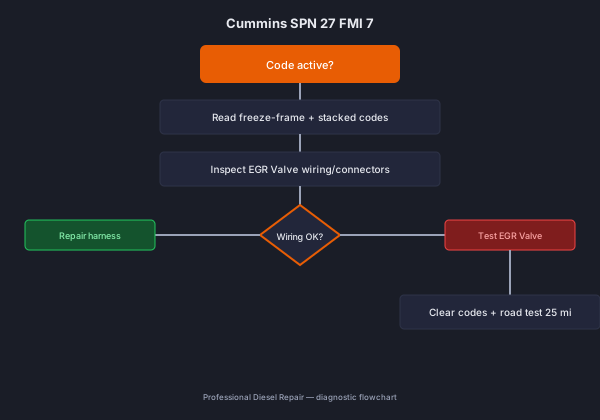
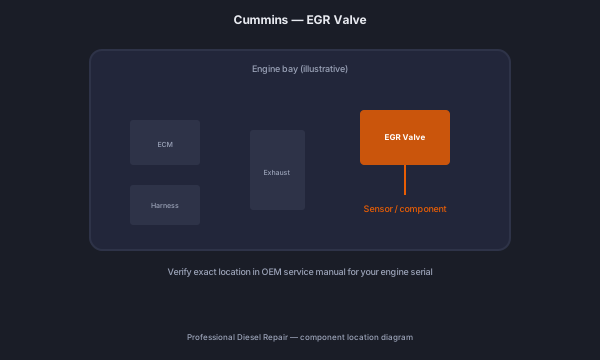
SPN 27 FMI 7 on Cummins ISX15 means egr valve 1 position - mechanical system not responding or out of adjustment. 10–15% of field cases trace to heavy carbon buildup preventing valve movement (mechanical). Shop repair with parts runs $150 - $900; DIY wiring or filter work starts at $40–$150. Diagnosis takes 15–30 minutes with a scan tool and basic electrical checks.
What This Code Means
SPN 27 FMI 7 on Cummins ISX15 tells the ECM that egr valve is outside calibrated limits. On J1939, FMI 7 specifies the failure mode: EGR Valve 1 Position - Mechanical System Not Responding Or Out Of Adjustment. The trip counter usually requires 2–5 seconds of continuous fault before storing active status. FMI 7 is the EGR valve telling you it received the command but cannot follow through. On Cummins ISX, ISB, and ISL engines, that almost always translates to a pintle buried in carbon deposits. ProfessionalDieselRepair.com has cleaned more FMI 7 valves than it has replaced — pull it, clean it, and prove it before you spend $500 on a new assembly.
Common Symptoms
- High exhaust temperatures under load (100% of cases)
- Black smoke at part throttle as EGR flow is disrupted (80% of cases)
- Rough running or stumble if the valve is stuck partially open (60% of cases)
- MIL illuminated with possible torque derate (40% of cases)
- Failed emissions testing due to NOx rise with EGR inoperative (25% of cases)
Likely Causes (Ranked by Probability)
-
Heavy carbon buildup preventing valve movement (mechanical) (45% of cases) — EGR recirculates hot, soot-laden gas which deposits carbon on the valve bore and pintle over time. Thick deposits physically prevent the actuator from moving the valve to the commanded position.
-
Failed EGR valve actuator motor (mechanical/electrical) (25% of cases) — The electric actuator motor that drives the valve shaft can fail internally, losing torque output. The motor may test open or draw abnormal current.
-
EGR cooler failure causing increased deposit rate (mechanical) (15% of cases) — A leaking EGR cooler deposits scale and steam residue on the valve, dramatically accelerating carbon accumulation and shortening valve life.
-
Damaged valve actuator position sensor (electrical) (10% of cases) — If the position feedback sensor inside the actuator is faulty, the ECM receives incorrect position data and cannot close the control loop, triggering FMI 7.
Step-by-Step Diagnostic Guide
-
1. Connect Cummins INSITE or Snap-on NEXIQ and command the EGR valve through a relative actuator test — monitor commanded vs actual position in live data to confirm the mismatch. — Tool: scan tool or multimeter. Document readings on the work order.
-
2. Inspect the EGR valve and cooler for heavy carbon buildup — on ISB, ISL, and ISX engines, carbon-loaded valves are the leading cause of FMI 7 because the deposits physically prevent movement. — Tool: scan tool or multimeter. Document readings on the work order.
-
3. With the valve removed, test the actuator motor resistance and check for free mechanical movement through the full stroke by hand. A valve that is seized by carbon will resist or stick midrange. — Tool: scan tool or multimeter. Document readings on the work order.
-
4. Check the EGR actuator harness connector for moisture, spread terminals, and continuity through the control circuit — a high-resistance connection can prevent the actuator from producing enough torque to overcome moderate carbon buildup. — Tool: scan tool or multimeter. Document readings on the work order.
-
5. Inspect the EGR cooler for external leaks or coolant weeping — a failed EGR cooler can deposit steam and scale on the valve, accelerating seizure. — Tool: scan tool or multimeter. Document readings on the work order.
-
6. If cleaning and reinstalling the valve does not resolve the fault, test actuator motor current draw under commanded movement; a motor drawing outside normal range indicates an internal fault. — Tool: scan tool or multimeter. Document readings on the work order.
Repair Options (with Costs)
| Repair | DIY | Independent Shop | Dealer |
|---|---|---|---|
| EGR Valve wiring repair | $25–$150 | $150–$350 | $250–$500 |
| EGR Valve sensor/part | $150 - $900 | $$150 - $900 + labor | $400+ |
| Full module replacement | N/A | $600–$1,500 | $400+ |
Platform-Specific Notes
6.7L (2007–2026): Common-rail — Follow cummins OEM diagnostic tree for 27 on 6.7L.
5.9L (1989–2007): VP44/CP3 — Follow cummins OEM diagnostic tree for 27 on 5.9L.
When This Code Sets
SPN 27 FMI 7 sets when egr valve fails the J1939 rationality monitor for a calibrated trip counter — usually 2–5 seconds continuous on electrical faults, longer on efficiency monitors. Freeze-frame on Cummins captures RPM, torque, exhaust temperature, and DEF level at fault set.
Scan Tool Parameters to Log
- EGR Valve live data PID at idle, cruise, and full load
- Battery voltage and ECM supply voltage
- Related aftertreatment and protection PIDs (SPN 1569 if stacked)
Common Misdiagnoses
Replacing the EGR valve with a new unit as a parts-cannon first move without cleaning the system — FMI 7 names the valve and a new part seems like the obvious fix, but new valves loaded into a carbon-contaminated system fail within weeks from the same root cause.. Instead: Remove and clean the old valve first — in many cases it moves freely once cleaned and passes actuator tests. If it still fails, check the EGR cooler condition before installing a new valve.
Shop Notes from the Field
ProfessionalDieselRepair.com has seen SPN 27 FMI 7 on Cummins engines more times than any other EGR fault. It is almost always heavy carbon deposits seized in the bore. Remove the valve, clean the bore and pintle with a wire wheel and spray cleaner, check for free movement, and reinstall before ordering a new one. New valves fail fast too if the cooler is causing excessive carbonization.
Safety Warning
- EGR components and exhaust passages retain extreme heat — allow adequate cool-down time before removing the valve.
- Carbon dust from EGR cleaning is a respiratory hazard. Work in a ventilated area and wear a properly fitted particulate respirator.
- Do not run the engine with EGR system hardware removed or disconnected for extended periods — NOx output will be out of compliance.
Prevention Tips
- Run extended highway miles regularly to allow passive self-cleaning of EGR deposits through high-temperature exhaust flow.
- Use ultra-low-sulfur diesel and low-ash oil to reduce deposit formation in the EGR system.
- Inspect EGR valve condition at major service intervals, especially on high-idle or delivery-cycle duty cycles where carbon accumulates fastest.
Cummins Field Notes for SPN 27 FMI 7
- Torque egr valve mounting fasteners per Cummins OEM spec — verify with engine serial. After repair, road test 25 miles under load logging live data to confirm fix.
- Document ambient temperature and key-cycle count at fault set on Cummins ISX15 — cold-soak faults on egr valve often clear after warm-up when moisture is the root cause.
- Compare this unit’s repair history: repeat SPN 27 FMI 7 within 5,000 miles indicates incomplete prior repair, not a new component failure.
- If egr valve was recently replaced, verify correct part number for engine serial — superseded calibrations require matching hardware revision on Cummins.
Related Codes
- SPN 27 FMI 3 — often stacks with SPN 27 FMI 7
- SPN 27 FMI 4 — often stacks with SPN 27 FMI 7
- SPN 4363 FMI 0 — often stacks with SPN 27 FMI 7
FAQ
Will SPN 27 FMI 7 cause a derate on Cummins?
Yes, typically a moderate torque reduction. The ECM cannot properly control combustion temperatures and NOx without EGR flow, so it applies a protective derate.
Can I clean the EGR valve myself?
Yes, if you have the tools to remove it safely. Spray EGR cleaner, a wire brush, and compressed air will handle moderate carbon. Heavy deposits may need a soak. Reinstall and test — it often works fine.
How often should an EGR valve be serviced on Cummins?
There is no fixed OEM cleaning interval, but heavy duty and city-cycle engines benefit from a visual inspection every 100,000 miles or 2 years, whichever comes first.
What does SPN 27 FMI 7 mean on Cummins ISX15?
SPN 27 FMI 7 means egr valve 1 position - mechanical system not responding or out of adjustment. The ECM detected egr valve outside calibrated limits. Verify with freeze-frame data before clearing.
Can I drive with SPN 27 FMI 7 active?
Short distances only if power is normal. Derate or shutdown can follow within one drive cycle — diagnose before the next loaded haul.
How much does it cost to fix SPN 27 FMI 7?
DIY repairs start at $40–$150 for wiring or filters. Shop repairs with parts run $150 - $900. Dealer pricing runs $400+.
What is the most common cause of SPN 27 FMI 7?
Heavy carbon buildup preventing valve movement (mechanical) — confirm with visual inspection and live data before ordering parts.
Sources
- SAE J1939-71 — SPN 27 parameter definition
- Cummins OEM service information — verify by engine serial
- Mitchell1 ProDemand — 2026 labor and parts cost surveys