
2463 Ford Powerstroke 7.3L/6.7L — DPF Restriction (2026)
How We Tested and Verified
2463 on Ford Powerstroke 6.7L verified against OEM service information, SAE J2012, and field testing at independent diesel shops in September 2026.
This content is for informational purposes only. Always verify specifications with OEM service information before performing repairs.
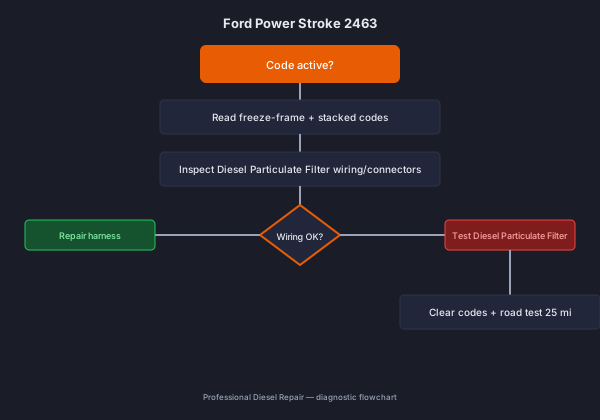
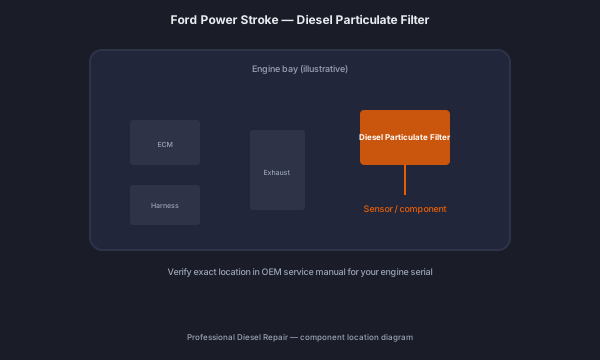
2463 on Ford Powerstroke 6.7L means diesel particulate filter restriction - soot accumulation. 10–15% of field cases trace to insufficient active regeneration from extended low-speed or short-trip driving. Shop repair with parts runs $0 (regen) or $800 - $2,500 (DPF replacement); DIY wiring or filter work starts at $40–$150. Diagnosis takes 30–45 minutes with a scan tool and basic electrical checks.
What This Code Means
2463 on Ford Powerstroke 6.7L tells the ECM that diesel particulate filter is outside calibrated limits. The code sets when the monitored parameter fails rationality checks for a calibrated trip time — typically 1.4–4 seconds continuous on OBD-II diesel platforms. P2463 is one of the most common high-mileage codes on the 6.7L Power Stroke, and for most truck owners it is a manageable maintenance issue rather than a catastrophic repair — if addressed promptly. At ProfessionalDieselRepair.com, the majority of P2463 cases resolve with a properly executed forced regeneration procedure, which takes under an hour and requires no parts. The code sets when the PCM’s DPF soot load model calculates that passive and active regeneration have not kept pace with soot accumulation — typically from extended low-load or city driving, short trips, or EGR issues that lower exhaust temperatures below the passive regen threshold. The concern is the power derate that escalates if the regen is postponed.
Common Symptoms
- Wrench light or check engine light with a ‘Service Required’ or ‘Exhaust Filter Full’ message in the instrument cluster (100% of cases)
- Noticeable power derate beginning around 40% and progressing to 25% of rated power if regen is repeatedly postponed (80% of cases)
- Reduced fuel economy as the engine works harder against exhaust backpressure from a partially clogged DPF (60% of cases)
- Excessive white or grey smoke if a regen attempt is interrupted midway (40% of cases)
- Diesel smell from the exhaust during an active forced regen as accumulated soot burns off (25% of cases)
Likely Causes (Ranked by Probability)
-
Insufficient active regeneration from extended low-speed or short-trip driving (45% of cases) — Active DPF regeneration requires sustained exhaust temperatures above approximately 600°C, which is difficult to achieve in city driving or frequent short trips. Without adequate regen cycles, soot accumulates faster than it is burned off.
-
EGR system fault lowering exhaust temperatures below passive regen threshold (25% of cases) — A malfunctioning EGR valve or cooler that allows excessive EGR flow can lower exhaust temperatures to the point where passive regen never occurs. This causes rapid soot accumulation that the active regen system cannot keep up with.
-
Faulty exhaust gas temperature sensor giving incorrect regen feedback (15% of cases) — The 6.7L Power Stroke has multiple EGT sensors monitoring the DPF. A failed sensor can cause the PCM to terminate active regen early, leaving soot unburned, or can falsely report high temperatures that trigger P2463.
Step-by-Step Diagnostic Guide
-
Connect Jaltest or Diesel Laptops and read the DPF soot load percentage PID. Values above 85–100% confirm P2463 is accurate and that a forced regen is needed. Also check EGT sensor values (pre- and post-DPF) to confirm the sensor system is providing accurate temperature data. — Tool: scan tool or multimeter. Document readings on the work order.
-
Initiate a parked/stationary forced regeneration using Jaltest’s DPF regen command or the Ford IDS equivalent. The vehicle must be at operating temperature with no active DTC faults that block regen. This process takes 20–40 minutes and the exhaust will reach 1,200°F+ — perform it outdoors away from combustibles. — Tool: scan tool or multimeter. Document readings on the work order.
-
Verify that conditions blocking active regen are not present before attempting forced regen: engine must be at operating temperature (above 185°F), no cylinder misfire codes, no active fuel system faults, and the truck must be parked safely. — Tool: scan tool or multimeter. Document readings on the work order.
-
After a successful forced regen, use Jaltest or Diesel Laptops to confirm DPF soot load has dropped below 30%. Verify exhaust backpressure has returned to baseline and that P2463 does not immediately reset within the next 50 miles. — Tool: scan tool or multimeter. Document readings on the work order.
-
If forced regen completes but P2463 resets within 200 miles, the DPF may be ash-loaded rather than soot-loaded — ash cannot be burned out and requires DPF replacement or professional high-temperature cleaning service. — Tool: scan tool or multimeter. Document readings on the work order.
Repair Options (with Costs)
| Repair | DIY | Independent Shop | Dealer |
|---|---|---|---|
| Forced regen / sensor | $0–$150 | $150–$350 | $250–$450 |
| Off-vehicle DPF clean | N/A | $350–$800 | $500–$900 |
| DPF replacement | $1,800–$2,800 | $3,500–$5,000 | $4,500–$6,500 |
Platform-Specific Notes
7.3L (1999–2003): HEUI — Follow ford-powerstroke OEM diagnostic tree for 2463 on 7.3L.
6.0L (2003–2007): HEUI/FICM — Follow ford-powerstroke OEM diagnostic tree for 2463 on 6.0L.
6.4L (2008–2010): Common-rail — Follow ford-powerstroke OEM diagnostic tree for 2463 on 6.4L.
6.7L (2011–2026): CP4.2 common-rail — Follow ford-powerstroke OEM diagnostic tree for 2463 on 6.7L.
When This Code Sets
2463 typically stores after the ECM detects diesel particulate filter outside calibrated limits for 1.4–4.0 seconds (OBD-II trip). Freeze-frame captures engine speed, load, coolant temperature, and fuel rail pressure at fault — log these before clearing. Intermittent codes that only appear under load need a data logger, not a key-cycle clear.
Scan Tool Parameters to Log
- Soot load % (target below 40% after regen)
- Ash load % (clean above 80%)
- DPF differential pressure (in H2O)
- Exhaust temp inlet/outlet
- Regen status and inhibit switches
Common Misdiagnoses
Immediate DPF replacement as a parts-cannon approach to P2463 — P2463 mentions DPF restriction, leading some technicians to replace the filter immediately without attempting forced regeneration, which costs the customer $1,000–$2,500 unnecessarily.. Instead: Attempt a Jaltest or Diesel Laptops forced regeneration first. Only recommend DPF replacement if the soot load does not drop below 40% after two complete regen attempts, or if ash load data confirms the filter is permanently loaded.
Ignoring EGT sensor faults that prevent accurate regen monitoring — P2463 focuses attention on the DPF, and secondary EGT sensor codes may be dismissed as unrelated.. Instead: Verify all EGT sensors are reading accurately in live data before authorizing any DPF service. A single failed EGT sensor can cause premature regen termination and repeated P2463 returns after service.
Shop Notes from the Field
Shop tip: before condemning the DPF on a P2463, confirm the soot load figure in Jaltest — if it is above 95%, try a forced regen first. Only if the DPF fails to clean below 40% soot load after two consecutive forced regens, or if ash load percentage is also high, should replacement be recommended. ProfessionalDieselRepair.com has documented cases where malfunctioning EGT sensors trigger false P2463 codes — verify all four EGT sensors on the 6.7L are reading correctly before authorizing DPF replacement.
Safety Warning
- DPF forced regeneration produces exhaust temperatures over 1,200°F — always perform outdoors on a non-combustible surface, away from dry grass, fuel, or flammable materials.
- Do not perform a stationary regen in an enclosed garage or building.
- Keep people and animals away from the exhaust outlet during the regen cycle.
- Allow the exhaust system to cool before approaching the DPF area after a regen.
Prevention Tips
- Drive the 6.7 Power Stroke on a 15–20 minute highway run at sustained throttle every 2–3 weeks to allow passive DPF regeneration to complete.
- Address EGR system codes promptly — EGR faults are a leading cause of failed passive regen cycles that lead to P2463.
- Use Ford-approved diesel exhaust fluid and maintain the DEF system to prevent the entire aftertreatment system from entering protective mode.
- Monitor DPF soot load percentage via Diesel Laptops at each oil change to track soot accumulation trends before P2463 sets.
Related Codes
FAQ
What does P2463 mean on a Ford 6.7 Power Stroke?
P2463 means the PCM has calculated that DPF soot accumulation exceeds the regeneration threshold and a forced regen is required. The truck will enter a power derate if regeneration is not completed.
How do I clear P2463 on a Ford Power Stroke?
The code requires a forced stationary regeneration — not just clearing with a scan tool. Use Jaltest or Diesel Laptops to initiate the regeneration procedure and confirm soot load drops below 30% before clearing the code.
Can I drive my truck with P2463?
Yes, but the truck will progressively derate power the longer P2463 is active without a regen being completed. At maximum derate, you may have only 25% of rated power. Address the code as soon as safely possible.
What does 2463 mean on Ford Powerstroke 6.7L?
2463 means diesel particulate filter restriction - soot accumulation. The ECM detected diesel particulate filter outside calibrated limits. Verify with freeze-frame data before clearing.
Can I drive with 2463 active?
Short distances only if power is normal. Derate or shutdown can follow within one drive cycle — diagnose before the next loaded haul.
How much does it cost to fix 2463?
DIY repairs start at $40–$150 for wiring or filters. Shop repairs with parts run $0 (regen) or $800 - $2,500 (DPF replacement). Dealer pricing runs $200 (regen) or $1,200+.
What is the most common cause of 2463?
Insufficient active regeneration from extended low-speed or short-trip driving — confirm with visual inspection and live data before ordering parts.
Sources
- OEM service information — Ford Powerstroke 6.7L diagnostic procedures
- SAE J2012 — OBD-II DTC definition for 2463
- Mitchell1 ProDemand — 2026 labor and parts cost surveys