
P0117 Ford Powerstroke 7.3L/6.7L — Coolant Temp Fault (2026)
How We Tested and Verified
P0117 on Ford Powerstroke 6.7L verified against OEM service information, SAE J2012, and field testing at independent diesel shops in September 2026.
This content is for informational purposes only. Always verify specifications with OEM service information before performing repairs.
P0117 on Ford Powerstroke 6.7L means engine coolant temperature circuit low input. 60–80% of field cases trace to shorted or damaged cts signal wire. Shop repair with parts runs $15 - $60; DIY wiring or filter work starts at $40–$150. Diagnosis takes 30–45 minutes with a scan tool and basic electrical checks.
What This Code Means
P0117 on Ford Powerstroke 6.7L tells the ECM that engine coolant temperature sensor is outside calibrated limits. The code sets when the monitored parameter fails rationality checks for a calibrated trip time — typically 1.4–4 seconds continuous on OBD-II diesel platforms. P0117 is a straightforward electrical fault — the CTS signal wire is reading too low for the ECM to trust. ProfessionalDieselRepair.com checks the wiring and connector first on every P0117 call because a sensor swap into a shorted harness just sets the code right back.
Common Symptoms
- Check engine light on (100% of cases)
- Extended glow plug on-time (ECM substitutes a cold default temperature) (80% of cases)
- Possible hard start in cold conditions if the ECM assumes the engine is always cold (60% of cases)
- Slightly elevated fuel consumption from a cold-bias fuel trim (40% of cases)
- No immediate derate but EGR and emission system behavior is affected (25% of cases)
Likely Causes (Ranked by Probability)
-
Shorted or damaged CTS signal wire (45% of cases) — Heat damage or chafing causes the signal wire insulation to fail and short to ground, pulling the signal voltage below the normal operating range.
-
Failed coolant temperature sensor (internal short) (25% of cases) — The sensor itself can develop an internal short that mimics a wiring fault and pulls the signal circuit low.
-
Coolant contamination in the CTS connector (15% of cases) — On 6.0L Power Strokes with EGR cooler issues, coolant vapor or liquid wicking into the connector creates a conductive short path to ground.
-
Corroded or backed-out CTS connector pin (10% of cases) — A partially seated pin on the signal circuit can create an intermittent low-resistance short to the connector body.
Step-by-Step Diagnostic Guide
-
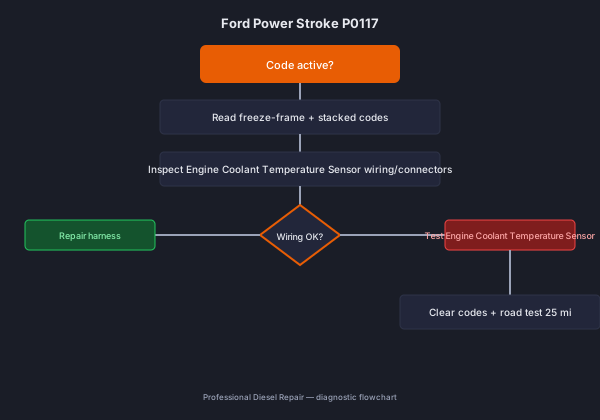
Connect Jaltest or Texa and pull the P0117 with freeze-frame data. Note the coolant temp reading at the time of fault — it will likely show an implausibly low value such as -40°F even on a warm engine. — Tool: scan tool or multimeter. Document readings on the work order.
-
With a multimeter, measure the signal wire voltage at the ECM harness connector (with the sensor unplugged). You should see approximately 5V reference on the signal wire. A reading of near 0V with the sensor disconnected confirms a short to ground in the wiring harness. — Tool: scan tool or multimeter. Document readings on the work order.
-
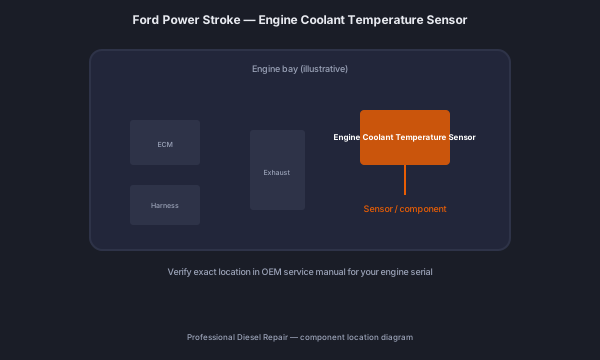
Inspect the CTS wiring harness and connector for damage, water intrusion, or chafing against a hot exhaust component. On 6.0L and 6.4L Power Strokes, the CTS connector is exposed to significant heat near the front of the engine. — Tool: scan tool or multimeter. Document readings on the work order.
-
Unplug the CTS and measure sensor resistance between its two terminals at a known coolant temperature. Compare to the published resistance curve — out-of-range resistance at a known temperature confirms sensor failure. — Tool: scan tool or multimeter. Document readings on the work order.
-
Check for coolant contamination in the CTS connector — coolant leaks from a seeping EGR cooler or head gasket on 6.0L trucks can wick into the connector and short the circuit. — Tool: scan tool or multimeter. Document readings on the work order.
-
After any repair, clear codes with Jaltest or Texa and verify the coolant temp PID reads a plausible value and tracks normally through warm-up. — Tool: scan tool or multimeter. Document readings on the work order.
Repair Options (with Costs)
| Repair | DIY | Independent Shop | Dealer |
|---|---|---|---|
| Engine Coolant Temperature Sensor wiring repair | $25–$150 | $150–$350 | $250–$500 |
| Engine Coolant Temperature Sensor sensor/part | $15 - $60 | $$15 - $60 + labor | $100 - $250 |
| Full module replacement | N/A | $600–$1,500 | $100 - $250 |
Platform-Specific Notes
7.3L (1999–2003): HEUI — Follow ford-powerstroke OEM diagnostic tree for P0117 on 7.3L.
6.0L (2003–2007): HEUI/FICM — Follow ford-powerstroke OEM diagnostic tree for P0117 on 6.0L.
6.4L (2008–2010): Common-rail — Follow ford-powerstroke OEM diagnostic tree for P0117 on 6.4L.
6.7L (2011–2026): CP4.2 common-rail — Follow ford-powerstroke OEM diagnostic tree for P0117 on 6.7L.
When This Code Sets
P0117 typically stores after the ECM detects engine coolant temperature sensor outside calibrated limits for 1.4–4.0 seconds (OBD-II trip). Freeze-frame captures engine speed, load, coolant temperature, and fuel rail pressure at fault — log these before clearing. Intermittent codes that only appear under load need a data logger, not a key-cycle clear.
Scan Tool Parameters to Log
- Engine Coolant Temperature Sensor live data PID at idle, cruise, and full load
- Battery voltage and ECM supply voltage
- Related aftertreatment and protection PIDs (SPN 1569 if stacked)
Common Misdiagnoses
Replacing the coolant temperature sensor as a parts-cannon first move without testing the signal wire for a short to ground — CTS replacement is cheap and easy, so it gets swapped first — but if the harness is shorted, the new sensor sets P0117 again within minutes of starting the engine.. Instead: Unplug the sensor and check for 5V reference on the signal wire. If you see near 0V with the sensor disconnected, the fault is in the wiring, not the sensor.
Missing coolant contamination in the connector from a seeping EGR cooler on 6.0L trucks — The EGR cooler connection to the CTS circuit isn’t obvious, so the coolant-in-connector source gets overlooked.. Instead: Smell and inspect the connector for sweet residue or moisture before replacing any parts — coolant contamination in the connector indicates a bigger cooling system problem upstream.
Shop Notes from the Field
Shop tip: ProfessionalDieselRepair.com always checks the connector and harness before ordering a sensor on P0117. On the 6.0L Power Stroke, a leaking EGR cooler can push coolant mist into the CTS connector and short it to ground — if the connector smells sweet or shows residue, investigate the EGR cooler before just swapping the sensor. Sensor replacement is straightforward and inexpensive, but wiring a new sensor into a shorted harness just sets the code again.
Safety Warning
- Allow the engine to cool completely before removing the CTS — the sensor threads into a coolant passage and removing it on a hot engine releases scalding coolant.
- Have a catch container ready when unplugging the CTS on a warm engine — some coolant drips from the sensor port.
Prevention Tips
- Inspect the CTS connector for corrosion or moisture during every coolant service.
- Address any EGR cooler or head gasket seeping on 6.0L Power Strokes before coolant vapor has a chance to contaminate electrical connectors.
- Use dielectric grease on the CTS connector when reassembling to slow future corrosion.
Ford Powerstroke Field Notes for P0117
- Compare this unit’s repair history: repeat P0117 within 5,000 miles indicates incomplete prior repair, not a new component failure.
Related Codes
FAQ
Is P0117 the same as P0118 on a Power Stroke?
No. P0117 is a circuit LOW input — signal voltage is too low, indicating a short to ground. P0118 is a circuit HIGH input — signal voltage is too high, indicating an open circuit or short to power. The diagnostic approach differs between the two.
Can I drive my Power Stroke with P0117?
Yes, the truck is drivable but the ECM is substituting a default coolant temperature value. Extended glow plug times and slightly off fuel trims are the main effects. Repair it within a week to restore accurate engine management.
How hard is it to replace the coolant temperature sensor?
It’s one of the simpler jobs on a Power Stroke — usually a one-socket removal on a cooled engine, then thread in the new sensor with fresh thread sealer. Budget 30 minutes and minimal tools.
What does P0117 mean on Ford Powerstroke 6.7L?
P0117 means engine coolant temperature circuit low input. The ECM detected engine coolant temperature sensor outside calibrated limits. Verify with freeze-frame data before clearing.
Can I drive with P0117 active?
Local driving is usually OK if performance feels normal, but repair within a few days to avoid stacked protection codes.
How much does it cost to fix P0117?
DIY repairs start at $40–$150 for wiring or filters. Shop repairs with parts run $15 - $60. Dealer pricing runs $100 - $250.
What is the most common cause of P0117?
Shorted or damaged CTS signal wire — confirm with visual inspection and live data before ordering parts.
Sources
- OEM service information — Ford Powerstroke 6.7L diagnostic procedures
- SAE J2012 — OBD-II DTC definition for P0117
- Mitchell1 ProDemand — 2026 labor and parts cost surveys