
P0500 Ford Powerstroke 7.3L/6.7L — Vehicle Speed Sens (2026)
How We Tested and Verified
P0500 on Ford Powerstroke 6.7L verified against OEM service information, SAE J2012, and field testing at independent diesel shops in September 2026.
This content is for informational purposes only. Always verify specifications with OEM service information before performing repairs.
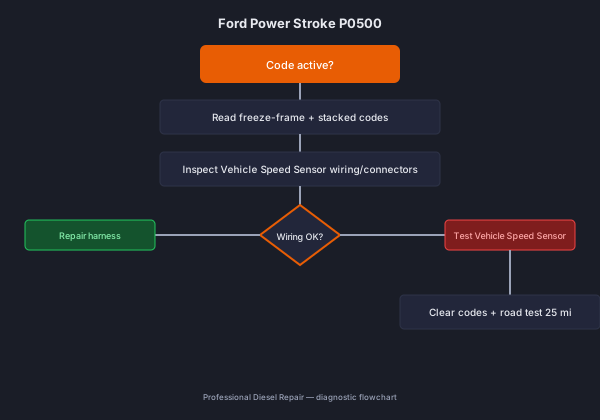
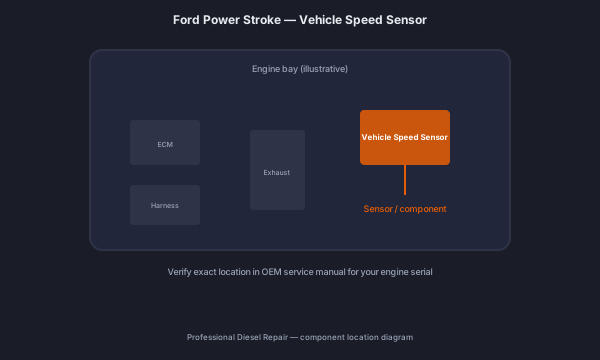
P0500 on Ford Powerstroke 6.7L means vehicle speed sensor “a” malfunction. 60–80% of field cases trace to corroded or water-intruded sensor connector. Shop repair with parts runs $40 - $200; DIY wiring or filter work starts at $40–$150. Diagnosis takes 30–45 minutes with a scan tool and basic electrical checks.
What This Code Means
P0500 on Ford Powerstroke 6.7L tells the ECM that vehicle speed sensor is outside calibrated limits. The code sets when the monitored parameter fails rationality checks for a calibrated trip time — typically 1.4–4 seconds continuous on OBD-II diesel platforms. The vehicle speed sensor tells the PCM and other modules how fast the truck is actually moving, which multiple systems depend on beyond just the speedometer display. ProfessionalDieselRepair.com sees P0500 most commonly caused by a corroded connector at the transmission tail housing rather than an outright sensor failure, since that location takes a beating from road spray and grime over years of service.
Common Symptoms
- MIL illuminated (100% of cases)
- Speedometer reading incorrectly or not at all (80% of cases)
- Cruise control inoperative (60% of cases)
- Harsh, delayed, or erratic transmission shifting (40% of cases)
Likely Causes (Ranked by Probability)
-
Corroded or water-intruded sensor connector (45% of cases) — The connector’s location near the transmission or transfer case exposes it to road grime and moisture, leading to corrosion over time.
-
Chafed sensor harness near the transmission or frame rail (25% of cases) — Vibration and road debris can wear through harness insulation where it routes along the underside of the truck.
-
Failed vehicle speed sensor (15% of cases) — The sensor’s internal element can fail from wear, heat exposure, or physical damage from road debris.
-
Damaged tone ring or reluctor at the sensor’s mounting location (10% of cases) — Physical damage to the toothed ring the sensor reads produces a genuinely erratic mechanical signal independent of the sensor’s own condition.
Step-by-Step Diagnostic Guide
-
Scan for codes with Ford IDS or a comparable tool and confirm P0500, then check live vehicle speed data against actual road speed if possible. — Tool: scan tool or multimeter. Document readings on the work order.
-
Inspect the vehicle speed sensor connector, typically located at the transmission tail housing or transfer case, for corrosion or damage. — Tool: scan tool or multimeter. Document readings on the work order.
-
Unplug the sensor and measure resistance across its terminals with a multimeter, comparing to spec for your specific transmission. — Tool: scan tool or multimeter. Document readings on the work order.
-
Trace the sensor harness back toward the PCM, checking for chafing near the transmission or frame rail where the harness routes. — Tool: scan tool or multimeter. Document readings on the work order.
-
Replace the sensor or repair the harness as needed, clear the code, and verify speedometer and cruise control function on a road test. — Tool: scan tool or multimeter. Document readings on the work order.
Repair Options (with Costs)
| Repair | DIY | Independent Shop | Dealer |
|---|---|---|---|
| Vehicle Speed Sensor wiring repair | $25–$150 | $150–$350 | $250–$500 |
| Vehicle Speed Sensor sensor/part | $40 - $200 | $$40 - $200 + labor | $300+ |
| Full module replacement | N/A | $600–$1,500 | $300+ |
Platform-Specific Notes
7.3L (1999–2003): HEUI — Follow ford-powerstroke OEM diagnostic tree for P0500 on 7.3L.
6.0L (2003–2007): HEUI/FICM — Follow ford-powerstroke OEM diagnostic tree for P0500 on 6.0L.
6.4L (2008–2010): Common-rail — Follow ford-powerstroke OEM diagnostic tree for P0500 on 6.4L.
6.7L (2011–2026): CP4.2 common-rail — Follow ford-powerstroke OEM diagnostic tree for P0500 on 6.7L.
When This Code Sets
P0500 typically stores after the ECM detects vehicle speed sensor outside calibrated limits for 1.4–4.0 seconds (OBD-II trip). Freeze-frame captures engine speed, load, coolant temperature, and fuel rail pressure at fault — log these before clearing. Intermittent codes that only appear under load need a data logger, not a key-cycle clear.
Scan Tool Parameters to Log
- Vehicle Speed Sensor live data PID at idle, cruise, and full load
- Battery voltage and ECM supply voltage
- Related aftertreatment and protection PIDs (SPN 1569 if stacked)
Common Misdiagnoses
Replacing the sensor without cleaning the connector first — A parts-cannon approach jumps to replacing the sensor without trying the simpler, often effective connector cleaning step.. Instead: Clean and inspect the connector for corrosion before replacing the sensor itself.
Replacing the transmission control module for shift quality complaints — Erratic shifting gets blamed on the transmission’s electronics without first checking the speed sensor input feeding it.. Instead: Verify the vehicle speed sensor signal is accurate and consistent before considering a transmission control module issue.
Assuming the ABS module is at fault for speedometer issues — On some platforms, ABS wheel speed sensors are confused with the transmission-based vehicle speed sensor.. Instead: Confirm which specific speed sensor is throwing the code before investigating the wrong system entirely.
Shop Notes from the Field
Shop tip from ProfessionalDieselRepair.com: check the sensor connector at the transmission tail housing first, since road grime and moisture exposure make this one of the most vulnerable connectors on the truck. A quick clean and dielectric grease application resolves a good percentage of these codes without any part replacement.
Safety Warning
- Support the vehicle properly on a lift or jack stands when accessing the sensor at the transmission or transfer case.
- Turn the ignition off before disconnecting the sensor connector.
- Be aware of hot exhaust components when working underneath the vehicle.
- Wear gloves when handling connectors that may have road grime or corrosion buildup.
Prevention Tips
- Inspect the vehicle speed sensor connector for corrosion during routine underbody inspections.
- Apply dielectric grease to the connector during any transmission or transfer case service.
- Address speedometer or cruise control irregularities promptly before they progress to a stored fault code.
- Protect underbody harnesses from road debris damage when off-road or in harsh conditions.
Ford Powerstroke Field Notes for P0500
- Document ambient temperature and key-cycle count at fault set on Ford Powerstroke 6.7L — cold-soak faults on vehicle speed sensor often clear after warm-up when moisture is the root cause.
- Compare this unit’s repair history: repeat P0500 within 5,000 miles indicates incomplete prior repair, not a new component failure.
- If vehicle speed sensor was recently replaced, verify correct part number for engine serial — superseded calibrations require matching hardware revision on Ford Powerstroke.
- Capture a 20-minute data log of vehicle speed sensor parameter during mixed driving before closing the work order — intermittent FMI signatures need road replication, not bay-idle checks.
- Check for OEM technical service bulletins covering P0500 on 6.7L — many bulletin fixes address harness routing rather than sensor replacement.
- Torque vehicle speed sensor mounting fasteners per Ford Powerstroke OEM spec — verify with engine serial. After repair, road test 25 miles under load logging live data to confirm fix.
- Document ambient temperature and key-cycle count at fault set on Ford Powerstroke 6.7L — cold-soak faults on vehicle speed sensor often clear after warm-up when moisture is the root cause.
Related Codes
FAQ
Can I drive with P0500 active?
Yes, the engine and basic drivability are unaffected, though you’ll lose accurate speedometer readings and cruise control functionality until it’s repaired.
How do I reset this code without a scanner?
Repairing the connector or sensor and cycling the key may allow the code to self-clear on some systems, but a scan tool is the most reliable way to confirm the fault has fully cleared.
Does this code affect transmission performance?
Yes, since many transmissions use vehicle speed data for shift scheduling, you may notice harsh, delayed, or erratic shifting until the sensor issue is resolved.
What does P0500 mean on Ford Powerstroke 6.7L?
P0500 means vehicle speed sensor “a” malfunction. The ECM detected vehicle speed sensor outside calibrated limits. Verify with freeze-frame data before clearing.
Can I drive with P0500 active?
Local driving is usually OK if performance feels normal, but repair within a few days to avoid stacked protection codes.
How much does it cost to fix P0500?
DIY repairs start at $40–$150 for wiring or filters. Shop repairs with parts run $40 - $200. Dealer pricing runs $300+.
What is the most common cause of P0500?
Corroded or water-intruded sensor connector — confirm with visual inspection and live data before ordering parts.
Sources
- OEM service information — Ford Powerstroke 6.7L diagnostic procedures
- SAE J2012 — OBD-II DTC definition for P0500
- Mitchell1 ProDemand — 2026 labor and parts cost surveys