
P0524 Ford Powerstroke 7.3L/6.7L — Low Oil Pressure (2026)
How We Tested and Verified
P0524 on Ford Powerstroke 6.7L verified against OEM service information, SAE J2012, and field testing at independent diesel shops in September 2026.
This content is for informational purposes only. Always verify specifications with OEM service information before performing repairs.
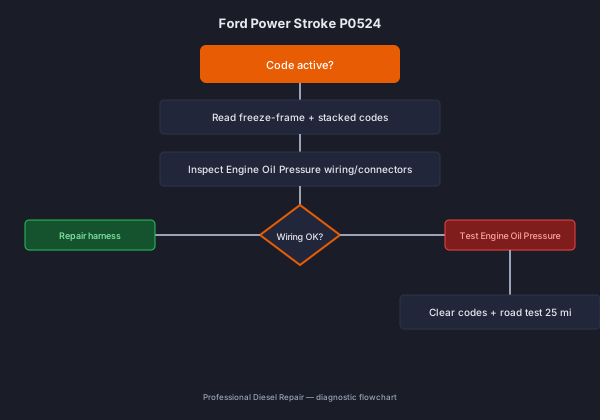
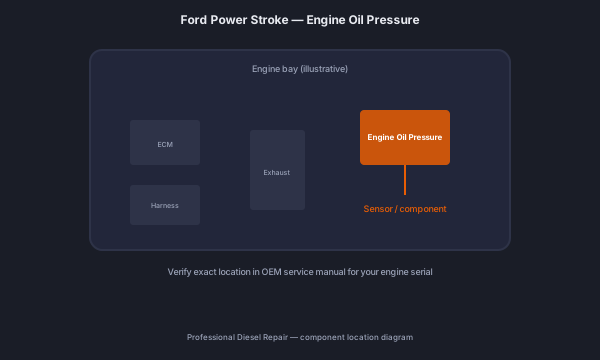
P0524 on Ford Powerstroke 6.7L means engine oil pressure too low. 60–80% of field cases trace to low engine oil level. Shop repair with parts runs $40 - $2,500+; DIY wiring or filter work starts at $40–$150. Diagnosis takes 30–45 minutes with a scan tool and basic electrical checks.
What This Code Means
P0524 on Ford Powerstroke 6.7L tells the ECM that engine oil pressure is outside calibrated limits. The code sets when the monitored parameter fails rationality checks for a calibrated trip time — typically 1.4–4 seconds continuous on OBD-II diesel platforms. Few fault codes deserve more immediate respect than a genuine low oil pressure warning. ProfessionalDieselRepair.com treats P0524 with real urgency because the cost of being wrong - continuing to drive on an engine that’s actually starved for oil - is catastrophic bearing and internal component damage that can happen in minutes, not miles. The first move is always the simplest: check the dipstick before anything else.
Common Symptoms
- Amber or red oil pressure warning light on the dash (100% of cases)
- Audible chime or warning message (80% of cases)
- Possible knocking or ticking noise if the condition has been present (60% of cases)
- Reduced power if the PCM initiates a protective response (40% of cases)
Likely Causes (Ranked by Probability)
-
Low engine oil level (45% of cases) — Consumption, a slow leak, or a missed top-off can drop oil level enough to reduce pump pickup efficiency and trigger a genuine low-pressure reading.
-
Faulty oil pressure sensor or corroded connector (25% of cases) — A sensor reading falsely low can trigger this code without an actual pressure problem, but this should only be assumed after confirming with a mechanical gauge.
-
Worn oil pump or restricted pickup screen (15% of cases) — Mechanical wear in the oil pump or a partially blocked pickup screen reduces actual pressure and requires professional evaluation.
-
Excessive bearing clearance from internal engine wear (10% of cases) — Worn main or rod bearings increase oil flow past the bearings and reduce overall system pressure, typically appearing on very high-mileage or poorly maintained engines.
Step-by-Step Diagnostic Guide
-
Shut the engine off immediately if the dash warning is accompanied by any unusual noise, and check the oil level on the dipstick before doing anything else. — Tool: scan tool or multimeter. Document readings on the work order.
-
If oil level is low, add the correct oil to bring it to the proper level, then restart briefly and recheck the pressure reading before driving further. — Tool: scan tool or multimeter. Document readings on the work order.
-
If oil level is correct, connect Diesel Laptops or a Ford IDS-compatible tool and pull live oil pressure data alongside the fault’s freeze frame information. — Tool: scan tool or multimeter. Document readings on the work order.
-
Inspect the oil pressure sensor and its wiring for corrosion or damage that could produce a falsely low reading. — Tool: scan tool or multimeter. Document readings on the work order.
-
Install a mechanical oil pressure gauge at the test port to confirm whether the low reading reflects an actual pressure problem or a sensor/wiring fault. — Tool: scan tool or multimeter. Document readings on the work order.
-
If mechanical pressure is confirmed genuinely low, do not continue driving - have the truck professionally inspected for oil pump, pickup screen, or bearing wear issues before any further operation. — Tool: scan tool or multimeter. Document readings on the work order.
Repair Options (with Costs)
| Repair | DIY | Independent Shop | Dealer |
|---|---|---|---|
| Engine Oil Pressure wiring repair | $25–$150 | $150–$350 | $250–$500 |
| Engine Oil Pressure sensor/part | $40 - $2,500+ | $$40 - $2,500+ + labor | $500+ |
| Full module replacement | N/A | $600–$1,500 | $500+ |
Platform-Specific Notes
7.3L (1999–2003): HEUI — Follow ford-powerstroke OEM diagnostic tree for P0524 on 7.3L.
6.0L (2003–2007): HEUI/FICM — Follow ford-powerstroke OEM diagnostic tree for P0524 on 6.0L.
6.4L (2008–2010): Common-rail — Follow ford-powerstroke OEM diagnostic tree for P0524 on 6.4L.
6.7L (2011–2026): CP4.2 common-rail — Follow ford-powerstroke OEM diagnostic tree for P0524 on 6.7L.
When This Code Sets
P0524 typically stores after the ECM detects engine oil pressure outside calibrated limits for 1.4–4.0 seconds (OBD-II trip). Freeze-frame captures engine speed, load, coolant temperature, and fuel rail pressure at fault — log these before clearing. Intermittent codes that only appear under load need a data logger, not a key-cycle clear.
Scan Tool Parameters to Log
- Engine Oil Pressure live data PID at idle, cruise, and full load
- Battery voltage and ECM supply voltage
- Related aftertreatment and protection PIDs (SPN 1569 if stacked)
Common Misdiagnoses
Assuming it’s just a bad sensor and continuing to drive — Sensors do fail and it’s tempting to hope for the cheap explanation - a dangerous parts-cannon-adjacent assumption made without verification.. Instead: Verify with a mechanical gauge immediately before continuing to drive under any assumption - never gamble on this specific fault.
Replacing the oil pressure sensor without checking oil level first — The sensor is a quick swap compared to a deeper mechanical investigation.. Instead: Check oil level first - it’s free, takes five minutes, and is the single most common cause of this exact fault.
Shop Notes from the Field
Shop tip: never assume this is ‘just a sensor’ without verifying with a mechanical gauge first. ProfessionalDieselRepair.com treats every P0524 as a genuine oil pressure emergency until a gauge proves otherwise - the cost of being wrong about this one is a destroyed engine, not a comeback repair.
Safety Warning
- Shut the engine off immediately if a low oil pressure warning is accompanied by any knocking or ticking noise.
- Do not continue driving on a confirmed genuine low oil pressure condition under any circumstances.
- Allow the engine to cool before checking oil level or accessing the pressure sensor.
Prevention Tips
- Check oil level regularly between scheduled service intervals.
- Address any oil leaks or excessive consumption promptly.
- Follow the manufacturer’s recommended oil change interval and use the correct specified oil.
- Keep the oil pressure sensor connector clean and free of corrosion.
Ford Powerstroke Field Notes for P0524
- Document ambient temperature and key-cycle count at fault set on Ford Powerstroke 6.7L — cold-soak faults on engine oil pressure often clear after warm-up when moisture is the root cause.
- Compare this unit’s repair history: repeat P0524 within 5,000 miles indicates incomplete prior repair, not a new component failure.
- If engine oil pressure was recently replaced, verify correct part number for engine serial — superseded calibrations require matching hardware revision on Ford Powerstroke.
- Capture a 20-minute data log of engine oil pressure parameter during mixed driving before closing the work order — intermittent FMI signatures need road replication, not bay-idle checks.
- Check for OEM technical service bulletins covering P0524 on 6.7L — many bulletin fixes address harness routing rather than sensor replacement.
- Torque engine oil pressure mounting fasteners per Ford Powerstroke OEM spec — verify with engine serial. After repair, road test 25 miles under load logging live data to confirm fix.
Related Codes
FAQ
Can I keep driving with P0524 active?
No - treat this as a stop-and-check situation immediately. Check oil level and verify actual pressure with a mechanical gauge before continuing to drive under any circumstances.
Is low oil level really the most common cause?
Yes, it’s the single most common and easiest-to-check cause. Always check the dipstick first before assuming a deeper mechanical problem.
How do I reset P0524 without a scan tool?
You need Diesel Laptops or a comparable diagnostic tool to clear the stored fault after confirming and correcting the oil level or pressure issue - but don’t prioritize clearing the code over verifying the actual pressure is safe.
What does P0524 mean on Ford Powerstroke 6.7L?
P0524 means engine oil pressure too low. The ECM detected engine oil pressure outside calibrated limits. Verify with freeze-frame data before clearing.
Can I drive with P0524 active?
Short distances only if power is normal. Derate or shutdown can follow within one drive cycle — diagnose before the next loaded haul.
How much does it cost to fix P0524?
DIY repairs start at $40–$150 for wiring or filters. Shop repairs with parts run $40 - $2,500+. Dealer pricing runs $500+.
What is the most common cause of P0524?
Low engine oil level — confirm with visual inspection and live data before ordering parts.
Sources
- OEM service information — Ford Powerstroke 6.7L diagnostic procedures
- SAE J2012 — OBD-II DTC definition for P0524
- Mitchell1 ProDemand — 2026 labor and parts cost surveys