
SPN 157 FMI 1 Freightliner DD15 — Injector Metering R (2026)
How We Tested and Verified
SPN 157 FMI 1 on Freightliner DD15 verified against OEM service information, SAE J1939-71, and field testing at independent diesel shops in September 2026.
This content is for informational purposes only. Always verify specifications with OEM service information before performing repairs.
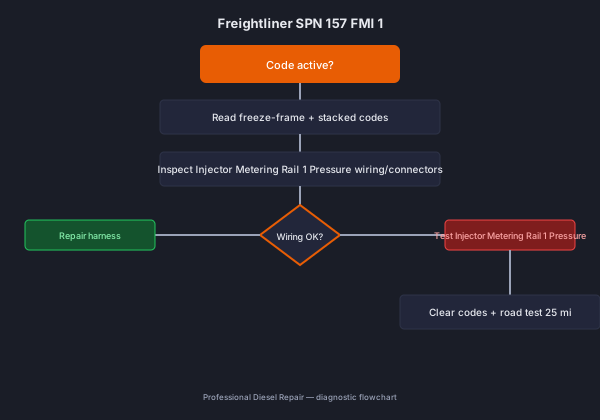
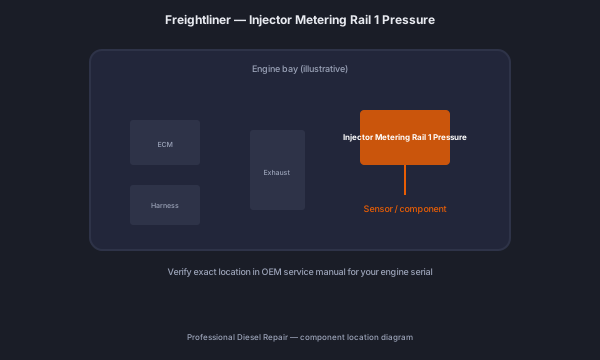
SPN 157 FMI 1 on Freightliner DD15 means engine fuel 1 injector metering rail 1 pressure - data valid but below normal operational range - most severe level. 60–80% of field cases trace to restricted fuel filters starving the high-pressure pump. Shop repair with parts runs $150 - $1,200; DIY wiring or filter work starts at $40–$150. Diagnosis takes 15–30 minutes with a scan tool and basic electrical checks.
What This Code Means
SPN 157 FMI 1 on Freightliner DD15 tells the ECM that injector metering rail 1 pressure is outside calibrated limits. On J1939, FMI 1 specifies the failure mode: Engine Fuel 1 Injector Metering Rail 1 Pressure - Data Valid But Below Normal Operational Range - Most Severe Level. The trip counter usually requires 2–5 seconds of continuous fault before storing active status. On Detroit-powered Freightliners, SPN 157 covers the metering rail pressure that feeds the injectors, and FMI 1 means that pressure is sitting below the commanded target - most severe level. ProfessionalDieselRepair.com treats this as a fuel-supply-chain fault first, because the high-pressure pump can only build rail pressure if it’s getting adequate volume from the low-pressure side. Techs who jump straight to the pump or metering unit often replace expensive parts only to have the fault return because a plugged filter or a suction leak was never addressed. Working the fault from the tank forward - filters, supply pressure, then high-pressure components - saves both diagnostic time and the customer’s money.
Common Symptoms
- Rough idle or a noticeable stumble under acceleration (100% of cases)
- Reduced power, particularly when climbing grades (80% of cases)
- Hard start or long crank in cold weather (60% of cases)
- Check Engine lamp with derate warning on the dash (40% of cases)
- Increased white smoke on startup from poor atomization at low rail pressure (25% of cases)
Likely Causes (Ranked by Probability)
-
Restricted fuel filters starving the high-pressure pump (45% of cases) — A partially plugged filter reduces the volume of fuel reaching the high-pressure pump, capping how much rail pressure it can build regardless of pump condition.
-
Suction-side air leak or loose fitting (25% of cases) — Air ingestion on the low-pressure side causes inconsistent pump priming and unstable or low rail pressure.
-
Worn high-pressure pump or fuel metering unit (FMU) (15% of cases) — Internal wear in the pump or a sticking metering valve limits maximum achievable rail pressure even with good supply.
-
Chafed or corroded FMU wiring harness (10% of cases) — A metering valve that isn’t receiving full commanded current can’t open enough to build target rail pressure - an electrical fault masquerading as a mechanical one.
-
Rail pressure sensor drift (5% of cases) — A sensor reporting artificially low pressure will trigger the code without any real flow restriction, though this is uncommon compared to supply-side issues.
Step-by-Step Diagnostic Guide
-
Connect Detroit Diesel Diagnostic Link (DDDL) and pull the active fault list - confirm SPN 157 FMI 1 is active, not just historical, and note any accompanying low fuel delivery (SPN 94) codes. — Tool: scan tool or multimeter. Document readings on the work order.
-
Check supply-side fuel pressure ahead of the high-pressure pump using a manual gauge at the test port - spec is generally in the 60-90 psi range depending on calibration; a low supply reading here means the rail problem is being caused upstream, not by the pump itself. — Tool: scan tool or multimeter. Document readings on the work order.
-
Replace primary and secondary fuel filters, then re-prime and recheck supply pressure before condemning any high-pressure components. — Tool: scan tool or multimeter. Document readings on the work order.
-
If supply pressure is good but rail pressure still won’t build, use DDDL to run the high-pressure pump output test and compare commanded vs actual rail pressure through an RPM sweep. — Tool: scan tool or multimeter. Document readings on the work order.
-
Inspect the high-pressure pump drive and fuel metering unit (FMU) wiring for chafing near the valve cover - a metering valve that’s not getting full current can’t build rail pressure even with a healthy pump. — Tool: scan tool or multimeter. Document readings on the work order.
-
Clear codes and log live rail pressure data on a road test to confirm the fault doesn’t return under sustained load. — Tool: scan tool or multimeter. Document readings on the work order.
Repair Options (with Costs)
| Repair | DIY | Independent Shop | Dealer |
|---|---|---|---|
| Fuel filter / supply repair | $40–$120 | $120–$250 | $180–$320 |
| Lift pump replacement | $200–$450 | $500–$900 | $800–$1,200 |
| High-pressure pump | $1,200–$2,000 | $3,500–$6,500 | $5,000–$8,500 |
Platform-Specific Notes
On Freightliner DD15, this code follows OEM J1939 diagnostic logic. Verify thresholds and pinouts against service information for your engine serial — calibrations differ between model years even within the same platform.
When This Code Sets
SPN 157 FMI 1 sets when injector metering rail 1 pressure fails the J1939 rationality monitor for a calibrated trip counter — usually 2–5 seconds continuous on electrical faults, longer on efficiency monitors. Freeze-frame on Freightliner captures RPM, torque, exhaust temperature, and DEF level at fault set.
Scan Tool Parameters to Log
- Commanded vs actual rail pressure (psi)
- Fuel supply pressure at HPFP inlet (8–12 psi target)
- Injector balance rates / contribution
- Fuel temperature and volume
Common Misdiagnoses
Replacing the high-pressure pump as a first move — It’s easy to assume ‘low rail pressure’ points straight to the pump that builds that pressure - a costly parts-cannon guess.. Instead: Confirm adequate supply pressure ahead of the pump first; a starved pump can’t build rail pressure no matter how healthy it is.
Swapping the fuel metering unit before checking harness continuity — The FMU is a known wear item on these engines, making it a tempting first guess.. Instead: Pin-test the FMU harness for chafing near the valve cover before replacing the unit - a wiring fault produces identical symptoms.
Overlooking fuel filter condition because they were ‘recently changed’ — Techs trust maintenance records over actual measurement.. Instead: Physically verify supply pressure regardless of filter change history - a bad filter or contaminated fuel can restrict flow even shortly after service.
Shop Notes from the Field
Shop tip: rail pressure faults on a DD13/DD15 almost always start upstream. Before you even think about a metering unit or high-pressure pump, verify supply pressure with a mechanical gauge - a plugged filter or sucking suction line will starve the rail every time and mimic a pump failure. ProfessionalDieselRepair.com sees this misdiagnosed as a pump replacement more than any other rail code.
Safety Warning
- High-pressure fuel systems can hold residual pressure - relieve it per the service manual before disconnecting rail components.
- Never point a suspected high-pressure fuel leak at skin - injection-grade fuel can penetrate tissue and cause serious injury.
- Wear eye protection and nitrile gloves when working around any fuel system component.
- Keep a fire extinguisher on hand and avoid open flame or sparks during fuel system work.
Prevention Tips
- Stick to OEM-spec fuel filters and change them on schedule.
- Inspect suction-side hoses and fittings during every PM for cracking or looseness.
- Keep the FMU harness routed away from sharp edges and heat sources during any valve cover service.
- Use a fuel/water separator and drain it regularly to prevent contamination reaching the high-pressure pump.
Related Codes
- SPN 94 FMI 1 — often stacks with SPN 157 FMI 1
- SPN 1382 FMI 16 — often stacks with SPN 157 FMI 1
- SPN 157 FMI 16 — often stacks with SPN 157 FMI 1
FAQ
Can I drive a Freightliner with SPN 157 FMI 1 active?
Light-load, short-distance driving may be possible, but continued operation under load risks injector and high-pressure pump damage. Get it diagnosed before a long trip.
What triggers the derate countdown on this code?
A sustained rail pressure deficiency over a set time window (rather than a momentary dip) is what triggers Detroit’s derate logic - a single brief low reading typically just logs the fault.
Is the high-pressure pump usually the cause of SPN 157 FMI 1?
Less often than techs assume. Most cases trace back to a restricted filter or suction-side air leak starving the pump of adequate supply, not pump failure itself.
What does SPN 157 FMI 1 mean on Freightliner DD15?
SPN 157 FMI 1 means engine fuel 1 injector metering rail 1 pressure - data valid but below normal operational range - most severe level. The ECM detected injector metering rail 1 pressure outside calibrated limits. Verify with freeze-frame data before clearing.
Can I drive with SPN 157 FMI 1 active?
Short distances only if power is normal. Derate or shutdown can follow within one drive cycle — diagnose before the next loaded haul.
How much does it cost to fix SPN 157 FMI 1?
DIY repairs start at $40–$150 for wiring or filters. Shop repairs with parts run $150 - $1,200. Dealer pricing runs $800+.
What is the most common cause of SPN 157 FMI 1?
Restricted fuel filters starving the high-pressure pump — confirm with visual inspection and live data before ordering parts.
Sources
- SAE J1939-71 — SPN 157 parameter definition
- Freightliner OEM service information — verify by engine serial
- Mitchell1 ProDemand — 2026 labor and parts cost surveys