
SPN 3246 FMI 3 Freightliner DD15 — DPF Restriction (2026)
How We Tested and Verified
SPN 3246 FMI 3 on Freightliner DD15 verified against OEM service information, SAE J1939-71, and field testing at independent diesel shops in September 2026.
This content is for informational purposes only. Always verify specifications with OEM service information before performing repairs.
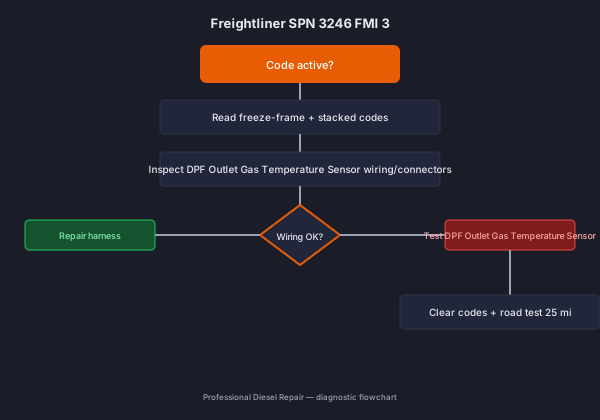
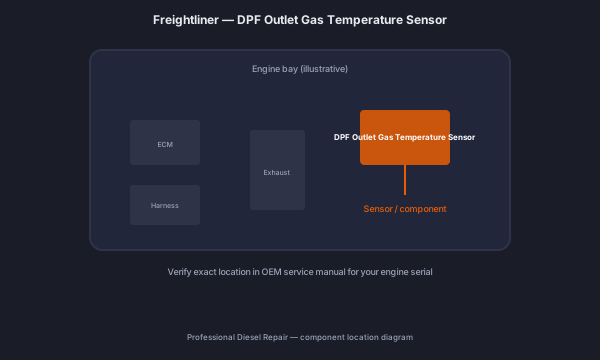
SPN 3246 FMI 3 on Freightliner DD15 means aftertreatment 1 diesel particulate filter outlet gas temperature - voltage above normal, or shorted to high source. 10–15% of field cases trace to sensor harness chafed against exhaust heat shield, shorted to 5v reference (electrical/sensor). Shop repair with parts runs $30–$250 (sensor $80–$200; wiring harness repair materials $30–$100); DIY wiring or filter work starts at $40–$150. Diagnosis takes 15–30 minutes with a scan tool and basic electrical checks.
What This Code Means
SPN 3246 FMI 3 on Freightliner DD15 tells the ECM that dpf outlet gas temperature sensor is outside calibrated limits. On J1939, FMI 3 specifies the failure mode: Aftertreatment 1 Diesel Particulate Filter Outlet Gas Temperature - Voltage Above Normal, Or Shorted To High Source. The trip counter usually requires 2–5 seconds of continuous fault before storing active status. Freightliner SPN 3246 FMI 3 is an aftertreatment instrumentation fault: the DPF outlet exhaust gas temperature sensor signal voltage is above the valid range, indicating a short to a high-voltage source somewhere in the signal circuit. On Cascadia trucks with DD13 or DD15 engines, the EGT sensors are critical feedback for active DPF regeneration—without an accurate outlet temperature, the ACM cannot confirm a regen is reaching target temperature (typically 500–600°C DOC outlet) and will halt regeneration. The sensor itself is rarely the problem with FMI 3; the wiring harness near the aftertreatment system heat shield is the most common failure point. ProfessionalDieselRepair.com documents the Cascadia aftertreatment harness routing and common chafe locations.
Common Symptoms
- Yellow check engine lamp with SPN 3246 FMI 3 active in DDDL (100% of cases)
- Active DPF regeneration may be inhibited or produce no temperature feedback (80% of cases)
- Additional aftertreatment-related codes may follow if regeneration is blocked for extended period (high DPF soot load) (60% of cases)
- Sensor reads maximum or out-of-range value in DDDL live data (typically full-scale voltage indicating a short to power) (40% of cases)
- No performance derate in most calibrations—this is an instrumentation fault, not a derate trigger (25% of cases)
Likely Causes (Ranked by Probability)
-
Sensor harness chafed against exhaust heat shield, shorted to 5V reference (electrical/sensor) (45% of cases) — The DPF outlet sensor harness runs along the aftertreatment canister where it is exposed to high heat and vibration. Insulation breakdown at metal edge contact points allows the signal wire to short to the adjacent 5V reference wire or sensor supply wire, pulling the signal above the valid range and triggering FMI 3.
-
Moisture or contamination in the sensor connector causing cross-pin short (electrical/sensor) (25% of cases) — Water intrusion or road grime contamination in the EGT sensor connector can create a conductive path between the 5V reference pin and the signal pin. This is most common on Cascadia trucks operating in heavy rain or high-pressure wash environments where the connector seal has degraded.
-
Wiring harness short to battery positive from adjacent circuit damage (electrical/sensor) (15% of cases) — Harness bundles that include both EGT signal wires and 12V or 24V power wires can short together if the harness protective sleeve deteriorates at a common routing clip. This type of short produces full battery voltage on the signal wire—far above the 5V valid range—and often damages the sensor’s internal circuit if left unresolved.
-
Failed DPF outlet temperature sensor with internal short to supply (electrical/sensor) (10% of cases) — In a minority of cases the sensor’s internal sensing element shorts to the 5V supply pin within the sensor body. This produces FMI 3 even with the harness in perfect condition. The connector unplug test distinguishes this from a harness fault—if FMI 3 persists with the sensor unplugged, the fault is external; if it changes to FMI 5 (open), the sensor was the source.
Step-by-Step Diagnostic Guide
-
1. Connect Detroit Diesel Diagnostic Link (DDDL) or Jaltest and confirm SPN 3246 FMI 3 is active. Check whether DPF soot load or related aftertreatment codes are also present from missed regenerations. — Tool: scan tool or multimeter. Document readings on the work order.
-
2. With the key on, engine off, navigate to live data and observe the DPF outlet temperature reading. An FMI 3 (voltage high / shorted to high) will show a reading at or near the maximum of the sensor range (typically 850–1,000°C on-screen or an invalid high value). — Tool: scan tool or multimeter. Document readings on the work order.
-
3. Locate the DPF outlet temperature sensor connector—on Cascadia DD13/DD15, it is on the DPF canister outlet pipe. With the key off, unplug the sensor connector. — Tool: scan tool or multimeter. Document readings on the work order.
-
4. Re-key the ignition to ON. If the fault clears or changes to FMI 5 (voltage low / open circuit) after unplugging the sensor, the sensor itself is good and the short to high source is in the wiring harness between the sensor and ECM. If fault remains FMI 3 with sensor disconnected, the ECM signal input or an adjacent wiring section remains shorted. — Tool: scan tool or multimeter. Document readings on the work order.
-
5. With the sensor disconnected, use a multimeter to measure voltage between the sensor signal wire and chassis ground. Voltage greater than 0.5V with the sensor unplugged confirms a wiring short to power (5V reference or battery positive from a chafed adjacent wire). — Tool: scan tool or multimeter. Document readings on the work order.
-
6. Trace the harness from the sensor connector toward the ACM/ECM, looking for chafe points where the harness contacts exhaust heat shields, metal edges, or adjacent wire looms. The DPF outlet sensor harness is routed near hot aftertreatment components and is prone to insulation damage. — Tool: scan tool or multimeter. Document readings on the work order.
-
7. Repair the harness short, reconnect the sensor, clear the fault in DDDL, and verify the temperature reading is plausible (ambient temperature at cold engine startup—typically 60–80°F). — Tool: scan tool or multimeter. Document readings on the work order.
Repair Options (with Costs)
| Repair | DIY | Independent Shop | Dealer |
|---|---|---|---|
| Forced regen / sensor | $0–$150 | $150–$350 | $250–$450 |
| Off-vehicle DPF clean | N/A | $350–$800 | $500–$900 |
| DPF replacement | $1,800–$2,800 | $3,500–$5,000 | $4,500–$6,500 |
Platform-Specific Notes
On Freightliner DD15, this code follows OEM J1939 diagnostic logic. Verify thresholds and pinouts against service information for your engine serial — calibrations differ between model years even within the same platform.
When This Code Sets
SPN 3246 FMI 3 sets when dpf outlet gas temperature sensor fails the J1939 rationality monitor for a calibrated trip counter — usually 2–5 seconds continuous on electrical faults, longer on efficiency monitors. Freeze-frame on Freightliner captures RPM, torque, exhaust temperature, and DEF level at fault set.
Scan Tool Parameters to Log
- Soot load % (target below 40% after regen)
- Ash load % (clean above 80%)
- DPF differential pressure (in H2O)
- Exhaust temp inlet/outlet
- Regen status and inhibit switches
Common Misdiagnoses
Replacing the DPF outlet temperature sensor as a parts-cannon move before doing the connector unplug test — EGT sensor codes are reflexively attributed to sensor failure. The sensor is a relatively low-cost part and is assumed to be the problem by default, even though FMI 3 specifically indicates a voltage-high condition that an externally-shorted sensor doesn’t cause.. Instead: Perform the 2-minute connector unplug test first: unplug the sensor with key on and observe whether FMI 3 changes to FMI 5. If it does, the sensor is fine—trace the harness for the short. Only replace the sensor if FMI 3 persists with the sensor disconnected.
Replacing the EGT sensor when the real fault is a damaged harness sleeve at a heat shield clip, and the new sensor immediately re-sets FMI 3 — The harness chafe point is sometimes hidden under the heat shield and not visible without removing the shield. A tech replaces the sensor without inspecting the harness, the new sensor shorts at the same location, and the code returns immediately.. Instead: Before installing a new sensor, trace the entire harness from the sensor connector to the first harness clip away from the DPF canister. Remove the heat shield if necessary to inspect the harness at the shield-contact point.
Assuming SPN 3246 FMI 3 means the DPF is overheating and the temperature is genuinely too high — FMI 16 means ‘data above normal range’ (temperature genuinely high); FMI 3 means ‘voltage above normal range’ (electrical short). Technicians unfamiliar with the FMI number convention sometimes confuse the two.. Instead: Remember: FMI 3 = voltage circuit fault (short to high); FMI 16 = valid data above threshold. These require completely different diagnostic paths. FMI 3 means check the wires, not the DPF temperature.
Shop Notes from the Field
FMI 3 on any EGT sensor is a wiring fault until the connector test proves otherwise—the sensor signal circuit is simple (5V reference, signal, and ground), and a shorted sensor produces FMI 4 (voltage low), not FMI 3. The unplug test described in the diagnostic steps is the fastest way to separate a wiring short from a sensor failure in under five minutes. On Cascadia models with the DD15, the DPF outlet sensor harness runs along the driver-side aftertreatment heat shield and frequently chafes at the point where the harness transitions from the flexible protective sleeve to the rigid clip on the canister. ProfessionalDieselRepair.com covers the DD15 aftertreatment harness inspection procedure with clip locations and heat shield separation technique.
Safety Warning
- Allow the aftertreatment system to cool below 150°F (60°C) before touching any EGT sensor or harness—the DPF canister and surrounding components retain heat for 30+ minutes after shutdown.
- Do not perform harness repair while the ignition is on—disconnect the battery negative cable before cutting, splicing, or reconnecting harness wires to prevent ECM damage from an accidental short.
- DPF regeneration temperatures can reach 1,200°F (650°C) internally—never perform an active regen test in a shop or enclosed area without proper exhaust ventilation.
Prevention Tips
- Inspect the aftertreatment sensor harness and heat shield routing at every 50,000-mile PM on Cascadia trucks—harness chafe is a maintenance item, not a random failure.
- After any aftertreatment system work (DPF cleaning, DOC replacement, EGT sensor swap), verify harness clips are correctly seated and heat shields are fully reinstalled.
- Apply heat-resistant harness protective sleeve to any section of the EGT sensor harness that runs within 2 inches of a heat shield or exhaust pipe.
- Clean and inspect all aftertreatment sensor connectors with electrical contact cleaner annually—connector degradation from moisture is the second most common FMI 3 cause after harness chafe.
Related Codes
- SPN 3246 FMI 4 — often stacks with SPN 3246 FMI 3
- SPN 3246 FMI 16 — often stacks with SPN 3246 FMI 3
- SPN 3242 FMI 3 — often stacks with SPN 3246 FMI 3
FAQ
What does FMI 3 mean on an EGT sensor code like SPN 3246?
FMI 3 means the sensor signal voltage is above the valid operating range—specifically ‘voltage above normal or shorted to a high source.’ It is an electrical fault in the signal circuit, not an indication that the exhaust gas temperature is genuinely elevated. The sensor or its wiring is producing a voltage higher than what any real temperature would generate.
How do I perform the connector unplug test for SPN 3246 FMI 3?
With the engine off but the key in the ON position, unplug the DPF outlet temperature sensor connector and observe the fault code status in DDDL or Jaltest. If FMI 3 changes to FMI 5 (voltage low/open circuit), the sensor was the source of the high voltage. If FMI 3 remains active with the sensor unplugged, the short is in the wiring harness or at the ECM connector—not the sensor itself.
Will SPN 3246 FMI 3 prevent DPF regeneration on a Freightliner?
Yes, typically. The ACM uses DPF outlet temperature as confirmation that an active regeneration reached the required temperature window (500–600°C at the DOC outlet minimum). Without a valid outlet temperature signal, the ACM cannot confirm regeneration completion and will inhibit or shorten future active regens. If left unresolved, this leads to elevated DPF soot load and eventually a soot-load derate.
What does SPN 3246 FMI 3 mean on Freightliner DD15?
SPN 3246 FMI 3 means aftertreatment 1 diesel particulate filter outlet gas temperature - voltage above normal, or shorted to high source. The ECM detected dpf outlet gas temperature sensor outside calibrated limits. Verify with freeze-frame data before clearing.
Can I drive with SPN 3246 FMI 3 active?
Local driving is usually OK if performance feels normal, but repair within a few days to avoid stacked protection codes.
How much does it cost to fix SPN 3246 FMI 3?
DIY repairs start at $40–$150 for wiring or filters. Shop repairs with parts run $30–$250 (sensor $80–$200; wiring harness repair materials $30–$100). Dealer pricing runs $150–$500.
What is the most common cause of SPN 3246 FMI 3?
Sensor harness chafed against exhaust heat shield, shorted to 5V reference (electrical/sensor) — confirm with visual inspection and live data before ordering parts.
Sources
- SAE J1939-71 — SPN 3246 parameter definition
- Freightliner OEM service information — verify by engine serial
- Mitchell1 ProDemand — 2026 labor and parts cost surveys