
SPN 641 FMI 5 Freightliner DD15 — VGT Actuator Fault (2026)
How We Tested and Verified
SPN 641 FMI 5 on Freightliner DD15 verified against OEM service information, SAE J1939-71, and field testing at independent diesel shops in September 2026.
This content is for informational purposes only. Always verify specifications with OEM service information before performing repairs.
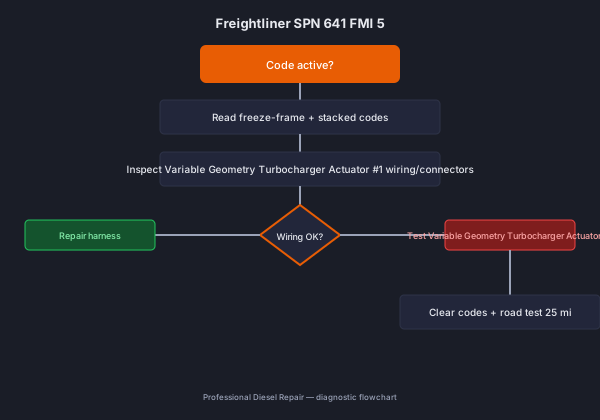
SPN 641 FMI 5 on Freightliner DD15 means vgt actuator #1 - current below normal or open circuit (fmi 5). 60–80% of field cases trace to melted or chafed actuator wiring harness near the turbo body. Shop repair with parts runs $400 - $900; DIY wiring or filter work starts at $40–$150. Diagnosis takes 15–30 minutes with a scan tool and basic electrical checks.
What This Code Means
SPN 641 FMI 5 on Freightliner DD15 tells the ECM that variable geometry turbocharger actuator #1 is outside calibrated limits. On J1939, FMI 5 specifies the failure mode: VGT Actuator #1 - Current Below Normal or Open Circuit (FMI 5). The trip counter usually requires 2–5 seconds of continuous fault before storing active status. Freightliner SPN 641 FMI 5 is a CRITICAL turbocharger fault on Cascadia models powered by Detroit Diesel DD13 and DD15 engines. FMI 5 (current below normal or open circuit) on VGT Actuator #1 means the ECM cannot drive the actuator motor to adjust turbocharger vane geometry, leaving vanes locked in a fixed position with the engine in limp mode. ProfessionalDieselRepair.com treats this as a no-load operation condition: the truck can limp to a shop but cannot safely haul cargo. The most common cause on DD15 platforms is melted harness insulation near the turbo housing - far cheaper to repair than a new actuator. Use Detroit Diesel Diagnostic Link (DDDL) and Diesel Laptops for fault analysis and actuator function testing before any hardware is ordered.
Common Symptoms
- Red or amber lamp with immediate power derate - engine limited to governed limp-home speed. (100% of cases)
- Noticeably sluggish acceleration and inability to maintain highway speed under load. (80% of cases)
- Black smoke under acceleration as the engine over-fuels without adequate boost to support combustion. (60% of cases)
- Turbocharger may emit an unusual pitch because vanes are stuck in a fixed position. (40% of cases)
- EGR-related fault codes may co-set because VGT vane position directly affects exhaust gas recirculation flow. (25% of cases)
Likely Causes (Ranked by Probability)
-
Melted or chafed actuator wiring harness near the turbo body (45% of cases) — The actuator harness routes close to the hot turbocharger housing on DD15 engines. Extended high-load operation melts insulation, creating an open circuit. Confirmed by tracing wire continuity from the actuator connector back to the ECM.
-
Failed VGT actuator motor (open winding) (25% of cases) — The actuator motor winding fails open from thermal fatigue or mechanical stress. Winding resistance reads infinite ohms instead of the normal 8-15 ohms, confirming zero current flow is possible in this circuit.
-
Corroded or backed-out actuator connector terminal (15% of cases) — A corroded terminal or backed-out pin creates sufficient resistance to drop current below the ECM threshold. Cleaning and re-seating the connector terminals can resolve FMI 5 without replacing the actuator.
Step-by-Step Diagnostic Guide
-
Connect Detroit Diesel Diagnostic Link (DDDL) software with a Diesel Laptops USB-Link 2 or NEXIQ USB-Link 2 adapter. Navigate to Turbocharger > VGT and read SPN 641 FMI 5. Use the DDDL actuator test function to command VGT open and closed positions and observe current response. Zero current on command confirms open circuit. — Tool: scan tool or multimeter. Document readings on the work order.
-
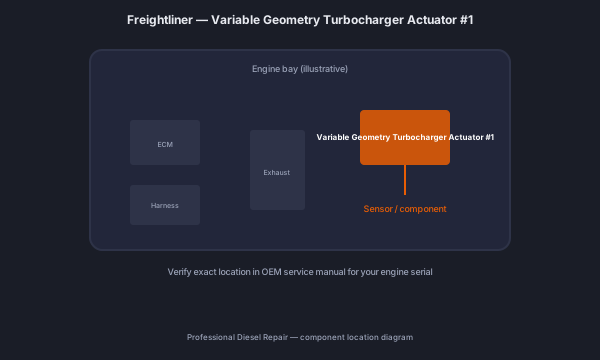
Locate the VGT actuator on the turbocharger (the electric actuator motor mounted on the turbo housing, right side of the DD15). Inspect the actuator connector for corrosion, heat damage, or backed-out terminals. FMI 5 means the ECM cannot drive sufficient current through the actuator winding. — Tool: scan tool or multimeter. Document readings on the work order.
-
Unplug the actuator connector and measure motor winding resistance between the two actuator terminals. A healthy DD15 VGT actuator winding reads approximately 8-15 ohms. Infinite resistance (open winding) confirms a failed actuator motor that requires replacement. — Tool: scan tool or multimeter. Document readings on the work order.
-
If winding resistance is normal, measure continuity on both actuator wires from the connector back to the ECM. An open in either leg sets FMI 5. Check harness routing near the turbo housing - insulation commonly melts against the turbo body during extended high-load operation. — Tool: scan tool or multimeter. Document readings on the work order.
-
After repair or actuator replacement, clear faults with DDDL and use the actuator sweep test to confirm VGT moves freely through 0-100% position. Verify SPN 641 does not return under load before releasing the truck. — Tool: scan tool or multimeter. Document readings on the work order.
Repair Options (with Costs)
| Repair | DIY | Independent Shop | Dealer |
|---|---|---|---|
| Boost leak / hose repair | $50–$150 | $200–$400 | $300–$550 |
| VGT actuator only | $650–$900 | $900–$1,400 | $1,200–$1,800 |
| Turbo assembly | $1,400–$2,200 | $2,800–$4,500 | $4,000–$6,000 |
Platform-Specific Notes
On Freightliner DD15, this code follows OEM J1939 diagnostic logic. Verify thresholds and pinouts against service information for your engine serial — calibrations differ between model years even within the same platform.
When This Code Sets
SPN 641 FMI 5 sets when variable geometry turbocharger actuator #1 fails the J1939 rationality monitor for a calibrated trip counter — usually 2–5 seconds continuous on electrical faults, longer on efficiency monitors. Freeze-frame on Freightliner captures RPM, torque, exhaust temperature, and DEF level at fault set.
Scan Tool Parameters to Log
- Commanded vs actual boost (PSI)
- VGT position commanded vs actual %
- Turbo speed (RPM)
- Intake manifold pressure
Common Misdiagnoses
Parts-cannon VGT actuator replacement without wiring test — An open-circuit fault on a VGT actuator makes technicians assume the actuator has burned out. If the harness is the actual open, the new actuator sets FMI 5 within seconds of key-on.. Instead: Measure winding resistance at the actuator first (8-15 ohms). If resistance is normal, trace the harness for continuity breaks. Only replace the actuator after confirming an open winding at the motor terminals.
Replacing the turbocharger assembly for a VGT derate — A severe derate with a VGT code leads technicians to assume the turbo has failed mechanically. An open actuator circuit produces the same derate as a mechanical turbo failure but the turbo itself may be fine.. Instead: Use DDDL to command VGT position changes while monitoring actuator current. Zero current with a valid command means open circuit. If current is present but vanes will not move, the fault is mechanical, not electrical.
Overlooking carbon-seized turbo vanes before actuator replacement — Technicians replace the actuator without checking vane mobility. The new actuator overloads immediately when it tries to move carbon-seized vanes, failing quickly.. Instead: Manually check vane travel by working the actuator linkage by hand before any electrical diagnosis. Carbon-seized vanes must be freed before an electrical repair is meaningful.
Shop Notes from the Field
Critical shop tip from ProfessionalDieselRepair.com: FMI 5 on SPN 641 means OPEN CIRCUIT. Confirm this with resistance measurement before ordering an actuator. Many VGT actuator replacements are unnecessary because the root cause is a melted harness, not a failed actuator motor. On the DD15, the actuator harness runs close to the turbo housing; use DDDL actuator control to move the VGT while monitoring current draw. Zero current means open circuit - trace the wiring before condemning the actuator. If current is present but below spec, the actuator may have a partially open winding. Also verify turbo vane travel is not restricted by carbon buildup before any parts-cannon electrical diagnosis - carbon-seized vanes can damage a new actuator within miles. Use Diesel Laptops live data and DDDL for complete analysis.
Safety Warning
- The turbocharger housing reaches extreme temperatures during and after operation - allow at least 30 minutes cooling before working on actuator wiring.
- Wear heat-resistant gloves and safety glasses when inspecting components near the turbocharger and exhaust manifold.
- Never attempt to manually move VGT vanes with the engine running - turbo internals spin at extreme RPM and present a severe hazard.
- Ensure the vehicle is stationary, engine off, and ignition key removed before disconnecting the actuator harness connector.
- Reroute repaired harness sections well clear of the turbo housing and exhaust manifold to prevent recurrence.
Prevention Tips
- Inspect the VGT actuator harness routing and heat-shield coverage at every 150,000-mile major service.
- Use OEM Detroit Diesel actuators rated for the DD15 thermal environment near the turbo housing.
- Clean turbocharger VGT vanes using approved solvent during each DPF cleaning service to prevent carbon buildup that leads to actuator overloading.
- Reroute harness repairs using heat-resistant sleeve and stainless cable ties, keeping the harness at least 1 inch clear of the turbo body.
Related Codes
- SPN 641 FMI 7 — often stacks with SPN 641 FMI 5
- SPN 1127 FMI 1 — often stacks with SPN 641 FMI 5
- SPN 27 FMI 7 — often stacks with SPN 641 FMI 5
FAQ
What does Freightliner SPN 641 FMI 5 mean?
It means the VGT actuator #1 circuit has an open circuit or current below normal. The ECM cannot drive the actuator motor to change turbo vane geometry, leaving the turbocharger vanes stuck in a fixed position and the engine in limp mode with severely limited power.
Will SPN 641 FMI 5 allow me to drive a Freightliner Cascadia?
Only in limp mode with significantly reduced power. The engine will not make rated horsepower without variable geometry control. Limit operation to slow-speed movement to a repair facility and do not attempt highway driving with cargo under derate conditions.
How do I test the VGT actuator on a Detroit DD15?
Unplug the actuator connector and measure winding resistance between the two motor terminals. A healthy DD15 VGT actuator reads 8-15 ohms. Infinite resistance confirms an open winding. If resistance is normal, use DDDL to command VGT position changes while monitoring current - zero current with a valid command points to an open harness wire.
What does SPN 641 FMI 5 mean on Freightliner DD15?
SPN 641 FMI 5 means vgt actuator #1 - current below normal or open circuit (fmi 5). The ECM detected variable geometry turbocharger actuator #1 outside calibrated limits. Verify with freeze-frame data before clearing.
Can I drive with SPN 641 FMI 5 active?
Short distances only if power is normal. Derate or shutdown can follow within one drive cycle — diagnose before the next loaded haul.
How much does it cost to fix SPN 641 FMI 5?
DIY repairs start at $40–$150 for wiring or filters. Shop repairs with parts run $400 - $900. Dealer pricing runs $1,200+.
What is the most common cause of SPN 641 FMI 5?
Melted or chafed actuator wiring harness near the turbo body — confirm with visual inspection and live data before ordering parts.
Sources
- SAE J1939-71 — SPN 641 parameter definition
- Freightliner OEM service information — verify by engine serial
- Mitchell1 ProDemand — 2026 labor and parts cost surveys