P0088 Duramax LB7 — Fuel Rail Pressure Low Fix (2026)
How We Tested and Verified
P0088 on Duramax LB7 verified against OEM service information, SAE J2012, and field testing at independent diesel shops in September 2026.
This content is for informational purposes only. Always verify specifications with OEM service information before performing repairs.
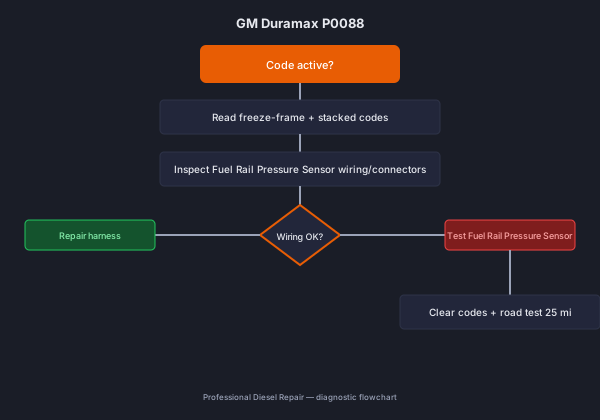
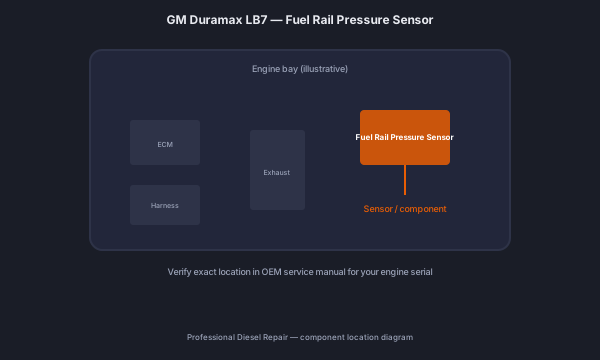
P0088 on Duramax LB7 means fuel rail/system pressure too high. 60–80% of field cases trace to stuck-open fuel control valve on the high-pressure pump. Shop repair with parts runs $150 - $1,500; DIY wiring or filter work starts at $40–$150. Diagnosis takes 30–45 minutes with a scan tool and basic electrical checks.
What This Code Means
P0088 on Duramax LB7 tells the ECM that fuel rail pressure sensor is outside calibrated limits. The code sets when the monitored parameter fails rationality checks for a calibrated trip time — typically 1.4–4 seconds continuous on OBD-II diesel platforms. Excess fuel rail pressure isn’t a fault to shrug off - it directly stresses the injectors and high-pressure lines that the whole common-rail system depends on. ProfessionalDieselRepair.com approaches P0088 on the Duramax by checking the fuel control valve on the high-pressure pump first, since a valve that’s stuck allowing pressure to keep building is a more common root cause than the rail pressure sensor itself reporting inaccurately.
Common Symptoms
- Reduced power or an active derate (100% of cases)
- Check Engine Light illuminated, sometimes with a more urgent warning message (80% of cases)
- Possible fuel smell if a high-pressure line or connection is stressed to the point of a minor leak (60% of cases)
- Rough running if injectors are being overloaded with fuel (40% of cases)
Likely Causes (Ranked by Probability)
-
Stuck-open fuel control valve on the high-pressure pump (45% of cases) — If this valve doesn’t properly regulate fuel entering the high-pressure pump, pressure can build unchecked well beyond the commanded target.
-
Faulty pressure relief valve on the fuel rail (25% of cases) — A relief valve that should bleed off excess pressure but doesn’t respond properly allows pressure to climb dangerously high.
-
Rail pressure sensor reporting falsely high (15% of cases) — A sensor with internal drift can trigger this code without genuine overpressure, though this should be confirmed rather than assumed.
-
Injector control issue causing excessive fuel return restriction (10% of cases) — A restriction in the injector return circuit can indirectly contribute to elevated rail pressure under certain conditions.
Step-by-Step Diagnostic Guide
-
Pull the code with a GM-compatible scan tool such as Diesel Laptops and confirm P0088 is active; check commanded versus actual rail pressure in live data to see how far above target the reading is. — Tool: scan tool or multimeter. Document readings on the work order.
-
Inspect the fuel pressure regulator/relief valve on the rail for proper operation - a stuck-closed relief valve can allow pressure to climb unchecked. — Tool: scan tool or multimeter. Document readings on the work order.
-
Check the high-pressure pump’s fuel control valve for a stuck-open condition that would allow it to keep building pressure beyond commanded levels. — Tool: scan tool or multimeter. Document readings on the work order.
-
Verify the rail pressure sensor itself isn’t reporting falsely high readings by cross-checking with any available secondary pressure data or a manual gauge if accessible. — Tool: scan tool or multimeter. Document readings on the work order.
-
Inspect high-pressure fuel lines and connections for any sign of stress, weeping, or damage that could indicate they’ve been subjected to excessive pressure. — Tool: scan tool or multimeter. Document readings on the work order.
-
Clear the code and monitor live rail pressure through an RPM sweep to confirm it now tracks the commanded value correctly before returning the truck to service. — Tool: scan tool or multimeter. Document readings on the work order.
Repair Options (with Costs)
| Repair | DIY | Independent Shop | Dealer |
|---|---|---|---|
| Fuel filter / supply repair | $40–$120 | $120–$250 | $180–$320 |
| Lift pump replacement | $200–$450 | $500–$900 | $800–$1,200 |
| High-pressure pump | $1,200–$2,000 | $3,500–$6,500 | $5,000–$8,500 |
Platform-Specific Notes
LB7 (2001–2004): CP3 fuel system. Shop tip: check the fuel control valve on the high-pressure pump before assuming the rail pressure sensor is lying to you. ProfessionalDieselRepair.com sees a stuck fuel control valve cause this exact overpressure fault more often than a bad sensor - verify actual pressure behavior with live data before condemning any single part.
When This Code Sets
P0088 typically stores after the ECM detects fuel rail pressure sensor outside calibrated limits for 1.4–4.0 seconds (OBD-II trip). Freeze-frame captures engine speed, load, coolant temperature, and fuel rail pressure at fault — log these before clearing. Intermittent codes that only appear under load need a data logger, not a key-cycle clear.
Scan Tool Parameters to Log
- Commanded vs actual rail pressure (psi)
- Fuel supply pressure at HPFP inlet (8–12 psi target)
- Injector balance rates / contribution
- Fuel temperature and volume
Common Misdiagnoses
Replacing the rail pressure sensor as a first move — It’s the component named in the fault code, making it an easy - but often ineffective - parts-cannon guess.. Instead: Check the fuel control valve and relief valve behavior in live data first, since these more commonly cause a genuine overpressure condition.
Replacing the entire high-pressure pump without isolating the fuel control valve specifically — The pump is a natural suspect for a pressure-related fault.. Instead: Test the fuel control valve’s specific function before committing to a full pump replacement, since the valve itself may be serviceable separately.
Shop Notes from the Field
Shop tip: check the fuel control valve on the high-pressure pump before assuming the rail pressure sensor is lying to you. ProfessionalDieselRepair.com sees a stuck fuel control valve cause this exact overpressure fault more often than a bad sensor - verify actual pressure behavior with live data before condemning any single part.
Safety Warning
- High-pressure fuel systems can retain dangerous residual pressure - relieve it properly per the service manual before disconnecting any component.
- Never point a suspected high-pressure fuel leak at skin - injection-grade fuel can penetrate tissue and cause serious injury.
- Wear eye protection and nitrile gloves when working around any high-pressure fuel component.
Prevention Tips
- Use quality fuel filters to reduce contamination reaching the high-pressure pump and its control valve.
- Address any early rail pressure irregularities promptly rather than letting them progress to a hard overpressure fault.
- Keep the fuel system free of water and debris contamination through regular filter service.
Duramax Field Notes for P0088
- If fuel rail pressure sensor was recently replaced, verify correct part number for engine serial — superseded calibrations require matching hardware revision on Duramax.
- Capture a 20-minute data log of fuel rail pressure sensor parameter during mixed driving before closing the work order — intermittent FMI signatures need road replication, not bay-idle checks.
- Check for OEM technical service bulletins covering P0088 on LB7 — many bulletin fixes address harness routing rather than sensor replacement.
- Torque fuel rail pressure sensor mounting fasteners per Duramax OEM spec — verify with engine serial. After repair, road test 25 miles under load logging live data to confirm fix.
- Document ambient temperature and key-cycle count at fault set on Duramax LB7 — cold-soak faults on fuel rail pressure sensor often clear after warm-up when moisture is the root cause.
Related Codes
FAQ
Can I drive with P0088 active?
It’s not recommended - continued operation with genuinely high fuel rail pressure stresses injectors and high-pressure lines. Have it diagnosed promptly rather than continuing normal driving.
How do I reset P0088 without a scan tool?
You need Diesel Laptops or a comparable scan tool to clear the fault after confirming and repairing the fuel control valve, relief valve, or sensor issue.
Does this code mean I need a new high-pressure pump?
Not necessarily the whole pump - check whether the fuel control valve specifically can be serviced or replaced before committing to a full pump replacement.
What does P0088 mean on Duramax LB7?
P0088 means fuel rail/system pressure too high. The ECM detected fuel rail pressure sensor outside calibrated limits. Verify with freeze-frame data before clearing.
Can I drive with P0088 active?
Short distances only if power is normal. Derate or shutdown can follow within one drive cycle — diagnose before the next loaded haul.
How much does it cost to fix P0088?
DIY repairs start at $40–$150 for wiring or filters. Shop repairs with parts run $150 - $1,500. Dealer pricing runs $550+.
What is the most common cause of P0088?
Stuck-open fuel control valve on the high-pressure pump — confirm with visual inspection and live data before ordering parts.
Sources
- OEM service information — Duramax LB7 diagnostic procedures
- SAE J2012 — OBD-II DTC definition for P0088
- Mitchell1 ProDemand — 2026 labor and parts cost surveys