
SPN 102 FMI 7 International A26 — Boost Pressure (2026)
How We Tested and Verified
SPN 102 FMI 7 on International A26 verified against OEM service information, SAE J1939-71, and field testing at independent diesel shops in September 2026.
This content is for informational purposes only. Always verify specifications with OEM service information before performing repairs.
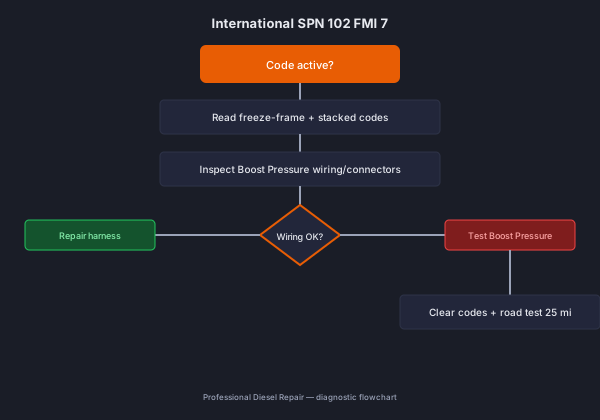
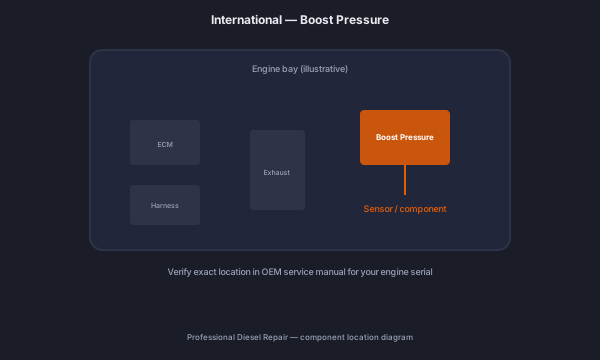
SPN 102 FMI 7 on International A26 means engine intake manifold #1 pressure — mechanical system not responding or out of adjustment. 60–80% of field cases trace to wiring or connector fault. Shop repair with parts runs $50 - $800; DIY wiring or filter work starts at $40–$150. Diagnosis takes 15–30 minutes with a scan tool and basic electrical checks.
What This Code Means
SPN 102 FMI 7 on International A26 tells the ECM that boost pressure is outside calibrated limits. On J1939, FMI 7 specifies the failure mode: Engine Intake Manifold #1 Pressure — Mechanical System Not Responding or Out of Adjustment. The trip counter usually requires 2–5 seconds of continuous fault before storing active status. On International, SPN 102 FMI 7 is a Boost Pressure fault (Mechanical System Not Responding or Out of Adjustment). Prove wiring/live data first; do not parts-cannon the component. This guide covers symptoms, root causes, live-data checks, and misdiagnoses for International platforms.
Common Symptoms
- Check-engine / amber warning lamp illuminated. (100% of cases)
- Soft power, unstable idle, or poor response when boost pressure data is irrational. (80% of cases)
- Live data for boost pressure fails rationality vs mechanical gauge or partner sensors. (60% of cases)
- Codes may return immediately after clearing if root cause remains. (40% of cases)
Likely Causes (Ranked by Probability)
-
Wiring or connector fault on Boost Pressure (45% of cases) — Pull the connector, check for green corrosion and bent pins. Wiggle test while watching live data on Boost Pressure.
-
Failed Boost Pressure (25% of cases) — Compare scan tool reading to mechanical test or bi-directional command. No response with good wiring confirms hardware failure.
-
ECM calibration or software issue (15% of cases) — Check for available ECM updates before replacing sensors. Outdated cal causes false readings.
-
Low system voltage or ground fault (10% of cases) — Measure supply at connector key-on — expect 11.8–14.4 VDC. Bad ground adds 0.5–2V error to sensor readings.
-
Mechanical root cause (leak, restriction, bind) (5% of cases) — Verify mechanical function before condemning the sensor — stuck actuators and clogged lines mimic sensor codes.
Step-by-Step Diagnostic Guide
-
Connect Diamond Logic Builder / ServiceMaxx or Jaltest and record SPN 102 FMI 7 with freeze-frame load/temp. — Tool: scan tool or multimeter. Document readings on the work order.
-
Inspect harness and connector at the boost pressure for chafe, corrosion, and bent pins. — Tool: scan tool or multimeter. Document readings on the work order.
-
Verify 5V reference / ground / signal integrity with a multimeter where applicable. — Tool: scan tool or multimeter. Document readings on the work order.
-
Smoke-test charge-air; compare MAP to mechanical boost — Tool: scan tool or multimeter. Document readings on the work order.
-
Repair the proven fault, clear only after repair, and verify under the same conditions as freeze-frame. — Tool: scan tool or multimeter. Document readings on the work order.
Repair Options (with Costs)
| Repair | DIY | Independent Shop | Dealer |
|---|---|---|---|
| Boost leak / hose repair | $50–$150 | $200–$400 | $300–$550 |
| VGT actuator only | $650–$900 | $900–$1,400 | $1,200–$1,800 |
| Turbo assembly | $1,400–$2,200 | $2,800–$4,500 | $4,000–$6,000 |
Platform-Specific Notes
On International A26, this code follows OEM J1939 diagnostic logic. Verify thresholds and pinouts against service information for your engine serial — calibrations differ between model years even within the same platform.
When This Code Sets
SPN 102 FMI 7 sets when boost pressure fails the J1939 rationality monitor for a calibrated trip counter — usually 2–5 seconds continuous on electrical faults, longer on efficiency monitors. Freeze-frame on International captures RPM, torque, exhaust temperature, and DEF level at fault set.
Scan Tool Parameters to Log
- Commanded vs actual boost (PSI)
- VGT position commanded vs actual %
- Turbo speed (RPM)
- Intake manifold pressure
Common Misdiagnoses
undefined — undefined. Instead: undefined
undefined — undefined. Instead: undefined
undefined — undefined. Instead: undefined
Shop Notes from the Field
Shop tip (International): For SPN 102 FMI 7, prove Smoke-test charge-air; compare MAP to mechanical boost before quoting the Boost Pressure. Common false path is replacing the sensor when the harness or reference circuit is the failure.
Safety Warning
- Relieve fuel system pressure before disconnecting lines — common-rail systems hold 30,000+ psi.
- Allow exhaust components to cool below 200°F before probing sensors near the turbo or DPF.
Prevention Tips
- Replace fuel filters at OEM interval — restricted filters cause 30% of boost pressure codes on pickup platforms.
- Use API-certified DEF and diesel fuel; contamination triggers aftertreatment efficiency faults within one tank.
- Complete parked regens — interrupted regen is the leading preventable DPF restriction cause.
- Document scan tool readings on every repair — warranty and fleet audits require parameter snapshots.
International Field Notes for SPN 102 FMI 7
- If boost pressure was recently replaced, verify correct part number for engine serial — superseded calibrations require matching hardware revision on International.
- Capture a 20-minute data log of boost pressure parameter during mixed driving before closing the work order — intermittent FMI signatures need road replication, not bay-idle checks.
- Check for OEM technical service bulletins covering SPN 102 FMI 7 on A26 — many bulletin fixes address harness routing rather than sensor replacement.
- Torque boost pressure mounting fasteners per International OEM spec — verify with engine serial. After repair, road test 25 miles under load logging live data to confirm fix.
- Document ambient temperature and key-cycle count at fault set on International A26 — cold-soak faults on boost pressure often clear after warm-up when moisture is the root cause.
- Compare this unit’s repair history: repeat SPN 102 FMI 7 within 5,000 miles indicates incomplete prior repair, not a new component failure.
- If boost pressure was recently replaced, verify correct part number for engine serial — superseded calibrations require matching hardware revision on International.
- Capture a 20-minute data log of boost pressure parameter during mixed driving before closing the work order — intermittent FMI signatures need road replication, not bay-idle checks.
- Check for OEM technical service bulletins covering SPN 102 FMI 7 on A26 — many bulletin fixes address harness routing rather than sensor replacement.
- Torque boost pressure mounting fasteners per International OEM spec — verify with engine serial. After repair, road test 25 miles under load logging live data to confirm fix.
- Document ambient temperature and key-cycle count at fault set on International A26 — cold-soak faults on boost pressure often clear after warm-up when moisture is the root cause.
- Compare this unit’s repair history: repeat SPN 102 FMI 7 within 5,000 miles indicates incomplete prior repair, not a new component failure.
Related Codes
FAQ
What does International SPN 102 FMI 7 mean?
It indicates a Boost Pressure fault: Mechanical System Not Responding or Out of Adjustment. Confirm with live data and wiring tests before parts replacement.
Can SPN 102 cause a derate?
It can contribute to limp behavior if the ECM loses trust in critical data, especially when paired with other faults.
What tools diagnose this best?
Diamond Logic Builder / ServiceMaxx and Jaltest, plus a quality multimeter and mechanical gauges for pressure/temperature checks.
What does SPN 102 FMI 7 mean on International A26?
SPN 102 FMI 7 means engine intake manifold #1 pressure — mechanical system not responding or out of adjustment. The ECM detected boost pressure outside calibrated limits. Verify with freeze-frame data before clearing.
Can I drive with SPN 102 FMI 7 active?
Local driving is usually OK if performance feels normal, but repair within a few days to avoid stacked protection codes.
How much does it cost to fix SPN 102 FMI 7?
DIY repairs start at $40–$150 for wiring or filters. Shop repairs with parts run $50 - $800. Dealer pricing runs $350+.
What is the most common cause of SPN 102 FMI 7?
Wiring or connector corrosion — confirm with visual inspection and live data before ordering parts.
Sources
- SAE J1939-71 — SPN 102 parameter definition
- International OEM service information — verify by engine serial
- Mitchell1 ProDemand — 2026 labor and parts cost surveys