
SPN 8064 FMI 12 International A26 — Crankshaft Positi (2026)
How We Tested and Verified
SPN 8064 FMI 12 on International A26 verified against OEM service information, SAE J1939-71, and field testing at independent diesel shops in September 2026.
This content is for informational purposes only. Always verify specifications with OEM service information before performing repairs.
SPN 8064 FMI 12 on International A26 means engine crankshaft position - bad intelligent device or component (signal inactive). 60–80% of field cases trace to corroded or damaged ckp sensor connector. Shop repair with parts runs $80 - $400; DIY wiring or filter work starts at $40–$150. Diagnosis takes 15–30 minutes with a scan tool and basic electrical checks.
What This Code Means
SPN 8064 FMI 12 on International A26 tells the ECM that crankshaft position sensor (ckp) is outside calibrated limits. On J1939, FMI 12 specifies the failure mode: Engine Crankshaft Position - Bad Intelligent Device or Component (Signal Inactive). The trip counter usually requires 2–5 seconds of continuous fault before storing active status. ProfessionalDieselRepair.com treats this A26 no-start pattern as a connector-first diagnosis - a surprising number of these turn out to be a pushed-out pin rather than an actual failed sensor.
Common Symptoms
- Engine cranks normally but will not start (100% of cases)
- No RPM reading on the dash during cranking (80% of cases)
- Check engine light illuminated with the ignition on before cranking (60% of cases)
- Possible history of intermittent stalling before the sensor failed completely (40% of cases)
Likely Causes (Ranked by Probability)
-
Corroded or damaged CKP sensor connector (45% of cases) — An electrical/wiring fault, not a sensor failure - a pushed-out pin or corrosion can completely interrupt the signal path even with a healthy sensor.
-
Sensor worked loose from its mounting bore (25% of cases) — A mechanical installation issue where vibration or improper reinstallation after service increased the air gap beyond the sensor’s detection range.
-
Internally failed (open) CKP sensor (15% of cases) — A genuine sensor hardware failure confirmed by an out-of-spec resistance reading.
-
Damaged crankshaft target wheel (10% of cases) — A mechanical engine component failure where the toothed wheel the sensor reads has physical damage, which is a more involved repair than the sensor itself.
Step-by-Step Diagnostic Guide
-
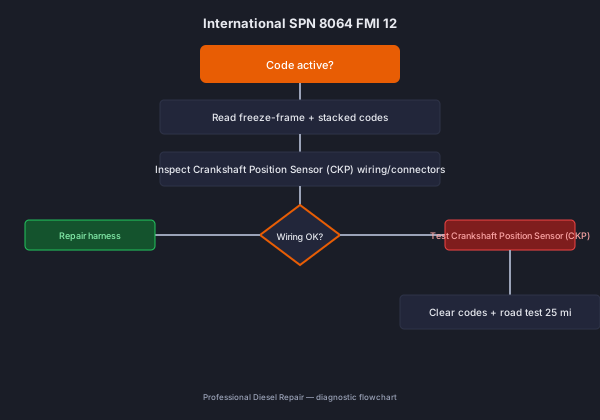
Confirm the no-start by watching for an RPM signal on the dash cluster while cranking - zero RPM confirms the ECM isn’t seeing crank position at all. — Tool: scan tool or multimeter. Document readings on the work order.
-
Connect a scan tool and check for SPN 8064 as an active fault along with a related camshaft position (SPN 8021) sync fault, since these two often appear together. — Tool: scan tool or multimeter. Document readings on the work order.
-
Inspect the CKP sensor connector for corrosion, a broken locking tab, or a pushed-out pin, which are common causes of a totally lost signal versus a degraded one. — Tool: scan tool or multimeter. Document readings on the work order.
-
Check the sensor’s air gap to the crankshaft target wheel, since a sensor that’s worked loose or been improperly reinstalled after service can lose signal entirely. — Tool: scan tool or multimeter. Document readings on the work order.
-
If the connector and air gap check out, test the sensor’s resistance value against OEM specification, since an internally open sensor produces this exact fault. — Tool: scan tool or multimeter. Document readings on the work order.
Repair Options (with Costs)
| Repair | DIY | Independent Shop | Dealer |
|---|---|---|---|
| Crankshaft Position Sensor (CKP) wiring repair | $25–$150 | $150–$350 | $250–$500 |
| Crankshaft Position Sensor (CKP) sensor/part | $80 - $400 | $$80 - $400 + labor | $450+ |
| Full module replacement | N/A | $600–$1,500 | $450+ |
Platform-Specific Notes
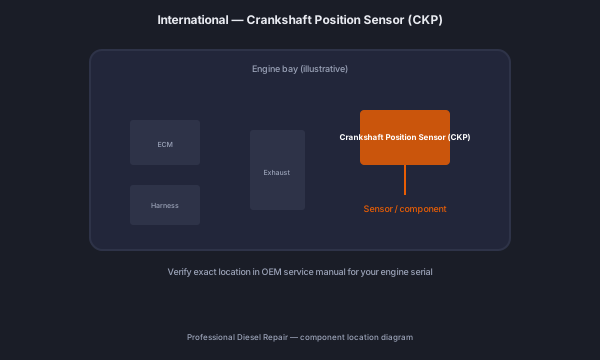
On International A26, this code follows OEM J1939 diagnostic logic. Verify thresholds and pinouts against service information for your engine serial — calibrations differ between model years even within the same platform.
When This Code Sets
SPN 8064 FMI 12 sets when crankshaft position sensor (ckp) fails the J1939 rationality monitor for a calibrated trip counter — usually 2–5 seconds continuous on electrical faults, longer on efficiency monitors. Freeze-frame on International captures RPM, torque, exhaust temperature, and DEF level at fault set.
Scan Tool Parameters to Log
- Crankshaft Position Sensor (CKP) live data PID at idle, cruise, and full load
- Battery voltage and ECM supply voltage
- Related aftertreatment and protection PIDs (SPN 1569 if stacked)
Common Misdiagnoses
Replacing the CKP sensor without checking the connector and mounting first — A no-start with a named sensor fault feels like an obvious swap.. Instead: This is a parts-cannon move on a fault that’s frequently a connector or mounting issue - check those first since they’re far cheaper to fix.
Overlooking a related camshaft position sync fault that points to the real issue — Techs focus on the most prominent fault code and miss companion codes.. Instead: Always pull the full fault list - a camshaft sync fault alongside this one can redirect the diagnosis toward a timing component issue.
Shop Notes from the Field
ProfessionalDieselRepair.com note: don’t assume a CKP no-start always means a bad sensor. Check the connector and mounting first - a pushed-out pin or a sensor that’s backed out of its bore from vibration is a common, cheap fix compared to a full sensor replacement.
Safety Warning
- Disconnect the battery before working on crankshaft sensor wiring to avoid accidental cranking.
- Be cautious of hot exhaust components near the sensor location if the engine was recently run.
Prevention Tips
- Inspect CKP sensor connectors for corrosion at scheduled PM intervals.
- Verify proper sensor air gap any time it’s removed for service.
- Address any intermittent stalling promptly, since it can be an early warning of a developing CKP signal problem.
International Field Notes for SPN 8064 FMI 12
- Compare this unit’s repair history: repeat SPN 8064 FMI 12 within 5,000 miles indicates incomplete prior repair, not a new component failure.
- If crankshaft position sensor (ckp) was recently replaced, verify correct part number for engine serial — superseded calibrations require matching hardware revision on International.
- Capture a 20-minute data log of crankshaft position sensor (ckp) parameter during mixed driving before closing the work order — intermittent FMI signatures need road replication, not bay-idle checks.
- Check for OEM technical service bulletins covering SPN 8064 FMI 12 on A26 — many bulletin fixes address harness routing rather than sensor replacement.
- Torque crankshaft position sensor (ckp) mounting fasteners per International OEM spec — verify with engine serial. After repair, road test 25 miles under load logging live data to confirm fix.
- Document ambient temperature and key-cycle count at fault set on International A26 — cold-soak faults on crankshaft position sensor (ckp) often clear after warm-up when moisture is the root cause.
- Compare this unit’s repair history: repeat SPN 8064 FMI 12 within 5,000 miles indicates incomplete prior repair, not a new component failure.
- If crankshaft position sensor (ckp) was recently replaced, verify correct part number for engine serial — superseded calibrations require matching hardware revision on International.
- Capture a 20-minute data log of crankshaft position sensor (ckp) parameter during mixed driving before closing the work order — intermittent FMI signatures need road replication, not bay-idle checks.
- Check for OEM technical service bulletins covering SPN 8064 FMI 12 on A26 — many bulletin fixes address harness routing rather than sensor replacement.
Related Codes
- SPN 8021 FMI 2 — often stacks with SPN 8064 FMI 12
- SPN 636 FMI 2 — often stacks with SPN 8064 FMI 12
FAQ
Can I keep driving with SPN 8064 FMI 12 active?
No - this fault causes a genuine no-start condition, so the truck can’t be driven at all until the signal is restored.
How do I reset this code without a scan tool?
A battery disconnect won’t fix the underlying signal loss - the engine simply won’t start again until the sensor, connector, or wiring issue is physically repaired.
What triggers this fault?
The ECM sets this code the moment it stops receiving any crankshaft position signal during a crank attempt, rather than after a countdown or threshold like many other faults.
What does SPN 8064 FMI 12 mean on International A26?
SPN 8064 FMI 12 means engine crankshaft position - bad intelligent device or component (signal inactive). The ECM detected crankshaft position sensor (ckp) outside calibrated limits. Verify with freeze-frame data before clearing.
Can I drive with SPN 8064 FMI 12 active?
Short distances only if power is normal. Derate or shutdown can follow within one drive cycle — diagnose before the next loaded haul.
How much does it cost to fix SPN 8064 FMI 12?
DIY repairs start at $40–$150 for wiring or filters. Shop repairs with parts run $80 - $400. Dealer pricing runs $450+.
What is the most common cause of SPN 8064 FMI 12?
Corroded or damaged CKP sensor connector — confirm with visual inspection and live data before ordering parts.
Sources
- SAE J1939-71 — SPN 8064 parameter definition
- International OEM service information — verify by engine serial
- Mitchell1 ProDemand — 2026 labor and parts cost surveys