
SPN 94 FMI 4 International A26 — Engine Fuel Delivery (2026)
How We Tested and Verified
SPN 94 FMI 4 on International A26 verified against OEM service information, SAE J1939-71, and field testing at independent diesel shops in September 2026.
This content is for informational purposes only. Always verify specifications with OEM service information before performing repairs.
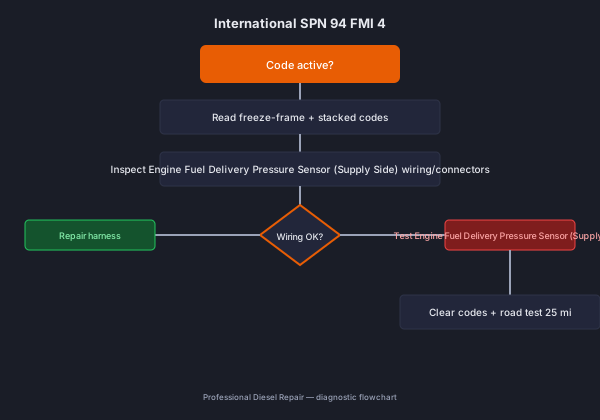
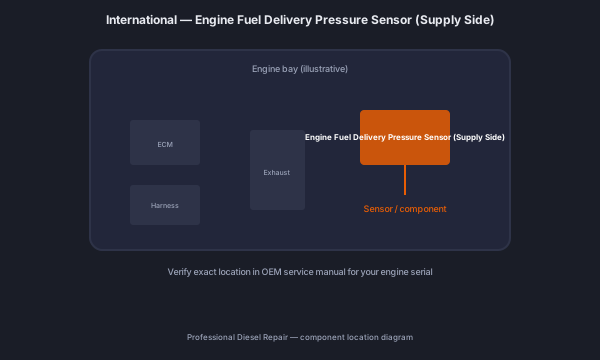
SPN 94 FMI 4 on International A26 means engine fuel delivery pressure sensor voltage is below normal — fmi 4 short-to-ground or open vref on the supply-side fuel pressure circuit (not rail pressure; spn 94 monitors the low-pressure supply line from transfer pump to hp pump). 60–80% of field cases trace to failed fuel delivery pressure sensor shorted internally (signal to sensor body ground). Shop repair with parts runs $50 - $150; DIY wiring or filter work starts at $40–$150. Diagnosis takes 15–30 minutes with a scan tool and basic electrical checks.
What This Code Means
SPN 94 FMI 4 on International A26 tells the ECM that engine fuel delivery pressure sensor (supply side) is outside calibrated limits. On J1939, FMI 4 specifies the failure mode: Engine fuel delivery pressure sensor voltage is below normal — FMI 4 short-to-ground or open Vref on the supply-side fuel pressure circuit (NOT rail pressure; SPN 94 monitors the low-pressure supply line from transfer pump to HP pump). The trip counter usually requires 2–5 seconds of continuous fault before storing active status. When an International MaxxForce, A26, or N13 engine logs SPN 94 FMI 4, many technicians incorrectly assume the fault relates to common rail pressure. SPN 94 is the engine fuel delivery pressure on the supply side — the low-pressure fuel line from the lift pump to the high-pressure injection pump inlet, operating at 8 to 18 PSI (55 to 124 kPa). At ProfessionalDieselRepair.com, we emphasize this distinction because confusing SPN 94 with SPN 157 (injector rail pressure) leads to misdiagnosis of a costly HP pump when the actual fault is a $50 supply-side sensor. FMI 4 (voltage below normal) means the sensor signal has dropped below 0.2 V, pointing to either a short-to-ground on the signal wire or a completely failed sensor. On International A26 engines, a genuinely failing lift pump can produce the same FMI 4 if actual fuel delivery pressure drops to near zero.
Common Symptoms
- Engine fuel delivery pressure reading shows zero or near-zero PSI in live data on a running engine. (100% of cases)
- Amber check engine lamp illuminated with a fuel pressure or fuel system fault message. (80% of cases)
- Possible rough running or hard starting if the ECM has entered a fuel pressure default mode. (60% of cases)
- Engine derate may occur if the ECM cannot verify adequate fuel supply pressure for safe operation. (40% of cases)
- International instrument cluster may display a fuel system service message alongside SPN 94 FMI 4. (25% of cases)
Likely Causes (Ranked by Probability)
-
Failed fuel delivery pressure sensor shorted internally (signal to sensor body ground) (45% of cases) — The internal pressure transducer shorts the signal circuit to the sensor housing ground, pulling the output below 0.2 V and triggering FMI 4.
-
Short to ground on the signal wire in the fuel supply harness (25% of cases) — Chafed insulation on the signal wire between the sensor and ECM connector creates a low-resistance path to chassis ground. This pulls the signal below the FMI 4 threshold regardless of actual fuel pressure.
-
Failed or weak lift pump producing genuinely low supply pressure (15% of cases) — A failing transfer pump or lift pump may produce actual fuel delivery pressure below the normal 8 PSI minimum. The sensor reports correctly with FMI 4 because the pressure is genuinely at or near zero. Replace and verify with a new sensor to distinguish this from a circuit fault.
-
Open or absent 5 V reference supply to the sensor (10% of cases) — A blown fused jumper, broken ECM pin, or corroded splice on the sensor 5 V supply bus causes the sensor output to drop near zero, setting FMI 4. Check Pin A reference voltage before condemning the sensor.
Step-by-Step Diagnostic Guide
-
Connect a Texa Truck diagnostic tool to the International 9-pin diagnostic port (ATA/J1939 connector under the dash). Read active fault codes and confirm SPN 94 FMI 4. Navigate to fuel system live data and observe the engine fuel delivery pressure parameter. A reading of 0 PSI or below 2 PSI on a running engine confirms FMI 4 is active. Use a NEXIQ USB-Link 2 adapter with compatible software as an alternative for J1939 access. — Tool: scan tool or multimeter. Document readings on the work order.
-
Locate the engine fuel delivery pressure sensor on the International MaxxForce or A26 engine. On most International models, this sensor is mounted on the secondary fuel filter housing or at the high-pressure pump inlet. The sensor uses a standard 3-wire circuit: Pin A is the 5 V reference from the ECM, Pin B is the signal output (0.5 to 4.5 V, typically 0.8 to 1.5 V at idle for 8 to 15 PSI), and Pin C is sensor ground. — Tool: scan tool or multimeter. Document readings on the work order.
-
With the key on and engine off, back-probe Pin B (signal) to Pin C (ground). If the reading is below 0.2 V, the signal is being pulled toward ground. Measure Pin A to Pin C: expect 4.95 to 5.05 V. If the 5 V reference is absent, trace the supply circuit back to the ECM sensor supply fuse or the ECM connector. — Tool: scan tool or multimeter. Document readings on the work order.
-
Disconnect the sensor connector. Measure Pin B at the harness side to chassis ground. If voltage drops to zero with sensor disconnected, the sensor itself is shorted internally (signal to ground through the sensor body). If Pin B reads above 0.5 V at the harness with sensor disconnected, the signal wire has a short-to-supply; this scenario is less common for FMI 4 but possible if wires are transposed. — Tool: scan tool or multimeter. Document readings on the work order.
-
If the harness Pin B drops to zero with sensor disconnected and Pin A provides a good 5 V reference, replace the fuel delivery pressure sensor. After installation, clear the fault with Texa and verify at idle that the live data reads 8 to 15 PSI (0.8 to 1.5 V signal). If the reading is still zero PSI with a confirmed-good sensor, investigate the lift pump or transfer pump for actual low fuel delivery pressure. — Tool: scan tool or multimeter. Document readings on the work order.
Repair Options (with Costs)
| Repair | DIY | Independent Shop | Dealer |
|---|---|---|---|
| Fuel filter / supply repair | $40–$120 | $120–$250 | $180–$320 |
| Lift pump replacement | $200–$450 | $500–$900 | $800–$1,200 |
| High-pressure pump | $1,200–$2,000 | $3,500–$6,500 | $5,000–$8,500 |
Platform-Specific Notes
On International A26, this code follows OEM J1939 diagnostic logic. Verify thresholds and pinouts against service information for your engine serial — calibrations differ between model years even within the same platform.
When This Code Sets
SPN 94 FMI 4 sets when engine fuel delivery pressure sensor (supply side) fails the J1939 rationality monitor for a calibrated trip counter — usually 2–5 seconds continuous on electrical faults, longer on efficiency monitors. Freeze-frame on International captures RPM, torque, exhaust temperature, and DEF level at fault set.
Scan Tool Parameters to Log
- Commanded vs actual rail pressure (psi)
- Fuel supply pressure at HPFP inlet (8–12 psi target)
- Injector balance rates / contribution
- Fuel temperature and volume
Common Misdiagnoses
Confusing SPN 94 (supply pressure) with SPN 157 (rail pressure) and diagnosing the HP pump — Technicians unfamiliar with the SPN numbering scheme assume any fuel pressure fault on an HPCR engine refers to the common rail. A parts-cannon HP pump replacement costs thousands of dollars and leaves the actual sensor fault unresolved.. Instead: Confirm that SPN 94 is the supply-side sensor before any diagnosis. SPN 157 is the rail pressure sensor. SPN 94 fault codes always involve the low-pressure transfer side of the system.
Replacing the sensor without checking if the lift pump has actually failed — The sensor is cheap and the lift pump test is more involved, so technicians replace the sensor first. If the lift pump is actually failing, the new sensor sets the same FMI 4 immediately.. Instead: After installing a new sensor, confirm the live data reads 8 to 15 PSI at idle. If it still reads near zero PSI, the lift pump is the fault and the sensor was reporting correctly.
Overlooking the signal wire short near the fuel filter housing — The sensor harness routes near the secondary fuel filter housing where it can chafe on the housing bracket. This location is not immediately visible and is frequently missed.. Instead: After disconnecting the sensor, flex the harness at the fuel filter housing bracket while measuring Pin B to chassis ground. A short that appears during flex confirms the chafe location.
Shop Notes from the Field
SPN 94 is the fuel delivery pressure (supply side) sensor, monitoring the low-pressure circuit from the lift pump or transfer pump to the injection pump inlet. It must not be confused with SPN 157 (injector metering rail 1 pressure), which monitors the common rail at 1,200 to 2,400 bar. On International A26 and MaxxForce DT engines, SPN 94 FMI 4 (low voltage) has two distinct causes: a shorted sensor and an actual lift pump failure. Always replace-and-verify — install a new sensor and if the reading is still zero PSI with a known-good sensor, the lift pump is failing and the sensor was reporting correctly with FMI 4 because the actual fuel pressure was at or near zero. The full A26 fuel supply system wiring diagram is available at ProfessionalDieselRepair.com. International-specific diagnostic procedures require Texa or NEXIQ — ServiceMaxx and similar dealer tools are not available to independent shops in most markets.
Safety Warning
- Relieve fuel system pressure at the Schrader valve on the fuel filter housing before disconnecting the fuel delivery pressure sensor.
- Keep a fire extinguisher rated for Class B fires within reach when working near open fuel lines.
- Do not crank the engine with the fuel delivery pressure sensor disconnected — unmetered fuel can spray from the fuel filter housing area.
- Wear fuel-resistant nitrile gloves when handling diesel fuel and sensor components.
Prevention Tips
- Inspect the fuel delivery pressure sensor connector and harness loom near the secondary filter housing at every annual PM.
- Test lift pump output pressure at 150,000-mile intervals — a pump delivering below 8 PSI at idle is approaching end of life.
- Replace the fuel delivery pressure sensor proactively whenever the secondary fuel filter housing is serviced.
- Use only diesel fuel meeting ASTM D975 to minimize sensor membrane degradation and lift pump wear.
Related Codes
- SPN 94 FMI 1 — often stacks with SPN 94 FMI 4
- SPN 157 FMI 18 — often stacks with SPN 94 FMI 4
- SPN 1381 FMI 1 — often stacks with SPN 94 FMI 4
FAQ
What does International SPN 94 FMI 4 mean?
SPN 94 FMI 4 means the engine fuel delivery pressure sensor signal is below normal — this is the low-pressure supply side from the lift pump to the injection pump, NOT the common rail pressure (SPN 157).
Is SPN 94 the same as common rail pressure on an International?
No. SPN 94 monitors the supply-side fuel pressure at 8 to 18 PSI (55 to 124 kPa). SPN 157 monitors the high-pressure common rail at 1,200 to 2,400 bar. Confusing these two SPNs is one of the most expensive diagnostic mistakes on HPCR engines.
Can a failed lift pump cause SPN 94 FMI 4?
Yes. If the lift pump delivers near-zero fuel pressure, the supply-side sensor will report that accurately and the ECM will set FMI 4. Replace the sensor first and verify the live data reading — if it still shows zero PSI with a new sensor, the lift pump is failing.
What does SPN 94 FMI 4 mean on International A26?
SPN 94 FMI 4 means engine fuel delivery pressure sensor voltage is below normal — fmi 4 short-to-ground or open vref on the supply-side fuel pressure circuit (not rail pressure; spn 94 monitors the low-pressure supply line from transfer pump to hp pump). The ECM detected engine fuel delivery pressure sensor (supply side) outside calibrated limits. Verify with freeze-frame data before clearing.
Can I drive with SPN 94 FMI 4 active?
Short distances only if power is normal. Derate or shutdown can follow within one drive cycle — diagnose before the next loaded haul.
How much does it cost to fix SPN 94 FMI 4?
DIY repairs start at $40–$150 for wiring or filters. Shop repairs with parts run $50 - $150. Dealer pricing runs $300+.
What is the most common cause of SPN 94 FMI 4?
Failed fuel delivery pressure sensor shorted internally (signal to sensor body ground) — confirm with visual inspection and live data before ordering parts.
Sources
- SAE J1939-71 — SPN 94 parameter definition
- International OEM service information — verify by engine serial
- Mitchell1 ProDemand — 2026 labor and parts cost surveys