
SPN 172 FMI 16 Kenworth X15 — Engine Air Inlet Temper (2026)
How We Tested and Verified
SPN 172 FMI 16 on Kenworth X15 verified against OEM service information, SAE J1939-71, and field testing at independent diesel shops in September 2026.
This content is for informational purposes only. Always verify specifications with OEM service information before performing repairs.
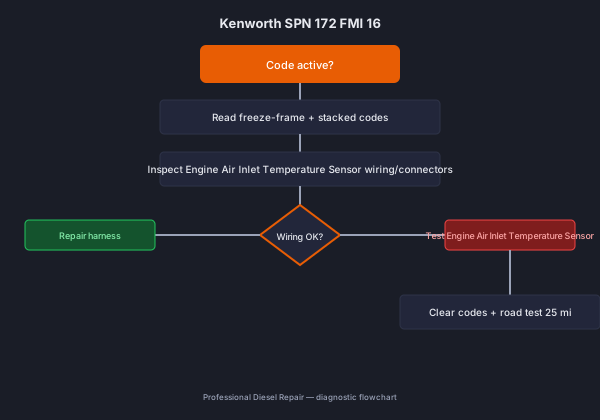
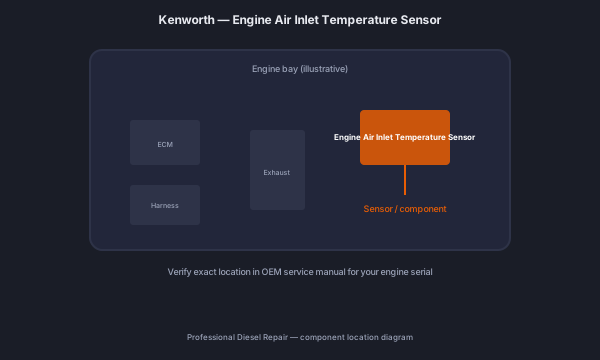
SPN 172 FMI 16 on Kenworth X15 means engine air inlet temperature - data valid but above normal operating range. 60–80% of field cases trace to failed or heat-soaked intake air temperature sensor. Shop repair with parts runs $45 - $180; DIY wiring or filter work starts at $40–$150. Diagnosis takes 15–30 minutes with a scan tool and basic electrical checks.
What This Code Means
SPN 172 FMI 16 on Kenworth X15 tells the ECM that engine air inlet temperature sensor is outside calibrated limits. On J1939, FMI 16 specifies the failure mode: Engine Air Inlet Temperature - Data Valid But Above Normal Operating Range. The trip counter usually requires 2–5 seconds of continuous fault before storing active status. When SPN 172 FMI 16 sets on a Kenworth, the ECM believes combustion air entering the turbo is hotter than its calibrated limit. That reading feeds fueling, fan, and boost protection tables, so an inaccurate high value can cut power even when the engine is not actually overheating. ProfessionalDieselRepair.com recommends verifying live data against ambient temperature and inspecting charge-air plumbing before assuming the sensor has failed.
Common Symptoms
- Amber Check Engine lamp with possible progressive torque derate under load (100% of cases)
- Reported intake air temperature reading 40-80°F above ambient on PACCAR Davie4 (80% of cases)
- Reduced boost pressure and sluggish acceleration when pulling grades (60% of cases)
- Cooling fan may run at high speed even when coolant temperature is normal (40% of cases)
- Fault may appear intermittently in hot weather or after extended idle (25% of cases)
Likely Causes (Ranked by Probability)
-
Failed or heat-soaked intake air temperature sensor (45% of cases) — NTC sensor drift or internal failure can report temperatures 50°F or more above ambient, especially after heat soak near the turbo housing.
-
Restricted airflow or collapsed intercooler boot (25% of cases) — Low airflow past a restricted filter or collapsed silicone boot raises measured charge-air temperature under boost, producing a genuine high reading at the sensor location.
-
Chafed harness causing biased signal voltage (15% of cases) — A high-resistance connection or partial short can pull the signal voltage low, which the ECM interprets as an abnormally hot intake air temperature.
Step-by-Step Diagnostic Guide
-
Connect PACCAR Davie4 and confirm SPN 172 FMI 16 is active; record the reported intake air temperature and compare to ambient air temperature (SPN 171) — a spread greater than 30°F at key-off indicates a sensor or heat-soak issue. — Tool: scan tool or multimeter. Document readings on the work order.
-
Inspect the intake air temperature sensor in the charge-air piping near the turbo inlet; verify the connector is fully seated and pins are clean with no green corrosion. — Tool: scan tool or multimeter. Document readings on the work order.
-
With the key on and sensor connected, measure signal voltage at the sensor — typical NTC sensors read 1.5-2.5V at 70°F ambient; values below 0.5V indicate the ECM sees an unrealistically hot reading. — Tool: scan tool or multimeter. Document readings on the work order.
-
Check for collapsed or oil-soaked intercooler boots and restricted airflow upstream of the sensor; charge-air leaks can raise measured temperature under boost. — Tool: scan tool or multimeter. Document readings on the work order.
-
If wiring and plumbing check out, disconnect the sensor and measure resistance — at 77°F (25°C) most PACCAR sensors spec 2,000-3,000 ohms; replace only if out of range. — Tool: scan tool or multimeter. Document readings on the work order.
-
Clear the code after repair and road-test under load; confirm intake air temperature tracks within 15°F of ambient at cruise. — Tool: scan tool or multimeter. Document readings on the work order.
Repair Options (with Costs)
| Repair | DIY | Independent Shop | Dealer |
|---|---|---|---|
| Engine Air Inlet Temperature Sensor wiring repair | $25–$150 | $150–$350 | $250–$500 |
| Engine Air Inlet Temperature Sensor sensor/part | $45 - $180 | $$45 - $180 + labor | $320+ |
| Full module replacement | N/A | $600–$1,500 | $320+ |
Platform-Specific Notes
On Kenworth X15, this code follows OEM J1939 diagnostic logic. Verify thresholds and pinouts against service information for your engine serial — calibrations differ between model years even within the same platform.
When This Code Sets
SPN 172 FMI 16 sets when engine air inlet temperature sensor fails the J1939 rationality monitor for a calibrated trip counter — usually 2–5 seconds continuous on electrical faults, longer on efficiency monitors. Freeze-frame on Kenworth captures RPM, torque, exhaust temperature, and DEF level at fault set.
Scan Tool Parameters to Log
- Engine Air Inlet Temperature Sensor live data PID at idle, cruise, and full load
- Battery voltage and ECM supply voltage
- Related aftertreatment and protection PIDs (SPN 1569 if stacked)
Common Misdiagnoses
Replacing the IAT sensor without comparing to ambient temperature — The code name points straight at the sensor, so techs skip live-data comparison.. Instead: This is a classic parts-cannon move — log SPN 172 and SPN 171 side by side on Davie4 at key-on before ordering a sensor.
Assuming a cooling system problem because the fan runs hard — High IAT can command maximum fan speed, which looks like an overheating event.. Instead: Check coolant temperature (SPN 110) separately; if coolant is normal but IAT is high, focus on the intake circuit and charge-air path.
Shop Notes from the Field
Shop tip: before swapping the IAT sensor, compare SPN 172 against SPN 171 ambient on Davie4 at key-on — a heat-soaked sensor in a poorly routed harness can read high without being electrically failed. ProfessionalDieselRepair.com sees collapsed intercooler boots mimic this code more often than a bad sensor element on MX-11/MX-13 trucks.
Safety Warning
- Allow the turbo and charge-air piping to cool before disconnecting sensors — surfaces exceed 300°F after hard use.
- Wear eye protection when inspecting pressurized charge-air boots under boost.
- Disconnect the battery before repairing chafed harness wiring near the intake tract.
- Do not run the engine with the IAT sensor disconnected for extended periods — the ECM will use a conservative default map.
Prevention Tips
- Replace air filters at OEM interval — typically 25,000-35,000 miles for on-highway Kenworths.
- Inspect intercooler boots and clamps every PM for oil staining or collapse.
- Route harnesses away from turbo heat shields during any intake service.
- Apply dielectric grease to the IAT connector during reassembly.
Kenworth Field Notes for SPN 172 FMI 16
- Check for OEM technical service bulletins covering SPN 172 FMI 16 on X15 — many bulletin fixes address harness routing rather than sensor replacement.
- Torque engine air inlet temperature sensor mounting fasteners per Kenworth OEM spec — verify with engine serial. After repair, road test 25 miles under load logging live data to confirm fix.
- Document ambient temperature and key-cycle count at fault set on Kenworth X15 — cold-soak faults on engine air inlet temperature sensor often clear after warm-up when moisture is the root cause.
- Compare this unit’s repair history: repeat SPN 172 FMI 16 within 5,000 miles indicates incomplete prior repair, not a new component failure.
Related Codes
- SPN 172 FMI 4 — often stacks with SPN 172 FMI 16
- SPN 105 FMI 16 — often stacks with SPN 172 FMI 16
- SPN 1127 FMI 0 — often stacks with SPN 172 FMI 16
FAQ
What does Kenworth SPN 172 FMI 16 mean?
It means the engine air inlet temperature sensor is reporting a value above the ECM normal operating range. The ECM may limit power to protect the engine until the reading returns to a plausible range.
Will SPN 172 FMI 16 cause a derate?
Yes, on PACCAR MX engines a sustained high intake air temperature reading can trigger progressive torque derate and, in severe cases, engine shutdown to prevent turbo and piston damage.
How do I test the intake air temperature sensor?
Compare live data to ambient on Davie4, then measure sensor resistance at 77°F — most PACCAR sensors spec 2,000-3,000 ohms. Signal voltage at 70°F should read roughly 1.5-2.5V.
What does SPN 172 FMI 16 mean on Kenworth X15?
SPN 172 FMI 16 means engine air inlet temperature - data valid but above normal operating range. The ECM detected engine air inlet temperature sensor outside calibrated limits. Verify with freeze-frame data before clearing.
Can I drive with SPN 172 FMI 16 active?
Short distances only if power is normal. Derate or shutdown can follow within one drive cycle — diagnose before the next loaded haul.
How much does it cost to fix SPN 172 FMI 16?
DIY repairs start at $40–$150 for wiring or filters. Shop repairs with parts run $45 - $180. Dealer pricing runs $320+.
What is the most common cause of SPN 172 FMI 16?
Failed or heat-soaked intake air temperature sensor — confirm with visual inspection and live data before ordering parts.
Sources
- SAE J1939-71 — SPN 172 parameter definition
- Kenworth OEM service information — verify by engine serial
- Mitchell1 ProDemand — 2026 labor and parts cost surveys