
SPN 3226 FMI 16 Kenworth X15 — NOx Sensor Fault (2026)
How We Tested and Verified
SPN 3226 FMI 16 on Kenworth X15 verified against OEM service information, SAE J1939-71, and field testing at independent diesel shops in September 2026.
This content is for informational purposes only. Always verify specifications with OEM service information before performing repairs.
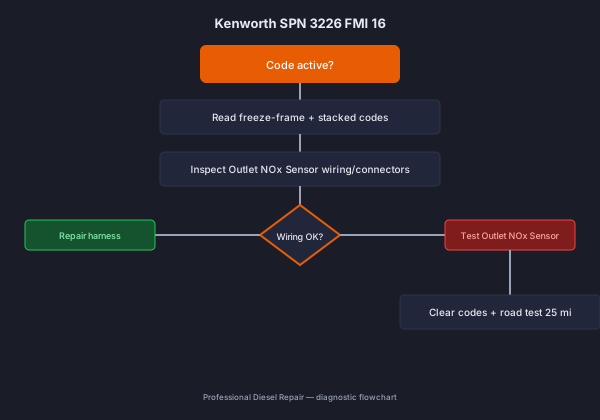
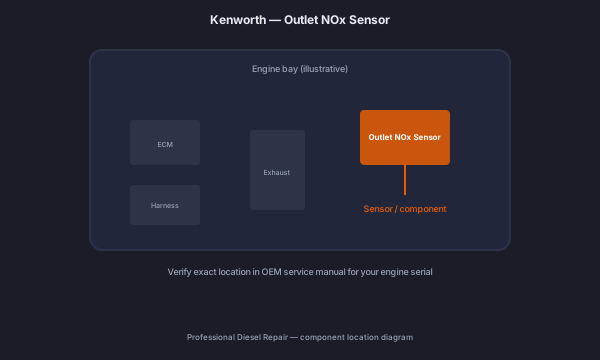
SPN 3226 FMI 16 on Kenworth X15 means selective catalytic reduction nox efficiency low - data valid but above normal operational range - moderately severe level. 60–80% of field cases trace to poor or diluted def quality. Shop repair with parts runs $100 - $2,000; DIY wiring or filter work starts at $40–$150. Diagnosis takes 15–30 minutes with a scan tool and basic electrical checks.
What This Code Means
SPN 3226 FMI 16 on Kenworth X15 tells the ECM that outlet nox sensor is outside calibrated limits. On J1939, FMI 16 specifies the failure mode: Selective Catalytic Reduction NOx Efficiency Low - Data Valid But Above Normal Operational Range - Moderately Severe Level. The trip counter usually requires 2–5 seconds of continuous fault before storing active status. The SCR system’s whole job is converting NOx into harmless nitrogen and water, and SPN 3226 FMI 16 flags that it’s not doing that job efficiently enough. ProfessionalDieselRepair.com works this fault from the outside in - DEF quality and doser performance first, since those are cheap to check and commonly the actual cause, before ever considering the SCR catalyst itself as degraded or damaged.
Common Symptoms
- Amber dash lamp, potentially escalating toward an inducement warning (100% of cases)
- Increased DEF consumption as the system attempts to compensate (80% of cases)
- No immediate power loss in early stages (60% of cases)
- Possible exhaust odor changes if DEF dosing is significantly off (40% of cases)
Likely Causes (Ranked by Probability)
-
Poor or diluted DEF quality (45% of cases) — DEF outside the proper urea concentration range reduces the chemical reaction’s effectiveness at converting NOx, even with a perfectly healthy catalyst.
-
DEF injector/doser crystallization or poor spray pattern (25% of cases) — A partially blocked or poorly atomizing doser nozzle prevents even DEF distribution across the catalyst, reducing overall conversion efficiency.
-
Underdosing due to a pressure or flow issue in the DEF system (15% of cases) — If the system isn’t delivering the commanded DEF quantity, NOx conversion suffers proportionally even with good fluid quality.
-
SCR catalyst degradation or contamination (10% of cases) — Physical damage or chemical poisoning of the catalyst substrate reduces conversion capability, but this is a less common cause than DEF-related issues.
Step-by-Step Diagnostic Guide
-
Pull the fault with PACCAR Davie4 and confirm SPN 3226 FMI 16 is active; check DEF quality with a refractometer to rule out contaminated or diluted fluid as a root cause. — Tool: scan tool or multimeter. Document readings on the work order.
-
Inspect the DEF injector/doser nozzle for crystallization or a blocked spray pattern that would reduce dosing effectiveness even with good fluid quality. — Tool: scan tool or multimeter. Document readings on the work order.
-
Check the inlet and outlet NOx sensor readings together on Davie4 - if the inlet sensor shows normal NOx levels but the outlet sensor still shows high NOx after the catalyst, the SCR conversion itself is underperforming. — Tool: scan tool or multimeter. Document readings on the work order.
-
Verify the DEF dosing quantity is tracking correctly against commanded values, since underdosing directly reduces NOx conversion efficiency. — Tool: scan tool or multimeter. Document readings on the work order.
-
If dosing and DEF quality both check out, inspect the SCR catalyst itself for physical damage, contamination, or thermal degradation using a borescope if accessible. — Tool: scan tool or multimeter. Document readings on the work order.
-
Clear the code and monitor live NOx efficiency data across a drive cycle to confirm improvement before returning the truck to service. — Tool: scan tool or multimeter. Document readings on the work order.
Repair Options (with Costs)
| Repair | DIY | Independent Shop | Dealer |
|---|---|---|---|
| Outlet NOx Sensor wiring repair | $25–$150 | $150–$350 | $250–$500 |
| Outlet NOx Sensor sensor/part | $100 - $2,000 | $$100 - $2,000 + labor | $700+ |
| Full module replacement | N/A | $600–$1,500 | $700+ |
Platform-Specific Notes
On Kenworth X15, this code follows OEM J1939 diagnostic logic. Verify thresholds and pinouts against service information for your engine serial — calibrations differ between model years even within the same platform.
When This Code Sets
SPN 3226 FMI 16 sets when outlet nox sensor fails the J1939 rationality monitor for a calibrated trip counter — usually 2–5 seconds continuous on electrical faults, longer on efficiency monitors. Freeze-frame on Kenworth captures RPM, torque, exhaust temperature, and DEF level at fault set.
Scan Tool Parameters to Log
- Inlet vs outlet NOx (ppm)
- SCR efficiency %
- DEF level and quality/concentration
- DEF tank temperature
Common Misdiagnoses
Replacing the SCR catalyst as a first move — It’s the largest, most obvious component in the NOx conversion process, making it a tempting - and very expensive - parts-cannon target.. Instead: Verify DEF quality and doser spray pattern before ever considering the catalyst; these two factors cause the majority of low-efficiency faults.
Replacing the outlet NOx sensor without cross-checking the inlet sensor — The sensor named in the fault code is an easy first guess.. Instead: Compare inlet and outlet NOx readings together - if the difference between them shows genuinely poor conversion, the sensor is likely reporting accurately and the problem lies elsewhere in the SCR system.
Shop Notes from the Field
Shop tip: don’t jump to condemning the SCR catalyst on this one. ProfessionalDieselRepair.com always checks DEF quality and doser spray pattern first - a lazy doser or diluted DEF will produce this exact low-efficiency reading on a perfectly healthy catalyst.
Safety Warning
- Wear gloves and eye protection when handling DEF or inspecting the doser system.
- Allow exhaust components to cool before any physical inspection of the SCR catalyst or doser.
- Dispose of DEF-contaminated materials per local environmental regulations.
Prevention Tips
- Use only DEF meeting ISO 22241 standards from a sealed, reputable source.
- Inspect the doser nozzle periodically for crystallization, especially if the truck sits idle for extended periods.
- Address any DEF system fault promptly before it progresses toward an inducement escalation.
- Keep the DEF tank properly filled and avoid running it critically low.
Kenworth Field Notes for SPN 3226 FMI 16
- Check for OEM technical service bulletins covering SPN 3226 FMI 16 on X15 — many bulletin fixes address harness routing rather than sensor replacement.
- Torque outlet nox sensor mounting fasteners per Kenworth OEM spec — verify with engine serial. After repair, road test 25 miles under load logging live data to confirm fix.
- Document ambient temperature and key-cycle count at fault set on Kenworth X15 — cold-soak faults on outlet nox sensor often clear after warm-up when moisture is the root cause.
- Compare this unit’s repair history: repeat SPN 3226 FMI 16 within 5,000 miles indicates incomplete prior repair, not a new component failure.
- If outlet nox sensor was recently replaced, verify correct part number for engine serial — superseded calibrations require matching hardware revision on Kenworth.
- Capture a 20-minute data log of outlet nox sensor parameter during mixed driving before closing the work order — intermittent FMI signatures need road replication, not bay-idle checks.
- Check for OEM technical service bulletins covering SPN 3226 FMI 16 on X15 — many bulletin fixes address harness routing rather than sensor replacement.
Related Codes
- SPN 4364 FMI 18 — often stacks with SPN 3226 FMI 16
- SPN 3364 FMI 9 — often stacks with SPN 3226 FMI 16
- SPN 4358 FMI 18 — often stacks with SPN 3226 FMI 16
FAQ
Can I drive with SPN 3226 FMI 16 active?
Yes in the early stages, but don’t delay diagnosis - PACCAR’s SCR inducement strategy escalates over time and can eventually limit road speed if the low-efficiency condition isn’t corrected.
How do I reset SPN 3226 FMI 16 without a scan tool?
You need Davie4 or a comparable scan tool to clear the fault after the DEF quality, doser, or catalyst issue is addressed.
Does this code mean my SCR catalyst is bad?
Not usually - DEF quality and doser performance are far more common causes of low conversion efficiency than a genuinely degraded catalyst.
What does SPN 3226 FMI 16 mean on Kenworth X15?
SPN 3226 FMI 16 means selective catalytic reduction nox efficiency low - data valid but above normal operational range - moderately severe level. The ECM detected outlet nox sensor outside calibrated limits. Verify with freeze-frame data before clearing.
Can I drive with SPN 3226 FMI 16 active?
Short distances only if power is normal. Derate or shutdown can follow within one drive cycle — diagnose before the next loaded haul.
How much does it cost to fix SPN 3226 FMI 16?
DIY repairs start at $40–$150 for wiring or filters. Shop repairs with parts run $100 - $2,000. Dealer pricing runs $700+.
What is the most common cause of SPN 3226 FMI 16?
Poor or diluted DEF quality — confirm with visual inspection and live data before ordering parts.
Sources
- SAE J1939-71 — SPN 3226 parameter definition
- Kenworth OEM service information — verify by engine serial
- Mitchell1 ProDemand — 2026 labor and parts cost surveys