
SPN 3251 FMI 2 Kenworth X15 — DPF Restriction (2026)
How We Tested and Verified
SPN 3251 FMI 2 on Kenworth X15 verified against OEM service information, SAE J1939-71, and field testing at independent diesel shops in September 2026.
This content is for informational purposes only. Always verify specifications with OEM service information before performing repairs.
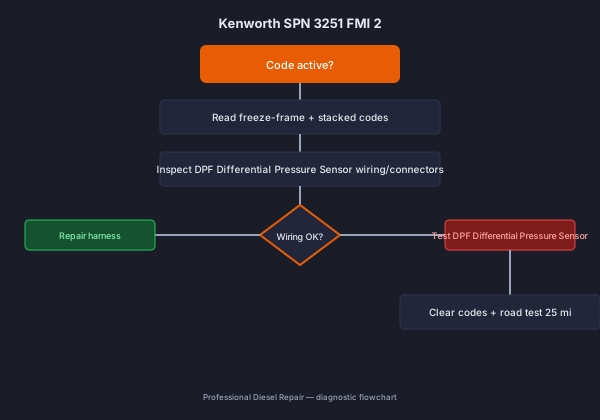
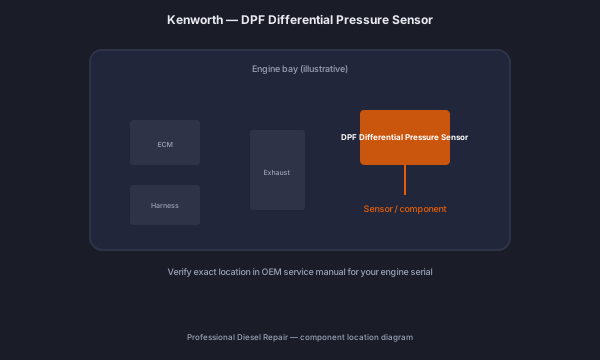
SPN 3251 FMI 2 on Kenworth X15 means aftertreatment 1 diesel particulate filter differential pressure - erratic, intermittent, or incorrect. 60–80% of field cases trace to loose or corroded sensor electrical connector. Shop repair with parts runs $80 - $300; DIY wiring or filter work starts at $40–$150. Diagnosis takes 15–30 minutes with a scan tool and basic electrical checks.
What This Code Means
SPN 3251 FMI 2 on Kenworth X15 tells the ECM that dpf differential pressure sensor is outside calibrated limits. On J1939, FMI 2 specifies the failure mode: Aftertreatment 1 Diesel Particulate Filter Differential Pressure - Erratic, Intermittent, or Incorrect. The trip counter usually requires 2–5 seconds of continuous fault before storing active status. ProfessionalDieselRepair.com finds that a five-minute wiggle test with live data running solves most of these calls before a single part gets ordered.
Common Symptoms
- Check engine light with no consistent power loss (100% of cases)
- DPF soot load percentage that jumps erratically in live data (80% of cases)
- Possible unnecessary or missed regen cycles from confused sensor data (60% of cases)
- No steady performance change most of the time (40% of cases)
Likely Causes (Ranked by Probability)
-
Loose or corroded sensor electrical connector (45% of cases) — An electrical/wiring fault, not a real pressure fluctuation - a poor connection produces the erratic signal the ECM is flagging.
-
Moisture intrusion at the connector (25% of cases) — Another wiring-side issue, common on trucks that see frequent wash bay exposure near the exhaust area.
-
Loose sense tube fitting (15% of cases) — A mechanical connection issue that lets the reading drift intermittently rather than staying stable.
-
Internal sensor component drift (10% of cases) — A genuine sensor hardware fault, confirmed only after ruling out the connector and tube connections.
Step-by-Step Diagnostic Guide
-
Connect PACCAR Davie4 and watch the differential pressure reading over several minutes at a steady idle - erratic jumps with the engine steady confirm a signal issue rather than a real pressure change. — Tool: scan tool or multimeter. Document readings on the work order.
-
Inspect both sense tube connections at the sensor and at the exhaust pipe for looseness that could cause an intermittent signal. — Tool: scan tool or multimeter. Document readings on the work order.
-
Wiggle-test the sensor’s electrical connector while watching live data for a signal that drops out or spikes with movement. — Tool: scan tool or multimeter. Document readings on the work order.
-
Check for moisture intrusion at the connector, which is a common cause of erratic readings on trucks that see a lot of wash bay time. — Tool: scan tool or multimeter. Document readings on the work order.
-
If the connector and tubes check out solid, replace the sensor itself since internal component drift can also cause this symptom. — Tool: scan tool or multimeter. Document readings on the work order.
Repair Options (with Costs)
| Repair | DIY | Independent Shop | Dealer |
|---|---|---|---|
| Forced regen / sensor | $0–$150 | $150–$350 | $250–$450 |
| Off-vehicle DPF clean | N/A | $350–$800 | $500–$900 |
| DPF replacement | $1,800–$2,800 | $3,500–$5,000 | $4,500–$6,500 |
Platform-Specific Notes
On Kenworth X15, this code follows OEM J1939 diagnostic logic. Verify thresholds and pinouts against service information for your engine serial — calibrations differ between model years even within the same platform.
When This Code Sets
SPN 3251 FMI 2 sets when dpf differential pressure sensor fails the J1939 rationality monitor for a calibrated trip counter — usually 2–5 seconds continuous on electrical faults, longer on efficiency monitors. Freeze-frame on Kenworth captures RPM, torque, exhaust temperature, and DEF level at fault set.
Scan Tool Parameters to Log
- Soot load % (target below 40% after regen)
- Ash load % (clean above 80%)
- DPF differential pressure (in H2O)
- Exhaust temp inlet/outlet
- Regen status and inhibit switches
Common Misdiagnoses
Replacing the sensor before wiggle-testing the connector with live data running — It feels like the fastest way to eliminate the fault.. Instead: This is a parts-cannon shortcut - an erratic signal is a classic connector symptom. Wiggle-test first and save the part swap for a confirmed internal failure.
Ignoring the fault because it doesn’t affect drivability — No performance change makes it feel low priority.. Instead: Still address it, since erratic sensor data can cause missed or unnecessary regen cycles that affect long-term DPF health.
Shop Notes from the Field
ProfessionalDieselRepair.com tip: an erratic FMI 2 signal is almost always a connector problem, not a sensor problem. Wiggle-test with live data running before you order a replacement part.
Safety Warning
- Let the exhaust system cool before handling the sensor or connector.
- Use dielectric grease on the connector after repair to help prevent future moisture intrusion.
Prevention Tips
- Apply dielectric grease to aftertreatment sensor connectors during service to resist moisture intrusion.
- Inspect sense tube fittings for tightness at scheduled service intervals.
- Address erratic sensor signals promptly rather than letting them persist and confuse the regen strategy.
Kenworth Field Notes for SPN 3251 FMI 2
- Capture a 20-minute data log of dpf differential pressure sensor parameter during mixed driving before closing the work order — intermittent FMI signatures need road replication, not bay-idle checks.
- Check for OEM technical service bulletins covering SPN 3251 FMI 2 on X15 — many bulletin fixes address harness routing rather than sensor replacement.
- Torque dpf differential pressure sensor mounting fasteners per Kenworth OEM spec — verify with engine serial. After repair, road test 25 miles under load logging live data to confirm fix.
- Document ambient temperature and key-cycle count at fault set on Kenworth X15 — cold-soak faults on dpf differential pressure sensor often clear after warm-up when moisture is the root cause.
- Compare this unit’s repair history: repeat SPN 3251 FMI 2 within 5,000 miles indicates incomplete prior repair, not a new component failure.
- If dpf differential pressure sensor was recently replaced, verify correct part number for engine serial — superseded calibrations require matching hardware revision on Kenworth.
- Capture a 20-minute data log of dpf differential pressure sensor parameter during mixed driving before closing the work order — intermittent FMI signatures need road replication, not bay-idle checks.
- Check for OEM technical service bulletins covering SPN 3251 FMI 2 on X15 — many bulletin fixes address harness routing rather than sensor replacement.
- Torque dpf differential pressure sensor mounting fasteners per Kenworth OEM spec — verify with engine serial. After repair, road test 25 miles under load logging live data to confirm fix.
- Document ambient temperature and key-cycle count at fault set on Kenworth X15 — cold-soak faults on dpf differential pressure sensor often clear after warm-up when moisture is the root cause.
- Compare this unit’s repair history: repeat SPN 3251 FMI 2 within 5,000 miles indicates incomplete prior repair, not a new component failure.
- If dpf differential pressure sensor was recently replaced, verify correct part number for engine serial — superseded calibrations require matching hardware revision on Kenworth.
Related Codes
- SPN 3251 FMI 18 — often stacks with SPN 3251 FMI 2
- SPN 3251 FMI 0 — often stacks with SPN 3251 FMI 2
FAQ
Can I keep driving with SPN 3251 FMI 2 active?
Yes - this fault doesn’t typically affect drivability, though it’s worth fixing so the ECM can properly manage DPF regen cycles.
How do I reset this code without a scan tool?
It may clear temporarily, but it will likely return if the connector or wiring issue isn’t fixed. Confirm the repair with Davie4.
Does this code trigger a derate?
No, not typically - this is a signal quality issue rather than a genuine restriction severe enough to warrant a power reduction.
What does SPN 3251 FMI 2 mean on Kenworth X15?
SPN 3251 FMI 2 means aftertreatment 1 diesel particulate filter differential pressure - erratic, intermittent, or incorrect. The ECM detected dpf differential pressure sensor outside calibrated limits. Verify with freeze-frame data before clearing.
Can I drive with SPN 3251 FMI 2 active?
Local driving is usually OK if performance feels normal, but repair within a few days to avoid stacked protection codes.
How much does it cost to fix SPN 3251 FMI 2?
DIY repairs start at $40–$150 for wiring or filters. Shop repairs with parts run $80 - $300. Dealer pricing runs $350+.
What is the most common cause of SPN 3251 FMI 2?
Loose or corroded sensor electrical connector — confirm with visual inspection and live data before ordering parts.
Sources
- SAE J1939-71 — SPN 3251 parameter definition
- Kenworth OEM service information — verify by engine serial
- Mitchell1 ProDemand — 2026 labor and parts cost surveys