
SPN 646 FMI 7 Kenworth X15 — Turbo Underboost (2026)
How We Tested and Verified
SPN 646 FMI 7 on Kenworth X15 verified against OEM service information, SAE J1939-71, and field testing at independent diesel shops in September 2026.
This content is for informational purposes only. Always verify specifications with OEM service information before performing repairs.
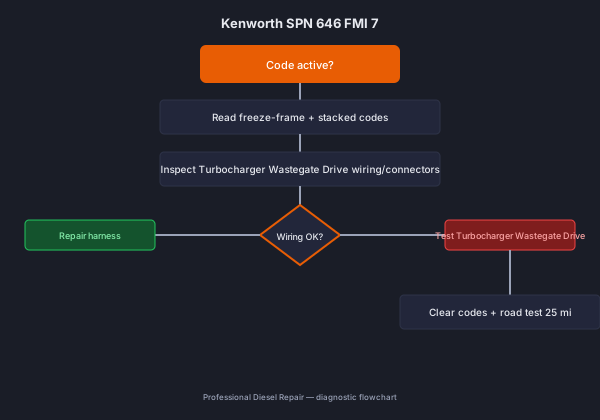
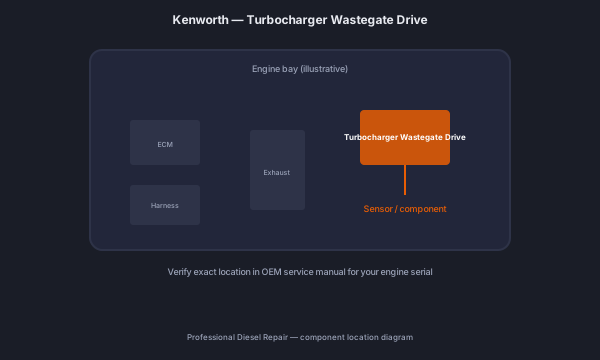
SPN 646 FMI 7 on Kenworth X15 means engine turbocharger 1 wastegate drive - mechanical system not responding or out of adjustment. 60–80% of field cases trace to soot or carbon buildup binding the wastegate linkage. Shop repair with parts runs $300 - $1,100; DIY wiring or filter work starts at $40–$150. Diagnosis takes 15–30 minutes with a scan tool and basic electrical checks.
What This Code Means
SPN 646 FMI 7 on Kenworth X15 tells the ECM that turbocharger wastegate drive is outside calibrated limits. On J1939, FMI 7 specifies the failure mode: Engine Turbocharger 1 Wastegate Drive - Mechanical System Not Responding or Out of Adjustment. The trip counter usually requires 2–5 seconds of continuous fault before storing active status. The wastegate actuator on a turbocharged Kenworth controls how much exhaust gas bypasses the turbine to regulate boost pressure, and SPN 646 FMI 7 flags that this actuator isn’t physically moving the way the ECM expects, despite the control signal itself looking normal. ProfessionalDieselRepair.com sees this fault most often from carbon and soot buildup binding the linkage rather than an actual failed actuator motor, which is why a careful mechanical inspection before parts replacement pays off on this repair.
Common Symptoms
- Inconsistent power delivery or boost surging under acceleration (100% of cases)
- MIL illuminated (80% of cases)
- Possible whistling or unusual turbo noise (60% of cases)
- Reduced fuel economy from inefficient boost control (40% of cases)
Likely Causes (Ranked by Probability)
-
Soot or carbon buildup binding the wastegate linkage (45% of cases) — Exhaust soot accumulates on the linkage pivot points over time, restricting free movement even when the actuator itself is functioning correctly.
-
Corroded or seized linkage pivot points (25% of cases) — Road salt and moisture exposure can corrode the linkage hardware, causing binding independent of any soot contamination.
-
Failed actuator motor or internal gear mechanism (15% of cases) — The actuator’s internal motor or gear train can fail from wear, preventing it from moving the wastegate arm even with a free linkage.
-
Damaged unison ring inside the turbo housing (10% of cases) — On variable geometry turbos, a soot-packed or damaged unison ring can bind internally, producing symptoms similar to an actuator failure.
Step-by-Step Diagnostic Guide
-
Connect PACCAR Davie4 and confirm SPN 646 FMI 7, then command the wastegate actuator through its range using the diagnostic tool’s actuator test if available. — Tool: scan tool or multimeter. Document readings on the work order.
-
Visually inspect the wastegate actuator linkage for binding, corrosion, or soot buildup preventing free movement. — Tool: scan tool or multimeter. Document readings on the work order.
-
With the engine off, manually attempt to move the wastegate arm by hand (if accessible) to check for mechanical resistance beyond normal spring tension. — Tool: scan tool or multimeter. Document readings on the work order.
-
Apply penetrating oil to a stuck linkage pivot point and retest movement, since carbon and soot buildup is a common cause of binding. — Tool: scan tool or multimeter. Document readings on the work order.
-
If the actuator itself doesn’t respond correctly during a bench or commanded test despite a free linkage, replace the actuator, clear codes, and verify normal boost behavior on a road test. — Tool: scan tool or multimeter. Document readings on the work order.
Repair Options (with Costs)
| Repair | DIY | Independent Shop | Dealer |
|---|---|---|---|
| Boost leak / hose repair | $50–$150 | $200–$400 | $300–$550 |
| VGT actuator only | $650–$900 | $900–$1,400 | $1,200–$1,800 |
| Turbo assembly | $1,400–$2,200 | $2,800–$4,500 | $4,000–$6,000 |
Platform-Specific Notes
On Kenworth X15, this code follows OEM J1939 diagnostic logic. Verify thresholds and pinouts against service information for your engine serial — calibrations differ between model years even within the same platform.
When This Code Sets
SPN 646 FMI 7 sets when turbocharger wastegate drive fails the J1939 rationality monitor for a calibrated trip counter — usually 2–5 seconds continuous on electrical faults, longer on efficiency monitors. Freeze-frame on Kenworth captures RPM, torque, exhaust temperature, and DEF level at fault set.
Scan Tool Parameters to Log
- Commanded vs actual boost (PSI)
- VGT position commanded vs actual %
- Turbo speed (RPM)
- Intake manifold pressure
Common Misdiagnoses
Replacing the actuator without checking linkage freedom first — A parts-cannon approach assumes the actuator is bad since it’s the named component, without testing whether it can move freely once installed.. Instead: Always verify the linkage moves freely by hand or with penetrating oil before condemning the actuator itself.
Replacing the entire turbocharger for a linkage binding issue — Boost control problems get blamed on the turbo as a whole rather than isolating the wastegate mechanism specifically.. Instead: Isolate whether the fault is in the actuator, linkage, or unison ring before committing to a full turbo replacement.
Installing a new actuator on a linkage that’s still binding — Techs assume a fresh actuator will have enough force to overcome minor binding.. Instead: Free up and lubricate the linkage completely before installing a new actuator to avoid burning out the replacement part quickly.
Shop Notes from the Field
Shop tip from ProfessionalDieselRepair.com: if the actuator motor sweeps freely on a bench or commanded test but binds once reinstalled on the turbo, the linkage or unison ring is packed with soot, not the actuator itself. Installing a brand new actuator on a seized linkage will burn out the new part in short order.
Safety Warning
- Allow the turbocharger and exhaust system to cool completely before working near the wastegate linkage.
- Wear heat-resistant gloves when handling components near the turbo housing.
- Be cautious of sharp edges on heat shields and turbo housing components.
- Support the vehicle properly if access requires working underneath.
Prevention Tips
- Inspect and lubricate wastegate linkage pivot points during routine turbo system PM checks.
- Address soot buildup around the turbo housing proactively on high-mileage engines.
- Avoid extended idle time, which contributes to soot accumulation in the exhaust system.
- Replace aging actuators proactively if intermittent boost issues are noticed before a hard fault sets.
Kenworth Field Notes for SPN 646 FMI 7
- Compare this unit’s repair history: repeat SPN 646 FMI 7 within 5,000 miles indicates incomplete prior repair, not a new component failure.
- If turbocharger wastegate drive was recently replaced, verify correct part number for engine serial — superseded calibrations require matching hardware revision on Kenworth.
- Capture a 20-minute data log of turbocharger wastegate drive parameter during mixed driving before closing the work order — intermittent FMI signatures need road replication, not bay-idle checks.
- Check for OEM technical service bulletins covering SPN 646 FMI 7 on X15 — many bulletin fixes address harness routing rather than sensor replacement.
- Torque turbocharger wastegate drive mounting fasteners per Kenworth OEM spec — verify with engine serial. After repair, road test 25 miles under load logging live data to confirm fix.
- Document ambient temperature and key-cycle count at fault set on Kenworth X15 — cold-soak faults on turbocharger wastegate drive often clear after warm-up when moisture is the root cause.
- Compare this unit’s repair history: repeat SPN 646 FMI 7 within 5,000 miles indicates incomplete prior repair, not a new component failure.
Related Codes
- SPN 641 FMI 7 — often stacks with SPN 646 FMI 7
- SPN 102 FMI 2 — often stacks with SPN 646 FMI 7
FAQ
Can I drive with SPN 646 FMI 7 active?
Yes, the engine will run, but expect inconsistent power delivery and boost behavior. It’s worth getting diagnosed promptly since prolonged inconsistent boost control can stress other engine components.
How do I reset this code without a scanner?
A battery disconnect may clear it temporarily, but the fault will return once the ECM detects the wastegate isn’t responding correctly to commanded positions.
Does this code cause a derate?
Some calibrations will limit boost or power as a protective measure when wastegate control is unreliable, though it’s not the aggressive emissions inducement derate seen with aftertreatment faults.
What does SPN 646 FMI 7 mean on Kenworth X15?
SPN 646 FMI 7 means engine turbocharger 1 wastegate drive - mechanical system not responding or out of adjustment. The ECM detected turbocharger wastegate drive outside calibrated limits. Verify with freeze-frame data before clearing.
Can I drive with SPN 646 FMI 7 active?
Short distances only if power is normal. Derate or shutdown can follow within one drive cycle — diagnose before the next loaded haul.
How much does it cost to fix SPN 646 FMI 7?
DIY repairs start at $40–$150 for wiring or filters. Shop repairs with parts run $300 - $1,100. Dealer pricing runs $950+.
What is the most common cause of SPN 646 FMI 7?
Soot or carbon buildup binding the wastegate linkage — confirm with visual inspection and live data before ordering parts.
Sources
- SAE J1939-71 — SPN 646 parameter definition
- Kenworth OEM service information — verify by engine serial
- Mitchell1 ProDemand — 2026 labor and parts cost surveys