
SPN 1127 FMI 18 Mack MP8 — Turbo Underboost (2026)
How We Tested and Verified
SPN 1127 FMI 18 on Mack MP8 verified against OEM service information, SAE J1939-71, and field testing at independent diesel shops in September 2026.
This content is for informational purposes only. Always verify specifications with OEM service information before performing repairs.
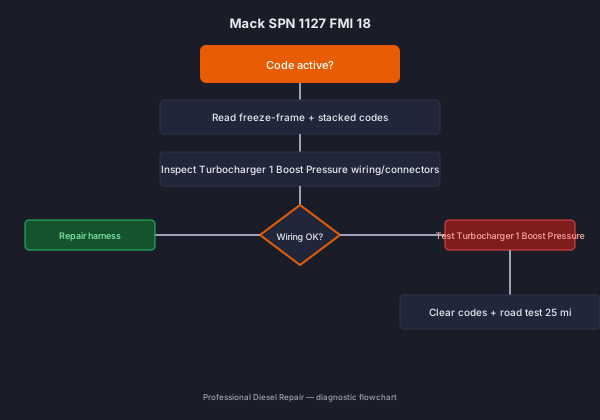
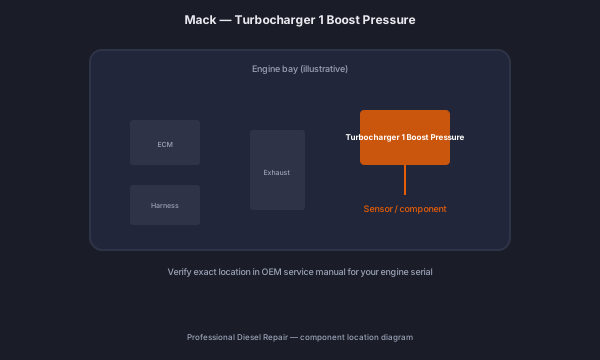
SPN 1127 FMI 18 on Mack MP8 means engine turbocharger 1 boost pressure - data valid but below normal operational range - moderately severe level. 60–80% of field cases trace to charge air cooler hose or boot leak. Shop repair with parts runs $40 - $900; DIY wiring or filter work starts at $40–$150. Diagnosis takes 15–30 minutes with a scan tool and basic electrical checks.
What This Code Means
SPN 1127 FMI 18 on Mack MP8 tells the ECM that turbocharger 1 boost pressure is outside calibrated limits. On J1939, FMI 18 specifies the failure mode: Engine Turbocharger 1 Boost Pressure - Data Valid But Below Normal Operational Range - Moderately Severe Level. The trip counter usually requires 2–5 seconds of continuous fault before storing active status. Underboost codes like SPN 1127 FMI 18 send a lot of Mack MP7 and MP8 trucks into the shop with a real power complaint, but ProfessionalDieselRepair.com’s experience says the turbo is rarely the actual problem. The charge air path between the turbo and the intake manifold is long, full of clamped connections, and lives in a hot, vibrating environment - it’s the most common failure point by far. A methodical leak check before touching the turbo saves unnecessary parts expense and gets the truck back on the road faster.
Common Symptoms
- Noticeable loss of power, especially accelerating from a stop or climbing grades (100% of cases)
- Black smoke under hard acceleration from an over-fueled, under-boosted mixture (80% of cases)
- Amber dash lamp, sometimes with a specific ‘low boost’ message (60% of cases)
- Turbo whine that sounds different or quieter than normal (40% of cases)
- Increased fuel consumption as the ECM compensates for reduced airflow (25% of cases)
Likely Causes (Ranked by Probability)
-
Charge air cooler hose or boot leak (45% of cases) — Rubber boots and clamps in the CAC piping degrade with heat cycling and vibration, developing leaks that bleed off boost before it reaches the intake.
-
Restricted air intake or dirty air filter (25% of cases) — A starved compressor inlet limits how much boost the turbo can produce regardless of turbo condition.
-
Sticking or binding VGT actuator/wastegate linkage (15% of cases) — Mechanical binding prevents the turbo’s variable geometry vanes or wastegate from reaching the position needed to build commanded boost.
-
Worn turbocharger (bearing or compressor wheel wear) (10% of cases) — Internal turbo wear reduces maximum achievable boost, typically after high mileage or a prior lubrication issue.
-
Faulty boost pressure sensor (5% of cases) — A sensor under-reporting actual pressure can trigger the code without a genuine airflow restriction, though this is less common than a physical leak.
Step-by-Step Diagnostic Guide
-
Pull codes with PACCAR Davie4 or Jaltest and confirm SPN 1127 FMI 18 is active; note actual vs. commanded boost at a steady RPM and load point for reference. — Tool: scan tool or multimeter. Document readings on the work order.
-
Do a full visual and physical inspection of the charge air cooler (CAC) piping - grab and shake every clamp and hose by hand looking for a boot that’s slipped or a split seam. — Tool: scan tool or multimeter. Document readings on the work order.
-
Pressure test the entire intake tract from the turbo compressor outlet to the intake manifold with a magnehelic gauge or a shop air regulator and soap solution - even a small leak bleeds off enough boost to trip this code. — Tool: scan tool or multimeter. Document readings on the work order.
-
Inspect the air filter and housing for restriction on the intake side - a starved compressor inlet can’t build boost even with a perfectly healthy turbo. — Tool: scan tool or multimeter. Document readings on the work order.
-
If no leaks are found, check the turbo’s variable geometry actuator or wastegate linkage for binding, using Davie4’s actuator test to command a sweep and watch for a sluggish or incomplete response. — Tool: scan tool or multimeter. Document readings on the work order.
-
Clear the code and road test under load while logging actual boost pressure to confirm the fix before releasing the truck. — Tool: scan tool or multimeter. Document readings on the work order.
Repair Options (with Costs)
| Repair | DIY | Independent Shop | Dealer |
|---|---|---|---|
| Boost leak / hose repair | $50–$150 | $200–$400 | $300–$550 |
| VGT actuator only | $650–$900 | $900–$1,400 | $1,200–$1,800 |
| Turbo assembly | $1,400–$2,200 | $2,800–$4,500 | $4,000–$6,000 |
Platform-Specific Notes
On Mack MP8, this code follows OEM J1939 diagnostic logic. Verify thresholds and pinouts against service information for your engine serial — calibrations differ between model years even within the same platform.
When This Code Sets
SPN 1127 FMI 18 sets when turbocharger 1 boost pressure fails the J1939 rationality monitor for a calibrated trip counter — usually 2–5 seconds continuous on electrical faults, longer on efficiency monitors. Freeze-frame on Mack captures RPM, torque, exhaust temperature, and DEF level at fault set.
Scan Tool Parameters to Log
- Commanded vs actual boost (PSI)
- VGT position commanded vs actual %
- Turbo speed (RPM)
- Intake manifold pressure
Common Misdiagnoses
Replacing the turbocharger before pressure-testing the CAC system — Underboost feels like a turbo problem, so it’s the intuitive first guess - a classic parts-cannon move that skips the cheap leak check.. Instead: Pressure test the entire intake tract for leaks before condemning the turbo; a leak anywhere downstream will produce identical symptoms.
Replacing the boost pressure sensor without confirming actual boost with a gauge — Sensors are inexpensive and quick to swap.. Instead: Verify with a mechanical boost gauge whether the low reading matches reality before assuming the sensor is at fault.
Shop Notes from the Field
Shop tip: 90% of underboost complaints on these trucks are a leak somewhere in the CAC piping, not a bad turbo. Walk the whole charge air system by hand before you ever pull the turbo - a $15 hose clamp is a lot cheaper than an unnecessary turbocharger. ProfessionalDieselRepair.com writes up leaking CAC boots more than any other cause on this code.
Safety Warning
- Allow the charge air system to cool before disconnecting any hoses - components can retain heat well after the engine is shut off.
- Wear eye protection when pressure testing the intake system with shop air.
- Support the vehicle properly on jack stands if inspection requires working underneath.
Prevention Tips
- Inspect CAC hoses and clamps at every PM interval, not just when a code appears.
- Replace aging rubber boots proactively before they crack rather than waiting for failure.
- Keep the air filter on schedule and inspect the housing for cracks.
- Address any oil consumption or turbo bearing noise promptly to avoid a boost-related failure down the road.
Mack Field Notes for SPN 1127 FMI 18
- Capture a 20-minute data log of turbocharger 1 boost pressure parameter during mixed driving before closing the work order — intermittent FMI signatures need road replication, not bay-idle checks.
- Check for OEM technical service bulletins covering SPN 1127 FMI 18 on MP8 — many bulletin fixes address harness routing rather than sensor replacement.
- Torque turbocharger 1 boost pressure mounting fasteners per Mack OEM spec — verify with engine serial. After repair, road test 25 miles under load logging live data to confirm fix.
Related Codes
- SPN 1127 FMI 16 — often stacks with SPN 1127 FMI 18
- SPN 102 FMI 4 — often stacks with SPN 1127 FMI 18
- SPN 132 FMI 2 — often stacks with SPN 1127 FMI 18
FAQ
Can I drive with SPN 1127 FMI 18 active?
You can typically limp along at reduced power, but expect sluggish acceleration and poor fuel economy. Don’t tow heavy loads or climb long grades until it’s diagnosed.
Is a bad turbo usually the cause of low boost codes?
Less often than people think. A charge air cooler leak is the most common cause by far - check every clamp and hose before assuming the turbo itself has failed.
How do I reset SPN 1127 FMI 18 without a scanner?
You need a diagnostic tool like Davie4 or Jaltest to clear the stored fault code; there’s no manual reset procedure available from the dash.
What does SPN 1127 FMI 18 mean on Mack MP8?
SPN 1127 FMI 18 means engine turbocharger 1 boost pressure - data valid but below normal operational range - moderately severe level. The ECM detected turbocharger 1 boost pressure outside calibrated limits. Verify with freeze-frame data before clearing.
Can I drive with SPN 1127 FMI 18 active?
Short distances only if power is normal. Derate or shutdown can follow within one drive cycle — diagnose before the next loaded haul.
How much does it cost to fix SPN 1127 FMI 18?
DIY repairs start at $40–$150 for wiring or filters. Shop repairs with parts run $40 - $900. Dealer pricing runs $500+.
What is the most common cause of SPN 1127 FMI 18?
Charge air cooler hose or boot leak — confirm with visual inspection and live data before ordering parts.
Sources
- SAE J1939-71 — SPN 1127 parameter definition
- Mack OEM service information — verify by engine serial
- Mitchell1 ProDemand — 2026 labor and parts cost surveys