
SPN 157 FMI 16 Mercedes-Benz OM471 — Fuel Rail Pressu (2026)
How We Tested and Verified
SPN 157 FMI 16 on Mercedes-Benz OM471 verified against OEM service information, SAE J1939-71, and field testing at independent diesel shops in September 2026.
This content is for informational purposes only. Always verify specifications with OEM service information before performing repairs.
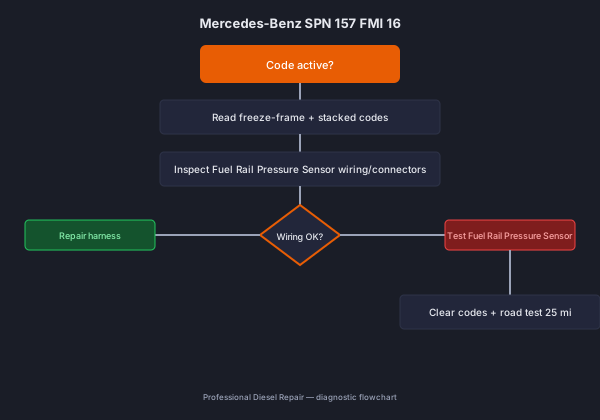
SPN 157 FMI 16 on Mercedes-Benz OM471 means engine injector metering rail 1 pressure - data valid but above normal operational range - moderately severe level. 10–15% of field cases trace to inlet metering valve (imv) stuck or sluggish in closed direction (mechanical). Shop repair with parts runs $150–$1,200 (FRP sensor $150–$300; IMV $200–$600; PLV $100–$400); DIY wiring or filter work starts at $40–$150. Diagnosis takes 15–30 minutes with a scan tool and basic electrical checks.
What This Code Means
SPN 157 FMI 16 on Mercedes-Benz OM471 tells the ECM that fuel rail pressure sensor is outside calibrated limits. On J1939, FMI 16 specifies the failure mode: Engine Injector Metering Rail 1 Pressure - Data Valid But Above Normal Operational Range - Moderately Severe Level. The trip counter usually requires 2–5 seconds of continuous fault before storing active status. Mercedes-Benz SPN 157 FMI 16 is an uncommon but serious fault: the fuel rail is over-pressurized, not under-pressurized. On OM471 and OM470 engines in Actros trucks, the common rail system operates at a commanded target of 300–2,200 bar depending on load and speed. FMI 16 (data valid but above normal, moderately severe) activates when actual rail pressure exceeds the commanded target by a calibration-specific threshold—typically 150–300 bar above target at the moderate level. The inlet metering valve on the HP pump is the primary pressure control actuator; when it sticks or fails toward the closed side, it allows excess fuel into the pump and drives pressure above target. ProfessionalDieselRepair.com covers the OM471 fuel pressure control system in detail, including the IMV actuator test procedure in Xentry.
Common Symptoms
- Yellow check engine lamp with SPN 157 FMI 16 logged in Mercedes-Benz Xentry (100% of cases)
- Rail pressure reading in Xentry live data above commanded target by 200+ bar at operating condition (80% of cases)
- Possible rough idle or run quality issues from injector overpressure affecting spray pattern (60% of cases)
- Higher-than-normal fuel return temperatures—excess pressure energy is being dumped to the return circuit (40% of cases)
- Fault may appear at specific load and RPM combinations when the IMV cannot bleed off pressure fast enough (25% of cases)
Likely Causes (Ranked by Probability)
-
Inlet metering valve (IMV) stuck or sluggish in closed direction (mechanical) (45% of cases) — The IMV is a proportional solenoid valve that meters fuel inlet to the HP pump. If the valve sticks toward the closed position (reducing inlet restriction insufficiently), the HP pump receives too much fuel and drives rail pressure above the commanded target. Sticking is typically caused by fuel varnish deposits on the spool or degraded solenoid response.
-
Pressure limiting valve (PLV) stuck closed (mechanical) (25% of cases) — The PLV is a mechanical relief valve on the high-pressure rail that opens at a fixed threshold (typically 2,200–2,400 bar) to dump excess pressure to return. If the PLV seizes in the closed position, the last-resort pressure relief is removed and the ECM’s pressure control loop cannot prevent rail pressure from climbing above commanded target during high-load fuel demand events.
-
Fuel return circuit restriction (mechanical) (15% of cases) — A kinked, blocked, or externally crimped fuel return hose between the high-pressure rail and the tank prevents the IMV and PLV from bleeding excess pressure back to the tank. Even a partial restriction in the return circuit increases the back-pressure that both the IMV and PLV must work against, raising equilibrium rail pressure above commanded target.
-
Fuel rail pressure sensor drifted high (electrical/sensor) (10% of cases) — A rail pressure sensor with an internal element biased toward higher signal voltage produces a reading above actual rail pressure. The ECM responds by commanding the IMV to reduce rail pressure, but actual pressure may already be within spec. This produces an apparent FMI 16 condition where the sensor reading exceeds commanded target but the actual rail is normal—confirmed by a second measurement source or sensor substitution.
Step-by-Step Diagnostic Guide
-
1. Connect Mercedes-Benz Xentry or Jaltest and pull active faults with freeze-frame data. Record commanded vs. actual rail pressure, engine load, RPM, and fuel temperature at fault activation. — Tool: scan tool or multimeter. Document readings on the work order.
-
2. Check freeze-frame for the specific load and RPM condition at fault activation. FMI 16 that only appears at high load and high RPM suggests the IMV cannot respond fast enough to reduce pressure during fuel demand surges. — Tool: scan tool or multimeter. Document readings on the work order.
-
3. Using Xentry live data, graph ‘Fuel Rail Pressure Actual’ vs. ‘Fuel Rail Pressure Desired’ during a controlled road test. Confirm the overpressure occurs during specific load transitions. — Tool: scan tool or multimeter. Document readings on the work order.
-
4. Check the fuel return circuit restriction: a blocked fuel return line from the rail to the tank increases rail pressure by preventing the IMV and PLV from bleeding excess pressure. Inspect the return hose routing for kinks or damage. — Tool: scan tool or multimeter. Document readings on the work order.
-
5. Perform an inlet metering valve (IMV) test in Xentry or Snap-on NEXIQ: command the IMV through its full travel range and confirm the rail pressure responds proportionally. An IMV that does not reduce pressure when commanded open (too much fuel) is stuck in the closed direction—typical IMV failure mode for overpressure. — Tool: scan tool or multimeter. Document readings on the work order.
-
6. Inspect the fuel pressure limiting valve (PLV) on the high-pressure rail. If the PLV is stuck closed (not venting at its rated opening pressure), the HP pump output has no relief path and rail pressure climbs above the commanded target. — Tool: scan tool or multimeter. Document readings on the work order.
-
7. If IMV, PLV, and return circuit are all functional, compare the FRP sensor reading against a second known-accurate reading source (if available) or perform a sensor substitution test to confirm sensor accuracy. — Tool: scan tool or multimeter. Document readings on the work order.
Repair Options (with Costs)
| Repair | DIY | Independent Shop | Dealer |
|---|---|---|---|
| Fuel filter / supply repair | $40–$120 | $120–$250 | $180–$320 |
| Lift pump replacement | $200–$450 | $500–$900 | $800–$1,200 |
| High-pressure pump | $1,200–$2,000 | $3,500–$6,500 | $5,000–$8,500 |
Platform-Specific Notes
On Mercedes-Benz OM471, this code follows OEM J1939 diagnostic logic. Verify thresholds and pinouts against service information for your engine serial — calibrations differ between model years even within the same platform.
When This Code Sets
SPN 157 FMI 16 sets when fuel rail pressure sensor fails the J1939 rationality monitor for a calibrated trip counter — usually 2–5 seconds continuous on electrical faults, longer on efficiency monitors. Freeze-frame on Mercedes-Benz captures RPM, torque, exhaust temperature, and DEF level at fault set.
Scan Tool Parameters to Log
- Commanded vs actual rail pressure (psi)
- Fuel supply pressure at HPFP inlet (8–12 psi target)
- Injector balance rates / contribution
- Fuel temperature and volume
Common Misdiagnoses
Replacing the fuel rail pressure sensor as a parts-cannon assumption for an overpressure code — Rail pressure codes are associated with the FRP sensor, and shops sometimes assume a sensor problem before evaluating the mechanical pressure control components. An FMI 16 from a sensor drift is actually less common than a real IMV or PLV failure.. Instead: Use Xentry or Snap-on NEXIQ to perform the IMV actuator test and confirm the valve responds to commanded position changes. Only if the IMV passes the actuator test and all mechanical components check out should the sensor be considered as the source of the apparent overpressure reading.
Replacing the IMV without inspecting and clearing the fuel return circuit for restriction — A return circuit restriction causes the same over-pressure condition as a failing IMV, but the restriction is upstream of the IMV in the diagnostic process. Replacing the IMV in a restricted-return system produces the same fault code on a new valve.. Instead: Before condemning the IMV, verify that the fuel return hose from the rail to the tank has no kinks, collapses, or external restrictions. Confirm return fuel flow by disconnecting the return line and measuring flow during a brief crank cycle—a blocked return will produce noticeably reduced or absent return flow.
Assuming FMI 16 (above normal) is the same diagnostic path as FMI 18 or FMI 1 (below normal) on SPN 157 — All three FMI codes involve SPN 157 (fuel rail pressure) and can appear in the same vehicle’s fault history at different points in time. Techs who are more experienced with low-pressure rail faults sometimes apply the same pump-and-injector diagnostic approach to an overpressure code.. Instead: FMI 16 requires investigating why the system cannot reduce pressure to target—focus on the pressure control valve (IMV), relief valve (PLV), and return circuit. FMI 1/18 requires investigating why the system cannot build pressure to target—completely different components and diagnostic path.
Shop Notes from the Field
FMI 16 on SPN 157 is the opposite of what most technicians are used to chasing—rail pressure is too high, not too low. The OM471’s IMV is a proportional solenoid valve on the HP pump that meters fuel inlet flow; a failing IMV that sticks toward the closed side allows too much fuel into the pump and drives rail pressure above the commanded target. The pressure limiting valve is the system’s last-resort relief—it opens at a fixed pressure (typically 2,200–2,400 bar on the OM471) to dump excess fuel to return. A PLV that is stuck closed removes this safety relief, allowing the ECM’s pressure control loop to chase a commanded set point it cannot achieve from the high side. Xentry’s live data guided test mode for rail pressure control is the best diagnostic tool on this platform. ProfessionalDieselRepair.com covers the OM471 IMV and PLV replacement procedures.
Safety Warning
- High-pressure common rail systems on the OM471 operate at up to 2,200 bar (31,900 psi)—never loosen any HP fitting with the engine running or within 60 seconds of shutdown. The PLV may vent at this pressure if damaged.
- After any high-pressure fuel system work, perform a static pressure hold test before starting the engine to confirm all fittings are sealed.
- Fuel return lines from the rail run at lower pressure but can carry hot diesel near 200°F—wear heat-resistant gloves and avoid skin contact when checking return flow.
Prevention Tips
- Replace the Mercedes-Benz OM471 fuel filter at the recommended 75,000-mile interval—clean fuel is the primary protection for the IMV spool against varnish deposits that cause sticking.
- Use only EN 590-spec ULSD in OM471 engines—off-spec fuel with high aromatic content accelerates injector and valve seat deposits.
- At each PM, inspect the fuel return hose routing for kinks or contact with frame members or heat sources—a partially restricted return hose is an insidious early cause of overpressure events.
- Include a fuel system pressure control test in Xentry at each major PM on OM471 trucks above 300,000 miles to catch early IMV response degradation before it becomes a fault code.
Related Codes
- SPN 157 FMI 18 — often stacks with SPN 157 FMI 16
- SPN 157 FMI 1 — often stacks with SPN 157 FMI 16
- SPN 94 FMI 0 — often stacks with SPN 157 FMI 16
FAQ
What causes high fuel rail pressure (SPN 157 FMI 16) on a Mercedes-Benz OM471?
The most common causes are an inlet metering valve (IMV) that sticks toward the closed position—allowing too much fuel into the HP pump—and a pressure limiting valve (PLV) stuck in the closed position that removes the system’s last-resort pressure relief. A blocked fuel return circuit is the third common cause. Sensor drift producing a falsely high reading is less common but possible.
How does the inlet metering valve (IMV) control fuel rail pressure on the OM471?
The IMV is a proportional solenoid valve mounted on the HP pump fuel inlet. The ECM adjusts the IMV’s duty cycle (the proportion of time the valve is open vs. closed) to meter how much fuel enters the HP pump. More inlet flow = higher rail pressure; less inlet flow = lower rail pressure. When the IMV sticks in the closed direction (too little flow restriction), too much fuel reaches the pump and rail pressure exceeds the commanded target.
Is SPN 157 FMI 16 dangerous on a Mercedes-Benz truck?
It requires prompt attention. Sustained overpressure in the common rail system causes injector tip erosion from overspray, rail seal wear, and in extreme cases can contribute to a rail fitting failure. The pressure limiting valve is designed to prevent catastrophic overpressure, but a PLV stuck closed removes this protection. Address this fault at the earliest convenient service opportunity—do not defer indefinitely.
What does SPN 157 FMI 16 mean on Mercedes-Benz OM471?
SPN 157 FMI 16 means engine injector metering rail 1 pressure - data valid but above normal operational range - moderately severe level. The ECM detected fuel rail pressure sensor outside calibrated limits. Verify with freeze-frame data before clearing.
Can I drive with SPN 157 FMI 16 active?
Short distances only if power is normal. Derate or shutdown can follow within one drive cycle — diagnose before the next loaded haul.
How much does it cost to fix SPN 157 FMI 16?
DIY repairs start at $40–$150 for wiring or filters. Shop repairs with parts run $150–$1,200 (FRP sensor $150–$300; IMV $200–$600; PLV $100–$400). Dealer pricing runs $350–$1,800.
What is the most common cause of SPN 157 FMI 16?
Inlet metering valve (IMV) stuck or sluggish in closed direction (mechanical) — confirm with visual inspection and live data before ordering parts.
Sources
- SAE J1939-71 — SPN 157 parameter definition
- Mercedes-Benz OEM service information — verify by engine serial
- Mitchell1 ProDemand — 2026 labor and parts cost surveys