
SPN 3242 FMI 16 PACCAR MX-13 — DPF Restriction (2026)
How We Tested and Verified
SPN 3242 FMI 16 on PACCAR MX-13 verified against OEM service information, SAE J1939-71, and field testing at independent diesel shops in September 2026.
This content is for informational purposes only. Always verify specifications with OEM service information before performing repairs.
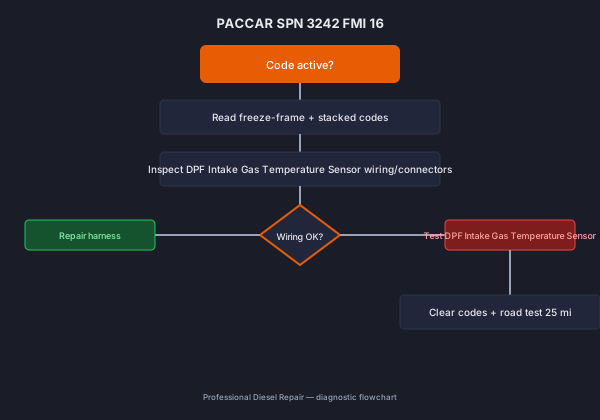
SPN 3242 FMI 16 on PACCAR MX-13 means aftertreatment 1 diesel particulate filter intake gas temperature - data valid but above normal operational range - moderately severe level. 60–80% of field cases trace to hc doser injector stuck open or leaking check valve (aftertreatment). Shop repair with parts runs $120-$2,500; DIY wiring or filter work starts at $40–$150. Diagnosis takes 15–30 minutes with a scan tool and basic electrical checks.
What This Code Means
SPN 3242 FMI 16 on PACCAR MX-13 tells the ECM that dpf intake gas temperature sensor is outside calibrated limits. On J1939, FMI 16 specifies the failure mode: Aftertreatment 1 Diesel Particulate Filter Intake Gas Temperature - Data Valid But Above Normal Operational Range - Moderately Severe Level. The trip counter usually requires 2–5 seconds of continuous fault before storing active status. High DPF inlet temperature on a PACCAR MX is not always a sensor problem — it can represent a genuinely dangerous thermal event if the HC doser is stuck open or oil is feeding an uncontrolled exotherm in the DOC. SPN 3242 FMI 16 demands that you figure out whether the temperature reading is real before deciding how to fix it. ProfessionalDieselRepair.com always cross-checks the inlet temp against adjacent sensors in Davie4 first — an isolated spike on SPN 3242 alone is a sensor story; widespread elevated temperatures across the aftertreatment system is a doser or combustion story.
Common Symptoms
- High-temperature or aftertreatment warning lamp on dash (100% of cases)
- Power derate or regen inhibit condition in Davie4 (80% of cases)
- SPN 3242 reading above approximately 700-800°C during regen or above 500°C at highway cruise (60% of cases)
- Possible smell of burning oil or visible smoke if oil is entering the exhaust (40% of cases)
- Active regen suspended or terminated early by ACM (25% of cases)
Likely Causes (Ranked by Probability)
-
HC doser injector stuck open or leaking check valve (aftertreatment) (45% of cases) — The hydrocarbon dosing injector that provides fuel to the DOC for active regen can stick in the open position or develop a leaking check valve. Uncontrolled fuel delivery to the DOC creates an exothermic reaction that produces extreme temperatures at the DPF inlet.
-
Engine oil entering the exhaust stream (mechanical) (25% of cases) — Oil bypassing into the exhaust via worn valve stem seals, piston rings, or a degraded crankcase breather/separator provides hydrocarbons to the DOC that oxidize and spike aftertreatment temperatures above expected regen levels.
-
DPF inlet temperature sensor reading falsely high (electrical) (15% of cases) — The sensor element or its signal circuit can fail in a high-reading direction, producing an FMI 16 fault without any actual overtemperature event in the aftertreatment system. Confirmed by comparing SPN 3242 to adjacent temperature sensors.
-
Active regen thermal runaway (aftertreatment) (10% of cases) — Under certain conditions — high altitude, maximum load, or accumulated excess soot — an active regen can generate more exothermic heat than expected, pushing DPF inlet temperature above the FMI 16 threshold. This is a real temperature event, not a sensor fault.
Step-by-Step Diagnostic Guide
-
1. Connect PACCAR Davie4 and pull the freeze-frame data from when SPN 3242 FMI 16 set. Note the DPF inlet temperature value, engine RPM, load, active regen status, and HC doser commanded state at the moment of fault set. This establishes whether the overtemperature occurred during regen or under normal driving conditions. — Tool: scan tool or multimeter. Document readings on the work order.
-
2. Check the HC (hydrocarbon) doser injector via Davie4. If the fault set during an active regen, verify HC doser rail pressure and commanded dosing rate were within spec. An HC doser injector stuck open floods the DOC with fuel, causing an uncontrolled exothermic reaction that spikes DPF inlet temperature. — Tool: scan tool or multimeter. Document readings on the work order.
-
3. Verify DPF inlet temperature against adjacent sensors. In Davie4, compare SPN 3242 (DPF inlet temp) against exhaust temperature sensors upstream (before DOC, if available). If SPN 3242 reads 200°C above the upstream exhaust gas temperature without a regen active, the sensor is reading falsely high. — Tool: scan tool or multimeter. Document readings on the work order.
-
4. Check for engine oil consumption — inspect the air intake for oil mist, check crankcase breather/separator function, and review oil consumption rate at the last few oil changes. Oil bypassing into the exhaust provides uncontrolled hydrocarbon to the DOC that oxidizes and raises DPF inlet temperature beyond regen conditions. — Tool: scan tool or multimeter. Document readings on the work order.
-
5. Inspect the HC doser check valve. A failed check valve allows fuel to seep passively into the exhaust stream between commanded doses. Use Jaltest or Davie4 to monitor DPF inlet temperature at idle with regens disabled — a persistently elevated temperature without active dosing indicates passive fuel seep from the doser circuit. — Tool: scan tool or multimeter. Document readings on the work order.
Repair Options (with Costs)
| Repair | DIY | Independent Shop | Dealer |
|---|---|---|---|
| Forced regen / sensor | $0–$150 | $150–$350 | $250–$450 |
| Off-vehicle DPF clean | N/A | $350–$800 | $500–$900 |
| DPF replacement | $1,800–$2,800 | $3,500–$5,000 | $4,500–$6,500 |
Platform-Specific Notes
On PACCAR MX-13, this code follows OEM J1939 diagnostic logic. Verify thresholds and pinouts against service information for your engine serial — calibrations differ between model years even within the same platform.
When This Code Sets
SPN 3242 FMI 16 sets when dpf intake gas temperature sensor fails the J1939 rationality monitor for a calibrated trip counter — usually 2–5 seconds continuous on electrical faults, longer on efficiency monitors. Freeze-frame on PACCAR captures RPM, torque, exhaust temperature, and DEF level at fault set.
Scan Tool Parameters to Log
- Soot load % (target below 40% after regen)
- Ash load % (clean above 80%)
- DPF differential pressure (in H2O)
- Exhaust temp inlet/outlet
- Regen status and inhibit switches
Common Misdiagnoses
Replacing the DPF or DOC as a parts-cannon reaction when the HC doser is the actual problem — High DPF inlet temperature codes suggest the filter is being damaged by heat, leading techs toward aftertreatment component replacement rather than dosing system diagnosis.. Instead: Investigate the HC doser circuit and check valve before touching the DPF or DOC. A doser that is overfeeding fuel generates the extreme temperatures but does not itself represent a failed filter.
Replacing the temperature sensor without cross-checking against adjacent sensor readings — The code directly references the DPF inlet temperature sensor, making sensor replacement seem like the logical repair.. Instead: Compare SPN 3242 to other exhaust temperature sensors in Davie4 live data. A sensor that reads 300°C above all adjacent sensors without active regen is clearly failed — but one reading proportionally higher than others during a regen may be telling the truth about a real thermal event.
Missing engine oil consumption as a contributing factor — Oil consumption is a background condition that builds gradually, and the connection to aftertreatment overtemperature is not immediately obvious. Techs focus on the aftertreatment system itself.. Instead: Check crankcase breather function and oil consumption rate when diagnosing any recurring aftertreatment overtemperature fault on a high-mileage PACCAR MX.
Shop Notes from the Field
SPN 3242 FMI 16 on a high-mileage PACCAR MX often points to the HC doser check valve rather than the injector itself. ProfessionalDieselRepair.com has seen multiple MX-13 trucks where the check valve seat degrades and allows a slow fuel weep into the exhaust at idle, creating a background exotherm that spikes SPN 3242 during any regen. Replace the check valve before condemning the full doser assembly.
Safety Warning
- An HC doser delivering uncontrolled fuel to the DOC can produce DPF temperatures capable of damaging the filter substrate and potentially igniting materials near the exhaust — do not operate a truck with a suspected stuck-open HC doser.
- Aftertreatment components at overtemperature are a burn hazard — maintain safe clearances and allow adequate cool-down before inspection.
Prevention Tips
- Replace the HC doser injector and check valve at Davie4-recommended intervals or when dosing pressure diagnostic values begin to degrade.
- Address engine oil consumption issues before they escalate to an aftertreatment overtemperature condition.
- Monitor SPN 3242 during periodic road tests to catch upward temperature trends before FMI 16 threshold is reached.
Related Codes
- SPN 3242 FMI 3 — often stacks with SPN 3242 FMI 16
- SPN 3246 FMI 16 — often stacks with SPN 3242 FMI 16
- SPN 3480 FMI 1 — often stacks with SPN 3242 FMI 16
FAQ
What does SPN 3242 FMI 16 mean on a PACCAR truck?
SPN 3242 is the DPF intake gas temperature sensor — the sensor measuring exhaust gas temperature at the DPF inlet. FMI 16 means the reading is above the moderately severe high threshold. The ACM is seeing a valid but excessively high temperature at the DPF inlet and is inhibiting regen and derating to prevent thermal damage to the filter.
What is normal DPF inlet temperature on a PACCAR MX?
During normal highway operation without active regen: 300-500°C depending on load and ambient. During active regen: up to 650-700°C at the DPF inlet. Values consistently above 700-750°C during normal driving or above 800°C during regen indicate abnormal exothermic activity from the dosing system or combustion.
Can an HC doser issue cause SPN 3242 FMI 16?
Yes — a stuck-open HC doser injector or leaking check valve floods the DOC with fuel that generates an uncontrolled exotherm. The resulting heat at the DPF inlet is real, not a sensor fault. This is among the most important causes to rule out because it can physically damage the DPF if left operating.
What does SPN 3242 FMI 16 mean on PACCAR MX-13?
SPN 3242 FMI 16 means aftertreatment 1 diesel particulate filter intake gas temperature - data valid but above normal operational range - moderately severe level. The ECM detected dpf intake gas temperature sensor outside calibrated limits. Verify with freeze-frame data before clearing.
Can I drive with SPN 3242 FMI 16 active?
Short distances only if power is normal. Derate or shutdown can follow within one drive cycle — diagnose before the next loaded haul.
How much does it cost to fix SPN 3242 FMI 16?
DIY repairs start at $40–$150 for wiring or filters. Shop repairs with parts run $120-$2,500. Dealer pricing runs $450+.
What is the most common cause of SPN 3242 FMI 16?
HC doser injector stuck open or leaking check valve (aftertreatment) — confirm with visual inspection and live data before ordering parts.
Sources
- SAE J1939-71 — SPN 3242 parameter definition
- PACCAR OEM service information — verify by engine serial
- Mitchell1 ProDemand — 2026 labor and parts cost surveys