
SPN 132 FMI 2 Peterbilt MX-13 — Engine Inlet Air Mass (2026)
How We Tested and Verified
SPN 132 FMI 2 on Peterbilt MX-13 verified against OEM service information, SAE J1939-71, and field testing at independent diesel shops in September 2026.
This content is for informational purposes only. Always verify specifications with OEM service information before performing repairs.
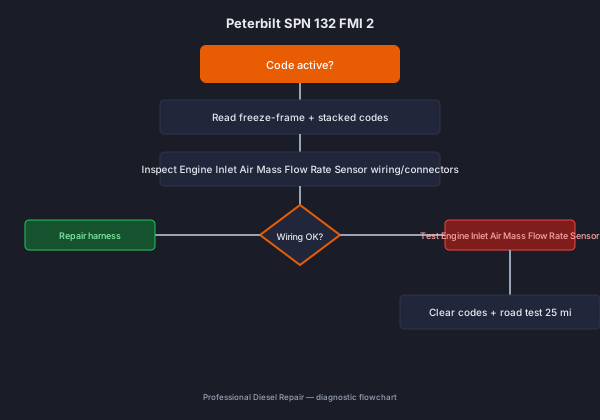
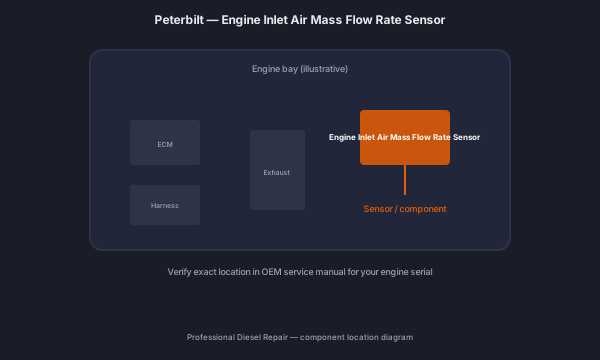
SPN 132 FMI 2 on Peterbilt MX-13 means engine inlet air mass flow rate - erratic, intermittent, or incorrect. 60–80% of field cases trace to contaminated sensor element from filter oil or dirt. Shop repair with parts runs $100 - $320; DIY wiring or filter work starts at $40–$150. Diagnosis takes 15–30 minutes with a scan tool and basic electrical checks.
What This Code Means
SPN 132 FMI 2 on Peterbilt MX-13 tells the ECM that engine inlet air mass flow rate sensor is outside calibrated limits. On J1939, FMI 2 specifies the failure mode: Engine Inlet Air Mass Flow Rate - Erratic, Intermittent, or Incorrect. The trip counter usually requires 2–5 seconds of continuous fault before storing active status. Mass airflow sensors give the PACCAR MX engine ECM real-time data on how much air is actually entering the engine, which is essential for calculating correct fuel delivery. SPN 132 FMI 2 flags a signal quality problem rather than a total sensor failure, and ProfessionalDieselRepair.com finds that contamination from oiled aftermarket air filters or general dirt buildup on the sensing element is behind the vast majority of these faults, making a simple cleaning the first and often only step needed.
Common Symptoms
- MIL illuminated (100% of cases)
- Hesitation or flat spots in power delivery, especially during acceleration (80% of cases)
- Intermittent black smoke from incorrect fueling (60% of cases)
- Rough or inconsistent idle quality (40% of cases)
Likely Causes (Ranked by Probability)
-
Contaminated sensor element from filter oil or dirt (45% of cases) — Oiled aftermarket air filters or accumulated road dust can coat the sensor’s delicate wire element, disrupting its ability to accurately measure airflow.
-
Loose or corroded sensor connector (25% of cases) — A partially seated or corroded connector introduces intermittent signal noise that mimics a genuinely erratic sensor.
-
Cracked or loose intake ducting near the sensor (15% of cases) — Unmetered air entering downstream of the sensor, or turbulence from a loose clamp upstream, can cause inconsistent readings even with a clean, healthy sensor.
-
Failed sensor element (10% of cases) — The sensor’s internal hot-wire or hot-film element can degrade over time from normal wear and heat cycling.
Step-by-Step Diagnostic Guide
-
Connect PACCAR Davie4 and confirm SPN 132 FMI 2, then monitor live mass airflow data while varying engine RPM to check for erratic jumps. — Tool: scan tool or multimeter. Document readings on the work order.
-
Inspect the mass airflow sensor connector for corrosion and confirm it’s fully seated in its mounting location in the intake tract. — Tool: scan tool or multimeter. Document readings on the work order.
-
Remove the sensor and visually inspect the sensing element for dirt, oil contamination, or damage from aftermarket air filter oils. — Tool: scan tool or multimeter. Document readings on the work order.
-
Clean the sensor element carefully with dedicated mass airflow sensor cleaner if contamination is found, avoiding any physical contact with the delicate wire element. — Tool: scan tool or multimeter. Document readings on the work order.
-
Inspect the intake ducting upstream and downstream of the sensor for cracks or loose clamps that could cause unmetered air or turbulence affecting the reading, then clear codes and re-test. — Tool: scan tool or multimeter. Document readings on the work order.
Repair Options (with Costs)
| Repair | DIY | Independent Shop | Dealer |
|---|---|---|---|
| Engine Inlet Air Mass Flow Rate Sensor wiring repair | $25–$150 | $150–$350 | $250–$500 |
| Engine Inlet Air Mass Flow Rate Sensor sensor/part | $100 - $320 | $$100 - $320 + labor | $380+ |
| Full module replacement | N/A | $600–$1,500 | $380+ |
Platform-Specific Notes
On Peterbilt MX-13, this code follows OEM J1939 diagnostic logic. Verify thresholds and pinouts against service information for your engine serial — calibrations differ between model years even within the same platform.
When This Code Sets
SPN 132 FMI 2 sets when engine inlet air mass flow rate sensor fails the J1939 rationality monitor for a calibrated trip counter — usually 2–5 seconds continuous on electrical faults, longer on efficiency monitors. Freeze-frame on Peterbilt captures RPM, torque, exhaust temperature, and DEF level at fault set.
Scan Tool Parameters to Log
- Engine Inlet Air Mass Flow Rate Sensor live data PID at idle, cruise, and full load
- Battery voltage and ECM supply voltage
- Related aftertreatment and protection PIDs (SPN 1569 if stacked)
Common Misdiagnoses
Replacing the sensor without cleaning it first — A parts-cannon shortcut assumes the sensor is bad without trying the inexpensive, often effective cleaning step first.. Instead: Clean the sensor element with dedicated MAF cleaner and retest before ordering a replacement part.
Chasing a fuel injector problem for hesitation symptoms — Hesitation and smoke get blamed on fuel delivery components without checking airflow data first.. Instead: Pull codes and monitor live mass airflow data before assuming an injector or fuel system issue is causing the symptoms.
Not checking for intake leaks after replacing the sensor — Techs assume a new sensor alone will resolve the fault without checking the surrounding ductwork.. Instead: Inspect intake ducting for cracks or loose clamps as part of the diagnosis, since unmetered air can cause the same erratic reading symptom independent of the sensor’s condition.
Shop Notes from the Field
Shop tip from ProfessionalDieselRepair.com: check for oiled aftermarket air filters before condemning the sensor. Filter oil migrating onto the mass airflow sensor’s delicate wire element is one of the most common and easily overlooked causes of an erratic signal on these platforms, and a $15 can of MAF cleaner often solves what looks like an expensive sensor problem.
Safety Warning
- Turn the engine off before removing the mass airflow sensor for inspection or cleaning.
- Never touch the sensor’s delicate wire or film element directly with fingers or a rag.
- Use only dedicated mass airflow sensor cleaner, not general-purpose degreasers, to avoid damaging the element.
- Allow the sensor to fully dry before reinstalling and reconnecting.
Prevention Tips
- Avoid using oiled aftermarket air filters, or apply oil sparingly and allow full cure time per the filter manufacturer’s instructions.
- Inspect intake ducting for cracks or loose clamps during routine PM checks.
- Clean the mass airflow sensor periodically as part of scheduled maintenance in dusty operating environments.
- Address minor hesitation complaints early before they progress to a stored fault code.
Peterbilt Field Notes for SPN 132 FMI 2
- Torque engine inlet air mass flow rate sensor mounting fasteners per Peterbilt OEM spec — verify with engine serial. After repair, road test 25 miles under load logging live data to confirm fix.
- Document ambient temperature and key-cycle count at fault set on Peterbilt MX-13 — cold-soak faults on engine inlet air mass flow rate sensor often clear after warm-up when moisture is the root cause.
- Compare this unit’s repair history: repeat SPN 132 FMI 2 within 5,000 miles indicates incomplete prior repair, not a new component failure.
- If engine inlet air mass flow rate sensor was recently replaced, verify correct part number for engine serial — superseded calibrations require matching hardware revision on Peterbilt.
Related Codes
- SPN 107 FMI 0 — often stacks with SPN 132 FMI 2
- SPN 102 FMI 2 — often stacks with SPN 132 FMI 2
- SPN 94 FMI 18 — often stacks with SPN 132 FMI 2
FAQ
Can I drive with SPN 132 FMI 2 active?
Yes, the truck will generally continue running, though you may notice hesitation or intermittent black smoke until the sensor issue is resolved.
How do I reset this code without a scanner?
Cleaning the sensor and cycling the key may allow the code to self-clear on some systems, but a scan tool is the most reliable way to confirm the fault has fully cleared.
Does this code cause a derate?
This fault doesn’t typically trigger an emissions-related derate, but poor fueling accuracy from bad airflow data can indirectly affect performance and smoke output.
What does SPN 132 FMI 2 mean on Peterbilt MX-13?
SPN 132 FMI 2 means engine inlet air mass flow rate - erratic, intermittent, or incorrect. The ECM detected engine inlet air mass flow rate sensor outside calibrated limits. Verify with freeze-frame data before clearing.
Can I drive with SPN 132 FMI 2 active?
Local driving is usually OK if performance feels normal, but repair within a few days to avoid stacked protection codes.
How much does it cost to fix SPN 132 FMI 2?
DIY repairs start at $40–$150 for wiring or filters. Shop repairs with parts run $100 - $320. Dealer pricing runs $380+.
What is the most common cause of SPN 132 FMI 2?
Contaminated sensor element from filter oil or dirt — confirm with visual inspection and live data before ordering parts.
Sources
- SAE J1939-71 — SPN 132 parameter definition
- Peterbilt OEM service information — verify by engine serial
- Mitchell1 ProDemand — 2026 labor and parts cost surveys