
SPN 175 FMI 1 Peterbilt MX-13 — Engine Oil Temperatur (2026)
How We Tested and Verified
SPN 175 FMI 1 on Peterbilt MX-13 verified against OEM service information, SAE J1939-71, and field testing at independent diesel shops in September 2026.
This content is for informational purposes only. Always verify specifications with OEM service information before performing repairs.
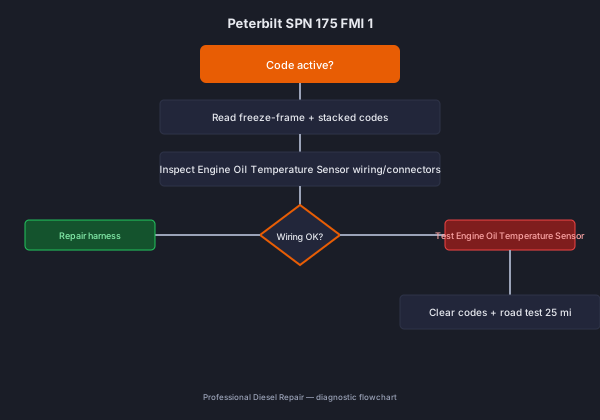
SPN 175 FMI 1 on Peterbilt MX-13 means engine oil temperature 1 - data valid but below normal operating range. 60–80% of field cases trace to failed oil temperature sensor (open circuit). Shop repair with parts runs $35 - $150; DIY wiring or filter work starts at $40–$150. Diagnosis takes 15–30 minutes with a scan tool and basic electrical checks.
What This Code Means
SPN 175 FMI 1 on Peterbilt MX-13 tells the ECM that engine oil temperature sensor is outside calibrated limits. On J1939, FMI 1 specifies the failure mode: Engine Oil Temperature 1 - Data Valid But Below Normal Operating Range. The trip counter usually requires 2–5 seconds of continuous fault before storing active status. Oil temperature on a Peterbilt feeds fan strategy, aftertreatment regen authorization, and engine protection logic. When SPN 175 FMI 1 sets, the ECM sees oil that appears too cold to operate safely — even when the engine is fully warmed. ProfessionalDieselRepair.com advises comparing oil temperature to coolant temperature on a scan tool and checking the connector at the oil filter housing before ordering a replacement sensor.
Common Symptoms
- Amber Check Engine lamp with oil temperature reading stuck below 100°F after warm-up (100% of cases)
- Cooling fan may not engage when oil temperature should command it on (80% of cases)
- Aftertreatment regen may be inhibited or delayed (60% of cases)
- Possible torque derate if the ECM cannot verify safe oil temperature during loaded operation (40% of cases)
- Dash or scan tool oil temp may read unrealistically cold compared to coolant temperature (25% of cases)
Likely Causes (Ranked by Probability)
-
Failed oil temperature sensor (open circuit) (45% of cases) — An open NTC element reads as maximum resistance, which the ECM interprets as oil temperature far below operating range.
-
Oil-contaminated or corroded connector at filter housing (25% of cases) — Oil wicking into the connector creates high resistance on the signal circuit, biasing the reading low without internal sensor failure.
-
Genuinely low oil temperature from stuck-open thermostat (15% of cases) — A thermostat stuck open prevents oil from reaching normal operating temperature, producing a real low reading that is not a sensor fault.
Step-by-Step Diagnostic Guide
-
Connect PACCAR Davie4 or Cummins INSITE and confirm SPN 175 FMI 1; compare oil temperature (SPN 175) to coolant temperature (SPN 110) after 15 minutes at 1,200 RPM — oil should be within 20-40°F of coolant, not 80°F colder. — Tool: scan tool or multimeter. Document readings on the work order.
-
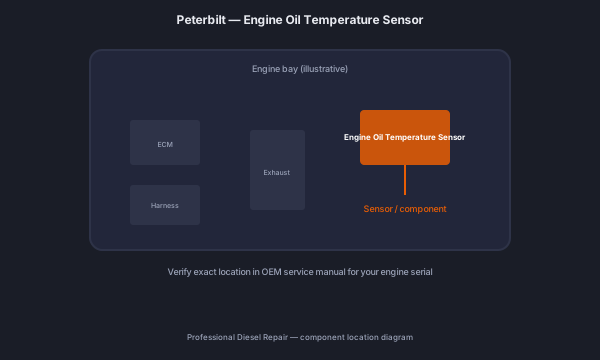
Locate the engine oil temperature sensor on the oil filter housing or block; inspect the 3-pin connector for oil contamination, bent pins, or a broken lock tab. — Tool: scan tool or multimeter. Document readings on the work order.
-
With the engine at operating temperature (coolant 180-195°F), measure sensor resistance — most sensors read 500-1,200 ohms at 190°F; an open circuit or reading above 10,000 ohms confirms sensor failure. — Tool: scan tool or multimeter. Document readings on the work order.
-
Back-probe the signal wire at the ECM connector with the sensor plugged in — expect 1.0-2.5V at operating temperature; 4.5-5.0V indicates an open circuit the ECM reads as very cold oil. — Tool: scan tool or multimeter. Document readings on the work order.
-
Check the 5V reference supply on the same harness branch (SPN 3509) — a weak reference can bias multiple temperature sensors low simultaneously. — Tool: scan tool or multimeter. Document readings on the work order.
-
Replace the sensor or repair wiring, clear codes, and verify oil temperature rises above 180°F within 20 minutes of loaded operation. — Tool: scan tool or multimeter. Document readings on the work order.
Repair Options (with Costs)
| Repair | DIY | Independent Shop | Dealer |
|---|---|---|---|
| Engine Oil Temperature Sensor wiring repair | $25–$150 | $150–$350 | $250–$500 |
| Engine Oil Temperature Sensor sensor/part | $35 - $150 | $$35 - $150 + labor | $280+ |
| Full module replacement | N/A | $600–$1,500 | $280+ |
Platform-Specific Notes
On Peterbilt MX-13, this code follows OEM J1939 diagnostic logic. Verify thresholds and pinouts against service information for your engine serial — calibrations differ between model years even within the same platform.
When This Code Sets
SPN 175 FMI 1 sets when engine oil temperature sensor fails the J1939 rationality monitor for a calibrated trip counter — usually 2–5 seconds continuous on electrical faults, longer on efficiency monitors. Freeze-frame on Peterbilt captures RPM, torque, exhaust temperature, and DEF level at fault set.
Scan Tool Parameters to Log
- Engine Oil Temperature Sensor live data PID at idle, cruise, and full load
- Battery voltage and ECM supply voltage
- Related aftertreatment and protection PIDs (SPN 1569 if stacked)
Common Misdiagnoses
Replacing the oil temperature sensor without verifying actual oil warmth — The code description blames the sensor, so mechanical causes get skipped.. Instead: This is a parts-cannon habit — compare SPN 175 to SPN 110 after a 15-minute warm-up; if coolant is 190°F and oil reads 90°F, check thermostat and oil cooler flow first.
Ignoring a simultaneous SPN 3509 fault — Techs treat each code independently during a quick scan.. Instead: A weak 5V reference can pull multiple temperature sensors low — diagnose supply voltage before swapping individual sensors.
Shop Notes from the Field
Shop tip: tee in a mechanical oil temperature gauge at the filter port before condemning the sensor — a genuinely cold oil reading with normal coolant points to a failed thermostat or oil cooler flow issue, not just a bad sensor. ProfessionalDieselRepair.com finds oil-soaked connectors at the filter housing cause more repeat visits than the sensor element itself on Peterbilt 579/389 models.
Safety Warning
- Hot engine oil exceeds 250°F — allow cooldown before disconnecting the sensor at the filter housing.
- Wear gloves when working near the oil filter — residual pressure can spray hot oil when the sensor is removed.
- Support the harness when disconnecting to avoid pulling pins from the ECM connector.
- Do not operate the engine with the oil temperature sensor unplugged — protection logic may default to conservative derate.
Prevention Tips
- Replace the oil filter and inspect the sensor O-ring at every PM — overtightening cracks the sensor boss.
- Clean oil from the connector area during filter changes.
- Replace thermostat at 150,000-mile intervals on severe-duty cycles.
- Check 5V reference voltage during annual electrical inspection.
Peterbilt Field Notes for SPN 175 FMI 1
- Torque engine oil temperature sensor mounting fasteners per Peterbilt OEM spec — verify with engine serial. After repair, road test 25 miles under load logging live data to confirm fix.
- Document ambient temperature and key-cycle count at fault set on Peterbilt MX-13 — cold-soak faults on engine oil temperature sensor often clear after warm-up when moisture is the root cause.
- Compare this unit’s repair history: repeat SPN 175 FMI 1 within 5,000 miles indicates incomplete prior repair, not a new component failure.
- If engine oil temperature sensor was recently replaced, verify correct part number for engine serial — superseded calibrations require matching hardware revision on Peterbilt.
Related Codes
- SPN 175 FMI 16 — often stacks with SPN 175 FMI 1
- SPN 3509 FMI 3 — often stacks with SPN 175 FMI 1
- SPN 110 FMI 1 — often stacks with SPN 175 FMI 1
FAQ
What does Peterbilt SPN 175 FMI 1 mean?
It means the engine oil temperature sensor is reporting a value below the ECM normal operating range. The ECM may restrict regen and fan operation until it receives a plausible oil temperature reading.
Can SPN 175 FMI 1 prevent DPF regeneration?
Yes, most aftertreatment systems require confirmed oil temperature above a minimum threshold (typically 140-160°F) before authorizing active regen. A stuck-low reading blocks regen and can lead to soot-related derate.
What resistance should the oil temperature sensor show?
At 190°F oil temperature, most sensors read 500-1,200 ohms. An open circuit above 10,000 ohms or signal voltage near 5V indicates sensor or wiring failure.
What does SPN 175 FMI 1 mean on Peterbilt MX-13?
SPN 175 FMI 1 means engine oil temperature 1 - data valid but below normal operating range. The ECM detected engine oil temperature sensor outside calibrated limits. Verify with freeze-frame data before clearing.
Can I drive with SPN 175 FMI 1 active?
Short distances only if power is normal. Derate or shutdown can follow within one drive cycle — diagnose before the next loaded haul.
How much does it cost to fix SPN 175 FMI 1?
DIY repairs start at $40–$150 for wiring or filters. Shop repairs with parts run $35 - $150. Dealer pricing runs $280+.
What is the most common cause of SPN 175 FMI 1?
Failed oil temperature sensor (open circuit) — confirm with visual inspection and live data before ordering parts.
Sources
- SAE J1939-71 — SPN 175 parameter definition
- Peterbilt OEM service information — verify by engine serial
- Mitchell1 ProDemand — 2026 labor and parts cost surveys