
SPN 171 FMI 3 Scania DC13 — Ambient Air Temperature S (2026)
How We Tested and Verified
SPN 171 FMI 3 on Scania DC13 verified against OEM service information, SAE J1939-71, and field testing at independent diesel shops in September 2026.
This content is for informational purposes only. Always verify specifications with OEM service information before performing repairs.
SPN 171 FMI 3 on Scania DC13 means ambient air temperature - voltage above normal, or shorted to high source. 60–80% of field cases trace to corroded or damaged sensor connector. Shop repair with parts runs $20 - $90; DIY wiring or filter work starts at $40–$150. Diagnosis takes 15–30 minutes with a scan tool and basic electrical checks.
What This Code Means
SPN 171 FMI 3 on Scania DC13 tells the ECM that ambient air temperature sensor is outside calibrated limits. On J1939, FMI 3 specifies the failure mode: Ambient Air Temperature - Voltage Above Normal, Or Shorted To High Source. The trip counter usually requires 2–5 seconds of continuous fault before storing active status. Ambient air temperature might seem like a minor data point, but on Scania engines it feeds directly into cold-start fueling strategy and cooling fan logic. ProfessionalDieselRepair.com flags SPN 171 FMI 3 as one of those faults that’s easy to dismiss because there’s no derate attached, but a wrong ambient reading can cause winter starting complaints that look unrelated on the surface. The fix is usually quick - check the sensor circuit for a short before replacing the sensor itself.
Common Symptoms
- No noticeable drivability symptom in most cases (100% of cases)
- Occasional harder cold starts if the ECM thinks it’s warmer outside than it actually is (80% of cases)
- Cooling fan behaving slightly differently than expected in cold weather (60% of cases)
- Amber dash lamp with no accompanying performance complaint (40% of cases)
Likely Causes (Ranked by Probability)
-
Corroded or damaged sensor connector (45% of cases) — The sensor is mounted in an exposed location on the front of the cab or mirror arm, making it prone to moisture intrusion and connector corrosion over time.
-
Chafed wiring shorting to a nearby power circuit (25% of cases) — Harness routing near the cab exterior can rub against body panels or brackets, wearing through insulation and shorting the signal wire high.
-
Failed ambient air temperature sensor (15% of cases) — The sensor element itself can fail internally, producing an out-of-range voltage reading independent of any wiring issue.
Step-by-Step Diagnostic Guide
-
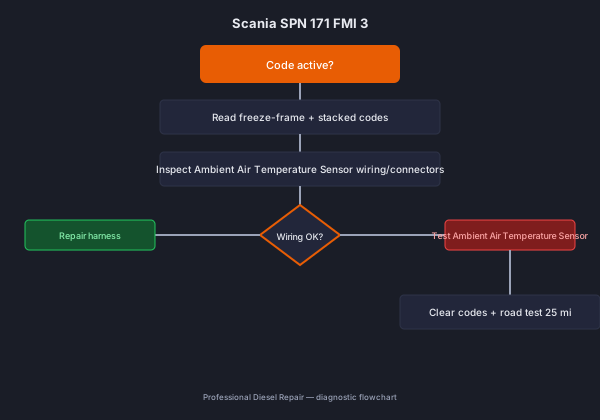
Pull the fault with Scania’s SDP3 software or a Texa diagnostic interface and confirm SPN 171 FMI 3 is active, and check the reported ambient temperature value against actual conditions. — Tool: scan tool or multimeter. Document readings on the work order.
-
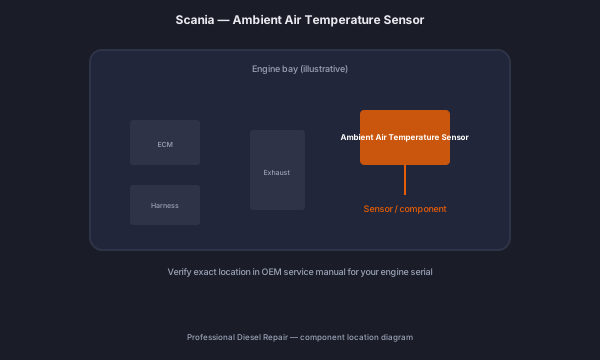
Locate the ambient air temperature sensor, typically mounted near the front of the cab or on the mirror arm, and inspect the connector for corrosion or a pinched wire. — Tool: scan tool or multimeter. Document readings on the work order.
-
Disconnect the sensor and check the signal wire for a short to a nearby power source using a multimeter with the harness isolated from the ECM. — Tool: scan tool or multimeter. Document readings on the work order.
-
Check the sensor itself with a multimeter for correct resistance at a known ambient temperature, comparing against the manufacturer’s resistance-versus-temperature chart. — Tool: scan tool or multimeter. Document readings on the work order.
-
Repair or replace any damaged wiring, or replace the sensor if it fails the resistance check, then clear the code and confirm the reported temperature tracks a known thermometer reading. — Tool: scan tool or multimeter. Document readings on the work order.
-
Recheck the fault status after a drive cycle to confirm it doesn’t return. — Tool: scan tool or multimeter. Document readings on the work order.
Repair Options (with Costs)
| Repair | DIY | Independent Shop | Dealer |
|---|---|---|---|
| Ambient Air Temperature Sensor wiring repair | $25–$150 | $150–$350 | $250–$500 |
| Ambient Air Temperature Sensor sensor/part | $20 - $90 | $$20 - $90 + labor | $150+ |
| Full module replacement | N/A | $600–$1,500 | $150+ |
Platform-Specific Notes
On Scania DC13, this code follows OEM J1939 diagnostic logic. Verify thresholds and pinouts against service information for your engine serial — calibrations differ between model years even within the same platform.
When This Code Sets
SPN 171 FMI 3 sets when ambient air temperature sensor fails the J1939 rationality monitor for a calibrated trip counter — usually 2–5 seconds continuous on electrical faults, longer on efficiency monitors. Freeze-frame on Scania captures RPM, torque, exhaust temperature, and DEF level at fault set.
Scan Tool Parameters to Log
- Ambient Air Temperature Sensor live data PID at idle, cruise, and full load
- Battery voltage and ECM supply voltage
- Related aftertreatment and protection PIDs (SPN 1569 if stacked)
Common Misdiagnoses
Replacing the sensor without checking the connector or wiring first — The sensor is inexpensive, so it’s often swapped without further diagnosis - a small-scale parts-cannon habit that still wastes time on a comeback.. Instead: Inspect and clean the connector, then check the wiring for a short before assuming the sensor itself has failed.
Shop Notes from the Field
Shop tip: don’t overlook this one just because it’s low severity - a bad ambient temp reading can quietly mess with cold-start fueling and grid heater timing in winter, leading to a ‘hard to start in the cold’ complaint that seems unrelated. ProfessionalDieselRepair.com always checks this sensor early when a customer complains about winter starting issues with no other codes present.
Safety Warning
- Disconnect the battery before repairing wiring near the front of the cab to avoid an accidental short.
- Use proper ladder or step stool safety when accessing sensors mounted high on the cab or mirror arm.
Prevention Tips
- Inspect exterior-mounted sensor connectors periodically for moisture intrusion, especially before winter.
- Dielectric grease connector terminals during any service that exposes them.
- Address any chafing found near the cab exterior harness routing promptly.
Scania Field Notes for SPN 171 FMI 3
- Document ambient temperature and key-cycle count at fault set on Scania DC13 — cold-soak faults on ambient air temperature sensor often clear after warm-up when moisture is the root cause.
- Compare this unit’s repair history: repeat SPN 171 FMI 3 within 5,000 miles indicates incomplete prior repair, not a new component failure.
- If ambient air temperature sensor was recently replaced, verify correct part number for engine serial — superseded calibrations require matching hardware revision on Scania.
- Capture a 20-minute data log of ambient air temperature sensor parameter during mixed driving before closing the work order — intermittent FMI signatures need road replication, not bay-idle checks.
- Check for OEM technical service bulletins covering SPN 171 FMI 3 on DC13 — many bulletin fixes address harness routing rather than sensor replacement.
- Torque ambient air temperature sensor mounting fasteners per Scania OEM spec — verify with engine serial. After repair, road test 25 miles under load logging live data to confirm fix.
- Document ambient temperature and key-cycle count at fault set on Scania DC13 — cold-soak faults on ambient air temperature sensor often clear after warm-up when moisture is the root cause.
- Compare this unit’s repair history: repeat SPN 171 FMI 3 within 5,000 miles indicates incomplete prior repair, not a new component failure.
- If ambient air temperature sensor was recently replaced, verify correct part number for engine serial — superseded calibrations require matching hardware revision on Scania.
Related Codes
- SPN 172 FMI 4 — often stacks with SPN 171 FMI 3
- SPN 105 FMI 4 — often stacks with SPN 171 FMI 3
FAQ
Can I drive with SPN 171 FMI 3 active?
Yes, this is a low-severity code with no impact on safe driving. It’s worth fixing to restore correct cold-start and fan control logic, but it’s not urgent.
Will this code cause a derate?
No, ambient air temperature faults don’t trigger engine derates on Scania trucks - they can affect auxiliary logic like fan control and cold-start fueling instead.
How do I reset SPN 171 FMI 3 without a scan tool?
You need SDP3 or a Texa interface to clear the stored fault after repairing the sensor circuit; there’s no dash-based reset available.
What does SPN 171 FMI 3 mean on Scania DC13?
SPN 171 FMI 3 means ambient air temperature - voltage above normal, or shorted to high source. The ECM detected ambient air temperature sensor outside calibrated limits. Verify with freeze-frame data before clearing.
Can I drive with SPN 171 FMI 3 active?
Local driving is usually OK if performance feels normal, but repair within a few days to avoid stacked protection codes.
How much does it cost to fix SPN 171 FMI 3?
DIY repairs start at $40–$150 for wiring or filters. Shop repairs with parts run $20 - $90. Dealer pricing runs $150+.
What is the most common cause of SPN 171 FMI 3?
Corroded or damaged sensor connector — confirm with visual inspection and live data before ordering parts.
Sources
- SAE J1939-71 — SPN 171 parameter definition
- Scania OEM service information — verify by engine serial
- Mitchell1 ProDemand — 2026 labor and parts cost surveys