
SPN 3364 FMI 3 Scania DC13 — DEF Dosing Unit (2026)
How We Tested and Verified
SPN 3364 FMI 3 on Scania DC13 verified against OEM service information, SAE J1939-71, and field testing at independent diesel shops in September 2026.
This content is for informational purposes only. Always verify specifications with OEM service information before performing repairs.
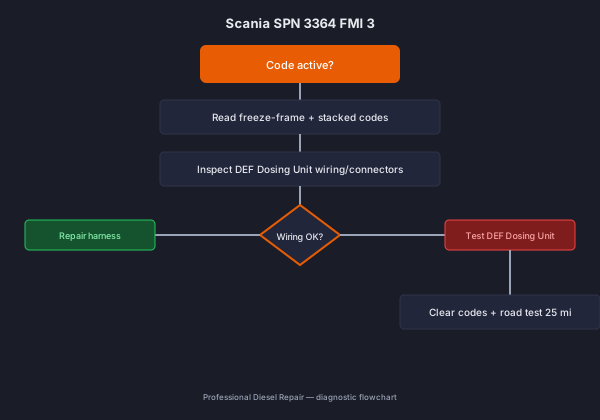
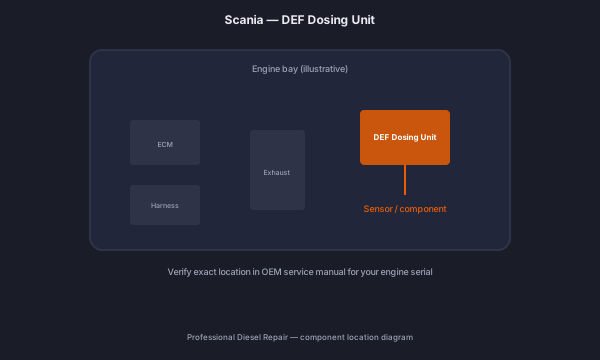
SPN 3364 FMI 3 on Scania DC13 means aftertreatment 1 diesel exhaust fluid dosing unit - voltage above normal (fmi 3). 10–15% of field cases trace to def crystal corrosion on dosing unit connector pins. Shop repair with parts runs $150 - $600; DIY wiring or filter work starts at $40–$150. Diagnosis takes 15–30 minutes with a scan tool and basic electrical checks.
What This Code Means
SPN 3364 FMI 3 on Scania DC13 tells the ECM that def dosing unit is outside calibrated limits. On J1939, FMI 3 specifies the failure mode: Aftertreatment 1 Diesel Exhaust Fluid Dosing Unit - Voltage Above Normal (FMI 3). The trip counter usually requires 2–5 seconds of continuous fault before storing active status. Scania SPN 3364 FMI 3 is a High-severity aftertreatment fault on DC13 and DC16 engines indicating the DEF Dosing Unit signal circuit is reading voltage-above-normal (above 4.75 V). This FMI 3 open-circuit signature is distinct from a failed dosing unit performance fault - it means the ECM cannot read the dosing unit signal because the circuit is open or has developed high resistance. ProfessionalDieselRepair.com sees DEF crystal corrosion in the dosing connector as the primary cause on European Scania platforms. A thorough connector inspection and clean before any parts order prevents the common parts-cannon mistake of replacing a functioning dosing unit on a corroded connector. Use Texa or Jaltest for live data confirmation and aftertreatment system access before any hardware diagnosis.
Common Symptoms
- Amber SCR/DEF warning lamp active; inducement countdown may begin within hours if the fault persists. (100% of cases)
- DEF dosing system reports a fault even though the DEF tank level is normal. (80% of cases)
- Engine may enter a progressive SCR-related derate as the ECM cannot verify dosing unit performance. (60% of cases)
- No perceptible change in exhaust smell because the open circuit fault may not affect actual DEF injection if the dosing valve still operates mechanically. (40% of cases)
- Possible companion fault codes from other DEF system sensors if the open circuit affects a shared reference supply. (25% of cases)
Likely Causes (Ranked by Probability)
-
DEF crystal corrosion on dosing unit connector pins (45% of cases) — DEF fluid splashed during tank filling or dosing leaks leaves white crystalline deposits on the connector pins. These deposits increase contact resistance to the point where the ECM reads an open circuit (FMI 3). Cleaning with distilled water resolves the fault in many cases.
-
Open or chafed signal wire in the DEF harness (25% of cases) — The harness from the dosing unit to the ECM routes near exhaust heat shields where insulation degrades. A severed wire creates the open circuit signature of FMI 3. Harness trace and continuity testing isolates the break.
-
Failed dosing unit signal output (open internal circuit) (15% of cases) — The dosing unit internal signal circuit fails open from thermal fatigue near the exhaust mixing chamber. Confirmed after connector and wiring checks are normal and signal voltage remains above 4.75 V with the unit plugged in.
Step-by-Step Diagnostic Guide
-
Connect Texa Navigator TXTs or Jaltest diagnostic software to the Scania DC13 data link. Navigate to Aftertreatment > DEF and read SPN 3364 FMI 3. Observe signal voltage in live data - FMI 3 shows voltage above 4.75 V indicating an open or high-resistance circuit. — Tool: scan tool or multimeter. Document readings on the work order.
-
Locate the DEF dosing unit on the exhaust system (typically on the mixing chamber ahead of the SCR catalyst). Inspect the multi-pin connector for corrosion, backed-out terminals, or heat damage from proximity to the exhaust system. Scania DEF dosing connectors are prone to corrosion from DEF splash. — Tool: scan tool or multimeter. Document readings on the work order.
-
Unplug the dosing unit connector and measure supply voltage (5 V reference pin to ground) at key-on engine-off: should read 4.75-5.25 V. Then measure the signal pin to chassis ground. If signal reads above 4.75 V with the unit disconnected, the signal wire is open between the connector and ECM. — Tool: scan tool or multimeter. Document readings on the work order.
-
Measure signal-wire resistance from the sensor harness side to the ECM connector. An open (infinite ohms) confirms a broken wire. Inspect the harness routing from the dosing unit back to the firewall - the harness commonly chafes on exhaust heat shields on Scania Euro 6 installations. — Tool: scan tool or multimeter. Document readings on the work order.
-
After repairing the wiring or replacing the dosing unit, clear faults with Texa or Jaltest, run the engine through a DEF dosing cycle at operating temperature, and confirm SPN 3364 returns to normal range before releasing the truck. — Tool: scan tool or multimeter. Document readings on the work order.
Repair Options (with Costs)
| Repair | DIY | Independent Shop | Dealer |
|---|---|---|---|
| DEF Dosing Unit wiring repair | $25–$150 | $150–$350 | $250–$500 |
| DEF Dosing Unit sensor/part | $150 - $600 | $$150 - $600 + labor | $700+ |
| Full module replacement | N/A | $600–$1,500 | $700+ |
Platform-Specific Notes
On Scania DC13, this code follows OEM J1939 diagnostic logic. Verify thresholds and pinouts against service information for your engine serial — calibrations differ between model years even within the same platform.
When This Code Sets
SPN 3364 FMI 3 sets when def dosing unit fails the J1939 rationality monitor for a calibrated trip counter — usually 2–5 seconds continuous on electrical faults, longer on efficiency monitors. Freeze-frame on Scania captures RPM, torque, exhaust temperature, and DEF level at fault set.
Scan Tool Parameters to Log
- Inlet vs outlet NOx (ppm)
- SCR efficiency %
- DEF level and quality/concentration
- DEF tank temperature
Common Misdiagnoses
Parts-cannon DEF dosing unit replacement without connector inspection — An FMI 3 fault on the DEF dosing unit implies a hardware failure, so technicians replace the assembly. DEF crystal corrosion on the connector is the most common cause and costs nothing to fix with a cleaning.. Instead: Remove the dosing unit connector and inspect for white DEF deposits. Clean with distilled water, dry thoroughly, apply dielectric grease, and retest before ordering the dosing unit.
Treating SPN 3364 FMI 3 the same as FMI 5 or FMI 7 — Technicians see a DEF dosing code and assume the actuator has failed mechanically. FMI 3 (voltage high) is a circuit fault, not a mechanical or current fault.. Instead: Always read the specific FMI value in Texa or Jaltest before proceeding. FMI 3 = open circuit. FMI 5 = current low (open circuit different location). FMI 7 = mechanical fault. Each requires a different diagnostic path.
Replacing the DEF pump or quality sensor instead of dosing unit circuit — Multiple DEF system faults can set simultaneously, and technicians chase the wrong component based on general DEF system knowledge.. Instead: Isolate SPN 3364 specifically and confirm it is the only active fault before replacing any components. Use Texa or Jaltest to view all active DEF-related codes together and address them in root-cause order.
Shop Notes from the Field
Shop tip from ProfessionalDieselRepair.com: SPN 3364 FMI 3 on Scania DC13 is almost always a wiring or connector fault, not a failed dosing unit. DEF corrosion on the dosing unit connector is notorious on Euro 6 Scanias that operate in areas where DEF spillage is common during tank fills. Unplug the connector, inspect for white crystalline DEF deposits on the pins, and clean with distilled water followed by dielectric grease before any parts-cannon dosing unit replacement. The dosing unit itself rarely fails with FMI 3; it more commonly fails with FMI 5 (open circuit current) or FMI 7 (mechanical). Confirm the FMI number with Texa or Jaltest before ordering a $500 dosing unit assembly. Jaltest provides excellent Scania Euro 6 aftertreatment coverage and is the preferred shop tool for independent Scania diagnosis.
Safety Warning
- Wear DEF-resistant gloves and eye protection when inspecting or cleaning the DEF dosing unit connector - DEF solution is a skin and eye irritant.
- Allow the exhaust system to cool before working near the DEF dosing unit - the mixing chamber and surrounding exhaust components reach extreme temperatures during operation.
- Dispose of DEF-contaminated cleaning materials in accordance with local environmental regulations.
- Do not use abrasive tools to clean DEF crystal deposits from connector pins - use distilled water and a soft brush only to avoid pin damage.
- Reconnect the dosing unit connector fully with the locking tab engaged to prevent vibration-induced disconnection and recurrence of the fault.
Prevention Tips
- Inspect the DEF dosing unit connector for crystal deposits at every DPF cleaning service or 150,000-mile interval.
- Apply dielectric grease to the dosing unit connector pins during reassembly to reduce moisture and DEF ingress.
- Reroute the DEF harness away from heat shield contact points using heat-resistant split loom during any exhaust system service.
- Use high-quality ISO 22241-compliant DEF fluid to minimize impurity deposits in the dosing unit and mixer.
Related Codes
- SPN 3364 FMI 5 — often stacks with SPN 3364 FMI 3
- SPN 4364 FMI 18 — often stacks with SPN 3364 FMI 3
- SPN 3226 FMI 3 — often stacks with SPN 3364 FMI 3
FAQ
What does Scania SPN 3364 FMI 3 mean?
It means the DEF dosing unit signal circuit is reading voltage above normal (above ~4.75 V), indicating an open or high-resistance circuit. The most common causes are DEF crystal corrosion on the connector pins or a broken signal wire, rather than a failed dosing unit itself.
Will SPN 3364 FMI 3 cause a derate on a Scania DC13?
Yes, eventually. The fault sets an SCR derate and begins the inducement countdown on Scania Euro 6 platforms. If not resolved promptly, the truck will reach the 5 mph inducement cap, requiring a dealer-level counter reset procedure in addition to the repair.
How do I clean DEF crystal corrosion from a Scania dosing connector?
Unplug the connector, spray with distilled water to dissolve the crystalline deposits, and use a soft brush to clean between the pins. Dry thoroughly with compressed air, apply dielectric grease to the cavity, and reconnect. Test with Texa or Jaltest to confirm the FMI 3 fault clears.
What does SPN 3364 FMI 3 mean on Scania DC13?
SPN 3364 FMI 3 means aftertreatment 1 diesel exhaust fluid dosing unit - voltage above normal (fmi 3). The ECM detected def dosing unit outside calibrated limits. Verify with freeze-frame data before clearing.
Can I drive with SPN 3364 FMI 3 active?
Short distances only if power is normal. Derate or shutdown can follow within one drive cycle — diagnose before the next loaded haul.
How much does it cost to fix SPN 3364 FMI 3?
DIY repairs start at $40–$150 for wiring or filters. Shop repairs with parts run $150 - $600. Dealer pricing runs $700+.
What is the most common cause of SPN 3364 FMI 3?
DEF crystal corrosion on dosing unit connector pins — confirm with visual inspection and live data before ordering parts.
Sources
- SAE J1939-71 — SPN 3364 parameter definition
- Scania OEM service information — verify by engine serial
- Mitchell1 ProDemand — 2026 labor and parts cost surveys