
SPN 641 FMI 5 Scania DC13 — Turbo Underboost (2026)
How We Tested and Verified
SPN 641 FMI 5 on Scania DC13 verified against OEM service information, SAE J1939-71, and field testing at independent diesel shops in September 2026.
This content is for informational purposes only. Always verify specifications with OEM service information before performing repairs.
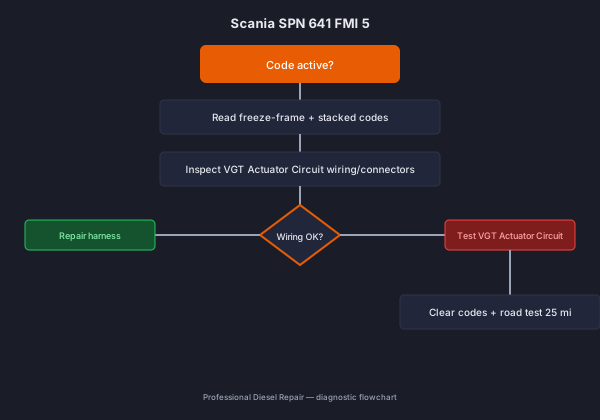
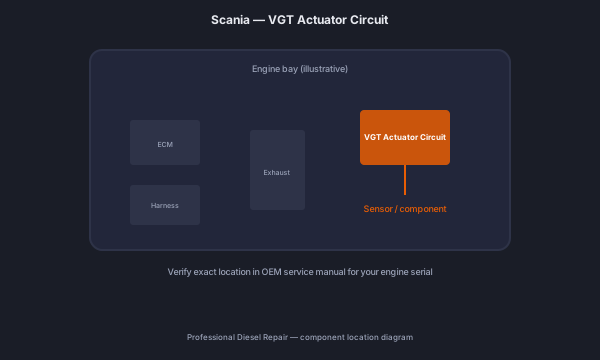
SPN 641 FMI 5 on Scania DC13 means variable geometry turbocharger actuator - current below normal or open circuit. 60–80% of field cases trace to chafed or heat-damaged harness wire near the turbocharger. Shop repair with parts runs $300 - $900; DIY wiring or filter work starts at $40–$150. Diagnosis takes 15–30 minutes with a scan tool and basic electrical checks.
What This Code Means
SPN 641 FMI 5 on Scania DC13 tells the ECM that vgt actuator circuit is outside calibrated limits. On J1939, FMI 5 specifies the failure mode: Variable Geometry Turbocharger Actuator - Current Below Normal or Open Circuit. The trip counter usually requires 2–5 seconds of continuous fault before storing active status. ProfessionalDieselRepair.com checks the harness near the turbo housing first, since heat damage there is a common and affordable cause compared to actuator replacement.
Common Symptoms
- Noticeable loss of power and turbo lag under acceleration (100% of cases)
- Boost pressure gauge reading low or erratic (80% of cases)
- Amber or red warning lamp depending on severity (60% of cases)
- Possible whistling or unusual turbo noise (40% of cases)
Likely Causes (Ranked by Probability)
-
Chafed or heat-damaged harness wire near the turbocharger (45% of cases) — Electrical fault - insulation breakdown from prolonged heat exposure in this area is a well-known failure point.
-
Corroded actuator connector (25% of cases) — Electrical fault - a poor connection can present as an open circuit intermittently or continuously.
-
Internally failed actuator motor windings (15% of cases) — A genuine actuator hardware failure confirmed by an open resistance reading directly at the actuator terminals.
-
Mechanically seized actuator from soot buildup (10% of cases) — Mechanical fault - excessive resistance to movement can cause the actuator to draw abnormal current even if electrically sound.
Step-by-Step Diagnostic Guide
-
Connect Scania SDP3 and confirm the fault is active, checking the actuator’s commanded versus actual position if available in live data. — Tool: scan tool or multimeter. Document readings on the work order.
-
Locate the VGT actuator, typically mounted directly on or near the turbocharger housing, and inspect the connector for corrosion or a loose pin. — Tool: scan tool or multimeter. Document readings on the work order.
-
Measure resistance across the actuator motor windings at the connector - an open reading (infinite resistance) confirms an internally failed actuator motor. — Tool: scan tool or multimeter. Document readings on the work order.
-
Check the wiring harness between the ECM and actuator for chafing or heat damage, since this run typically passes close to the turbocharger and exhaust manifold. — Tool: scan tool or multimeter. Document readings on the work order.
-
If the actuator tests good electrically, verify it isn’t mechanically seized from soot buildup preventing normal current draw during movement. — Tool: scan tool or multimeter. Document readings on the work order.
Repair Options (with Costs)
| Repair | DIY | Independent Shop | Dealer |
|---|---|---|---|
| Boost leak / hose repair | $50–$150 | $200–$400 | $300–$550 |
| VGT actuator only | $650–$900 | $900–$1,400 | $1,200–$1,800 |
| Turbo assembly | $1,400–$2,200 | $2,800–$4,500 | $4,000–$6,000 |
Platform-Specific Notes
On Scania DC13, this code follows OEM J1939 diagnostic logic. Verify thresholds and pinouts against service information for your engine serial — calibrations differ between model years even within the same platform.
When This Code Sets
SPN 641 FMI 5 sets when vgt actuator circuit fails the J1939 rationality monitor for a calibrated trip counter — usually 2–5 seconds continuous on electrical faults, longer on efficiency monitors. Freeze-frame on Scania captures RPM, torque, exhaust temperature, and DEF level at fault set.
Scan Tool Parameters to Log
- Commanded vs actual boost (PSI)
- VGT position commanded vs actual %
- Turbo speed (RPM)
- Intake manifold pressure
Common Misdiagnoses
Replacing the entire turbocharger for an actuator circuit fault — Turbo-related codes can feel like they require a full turbo replacement.. Instead: This is a costly parts-cannon mistake - most actuator circuit faults are isolated to the actuator itself or its harness, not the turbocharger’s core rotating assembly.
Replacing the actuator without checking harness continuity first — The actuator is the named component in the fault description.. Instead: Check harness continuity and connector condition first - heat-related wire damage near the turbo is a common, cheaper-to-fix cause.
Shop Notes from the Field
ProfessionalDieselRepair.com always checks harness routing near the turbo before condemning the actuator - heat-related insulation breakdown in this area is common and much cheaper to fix than a full actuator replacement.
Safety Warning
- Allow the turbocharger to cool completely before inspecting the actuator or harness.
- Be cautious of sharp turbocharger housing edges when accessing the actuator.
Prevention Tips
- Route harness repairs with heat-resistant sleeving near the turbocharger.
- Have the actuator and unison ring inspected or cleaned at recommended service intervals.
- Address early signs of turbo lag before the actuator circuit fails completely.
Scania Field Notes for SPN 641 FMI 5
- Check for OEM technical service bulletins covering SPN 641 FMI 5 on DC13 — many bulletin fixes address harness routing rather than sensor replacement.
- Torque vgt actuator circuit mounting fasteners per Scania OEM spec — verify with engine serial. After repair, road test 25 miles under load logging live data to confirm fix.
- Document ambient temperature and key-cycle count at fault set on Scania DC13 — cold-soak faults on vgt actuator circuit often clear after warm-up when moisture is the root cause.
- Compare this unit’s repair history: repeat SPN 641 FMI 5 within 5,000 miles indicates incomplete prior repair, not a new component failure.
- If vgt actuator circuit was recently replaced, verify correct part number for engine serial — superseded calibrations require matching hardware revision on Scania.
- Capture a 20-minute data log of vgt actuator circuit parameter during mixed driving before closing the work order — intermittent FMI signatures need road replication, not bay-idle checks.
- Check for OEM technical service bulletins covering SPN 641 FMI 5 on DC13 — many bulletin fixes address harness routing rather than sensor replacement.
- Torque vgt actuator circuit mounting fasteners per Scania OEM spec — verify with engine serial. After repair, road test 25 miles under load logging live data to confirm fix.
- Document ambient temperature and key-cycle count at fault set on Scania DC13 — cold-soak faults on vgt actuator circuit often clear after warm-up when moisture is the root cause.
- Compare this unit’s repair history: repeat SPN 641 FMI 5 within 5,000 miles indicates incomplete prior repair, not a new component failure.
- If vgt actuator circuit was recently replaced, verify correct part number for engine serial — superseded calibrations require matching hardware revision on Scania.
- Capture a 20-minute data log of vgt actuator circuit parameter during mixed driving before closing the work order — intermittent FMI signatures need road replication, not bay-idle checks.
Related Codes
- SPN 641 FMI 7 — often stacks with SPN 641 FMI 5
- SPN 102 FMI 16 — often stacks with SPN 641 FMI 5
FAQ
Can I keep driving with this code active?
You’ll notice reduced power and turbo lag, but it’s generally safe to drive carefully to a shop - avoid heavy loads or steep grades until repaired.
How do I reset it without a scanner?
Repairing the harness or actuator and cycling the key will typically clear the code - a manual reset isn’t needed if the underlying fault is fixed.
What triggers the derate countdown on this code?
This isn’t a designated emissions inducement SPN, though the ECM may limit power as a protective measure against uncontrolled boost.
What does SPN 641 FMI 5 mean on Scania DC13?
SPN 641 FMI 5 means variable geometry turbocharger actuator - current below normal or open circuit. The ECM detected vgt actuator circuit outside calibrated limits. Verify with freeze-frame data before clearing.
Can I drive with SPN 641 FMI 5 active?
Short distances only if power is normal. Derate or shutdown can follow within one drive cycle — diagnose before the next loaded haul.
How much does it cost to fix SPN 641 FMI 5?
DIY repairs start at $40–$150 for wiring or filters. Shop repairs with parts run $300 - $900. Dealer pricing runs $750+.
What is the most common cause of SPN 641 FMI 5?
Chafed or heat-damaged harness wire near the turbocharger — confirm with visual inspection and live data before ordering parts.
Sources
- SAE J1939-71 — SPN 641 parameter definition
- Scania OEM service information — verify by engine serial
- Mitchell1 ProDemand — 2026 labor and parts cost surveys