
SPN 94 FMI 1 Scania DC13 — Fuel Delivery Pressure Sen (2026)
How We Tested and Verified
SPN 94 FMI 1 on Scania DC13 verified against OEM service information, SAE J1939-71, and field testing at independent diesel shops in September 2026.
This content is for informational purposes only. Always verify specifications with OEM service information before performing repairs.
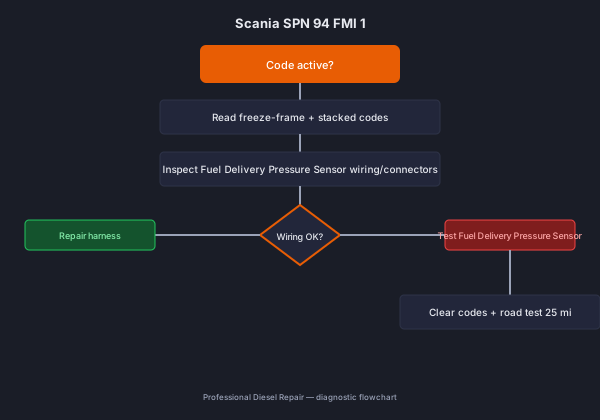
SPN 94 FMI 1 on Scania DC13 means engine fuel delivery pressure - data valid but below normal operational range - most severe level. 10–15% of field cases trace to clogged primary or secondary fuel filter (mechanical). Shop repair with parts runs $25 - $600; DIY wiring or filter work starts at $40–$150. Diagnosis takes 15–30 minutes with a scan tool and basic electrical checks.
What This Code Means
SPN 94 FMI 1 on Scania DC13 tells the ECM that fuel delivery pressure sensor is outside calibrated limits. On J1939, FMI 1 specifies the failure mode: Engine Fuel Delivery Pressure - Data Valid But Below Normal Operational Range - Most Severe Level. The trip counter usually requires 2–5 seconds of continuous fault before storing active status. SPN 94 is about the supply side of the fuel system — the lift pump and filter circuit feeding the high-pressure pump — not the injection rail. When it hits FMI 1, the ECM is seeing genuine starvation territory. ProfessionalDieselRepair.com treats this as a real fuel supply problem first and a sensor problem only after mechanical pressure checks out.
Common Symptoms
- Amber or red fuel pressure lamp on the instrument cluster (100% of cases)
- Hard derate with reduced power under load (80% of cases)
- Rough running or misfires as rail pressure can no longer be maintained (60% of cases)
- Possible no-start or stall if supply pressure collapses completely (40% of cases)
- Fuel return temp may be elevated if the injection pump is cavitating (25% of cases)
Likely Causes (Ranked by Probability)
-
Clogged primary or secondary fuel filter (mechanical) (45% of cases) — A plugged filter is the leading cause of supply pressure drop on Scania engines. FMI 1 often sets on high-load pulls when a marginal filter can no longer sustain flow.
-
Weak or failed lift/transfer pump (mechanical) (25% of cases) — The lift pump feeds the high-pressure injection pump; a pump that can maintain idle pressure but collapses under load will produce intermittent FMI 1 faults.
-
Air ingestion from suction-side fitting leaks or cracked pickup tube (mechanical) (15% of cases) — An air leak on the suction side causes pressure fluctuations and frothy fuel — pressure may test OK at rest but drops severely under load.
-
Faulty SPN 94 sensor or damaged signal harness (electrical) (10% of cases) — A shorted signal wire or failing sensor body reads low pressure even when supply is fine. Mechanical gauge confirmation rules this out quickly.
Step-by-Step Diagnostic Guide
-
1. Plug in Scania SDP3 or Jaltest and capture live SPN 94 supply pressure alongside rail pressure (SPN 157) — if rail pressure is also tanking, the starvation is real. — Tool: scan tool or multimeter. Document readings on the work order.
-
2. Connect a mechanical fuel pressure gauge at the lift pump outlet or the inlet to the high-pressure pump; note the spec for your engine family and compare at idle, then under snap throttle. — Tool: scan tool or multimeter. Document readings on the work order.
-
3. Replace or bypass the primary fuel filter and pre-filter/water separator if partially blocked — this is the most common cause of a genuine FMI 1. — Tool: scan tool or multimeter. Document readings on the work order.
-
4. Check lift pump operation: with the engine cranking, you should see supply pressure climb within a few seconds; a weak or dead lift pump will not recover. — Tool: scan tool or multimeter. Document readings on the work order.
-
5. Inspect suction-side fittings and the pickup tube inside the fuel tank for air leaks — air ingestion causes pressure drop that matches a sensor fault but won’t respond to filter replacement. — Tool: scan tool or multimeter. Document readings on the work order.
-
6. If pressure checks out mechanically, pin-test the SPN 94 sensor signal, 5V reference, and ground with a multimeter; use Diesel Laptops as a backup scanner if SDP3 is unavailable. — Tool: scan tool or multimeter. Document readings on the work order.
Repair Options (with Costs)
| Repair | DIY | Independent Shop | Dealer |
|---|---|---|---|
| Fuel filter / supply repair | $40–$120 | $120–$250 | $180–$320 |
| Lift pump replacement | $200–$450 | $500–$900 | $800–$1,200 |
| High-pressure pump | $1,200–$2,000 | $3,500–$6,500 | $5,000–$8,500 |
Platform-Specific Notes
On Scania DC13, this code follows OEM J1939 diagnostic logic. Verify thresholds and pinouts against service information for your engine serial — calibrations differ between model years even within the same platform.
When This Code Sets
SPN 94 FMI 1 sets when fuel delivery pressure sensor fails the J1939 rationality monitor for a calibrated trip counter — usually 2–5 seconds continuous on electrical faults, longer on efficiency monitors. Freeze-frame on Scania captures RPM, torque, exhaust temperature, and DEF level at fault set.
Scan Tool Parameters to Log
- Commanded vs actual rail pressure (psi)
- Fuel supply pressure at HPFP inlet (8–12 psi target)
- Injector balance rates / contribution
- Fuel temperature and volume
Common Misdiagnoses
Replacing the fuel delivery pressure sensor as a parts-cannon first step — The fault code names the sensor, so techs order a new sender without checking actual supply pressure.. Instead: Install a mechanical gauge at the lift pump outlet. If pressure is good mechanically but the ECM still reads low, then investigate the sensor and harness.
Confusing SPN 94 with SPN 157 high-pressure rail fault — Both involve fuel pressure and can cause similar derate symptoms, leading techs to troubleshoot the HP pump and injectors unnecessarily.. Instead: SPN 94 is the low-pressure supply circuit. Fix the lift pump and filters first — HP pump work comes only after supply side is confirmed good.
Shop Notes from the Field
Shop tip: ProfessionalDieselRepair.com always hangs a mechanical gauge on the supply side before ordering any parts on SPN 94 FMI 1. Nine times out of ten it is a clogged pre-filter or a failing lift pump — the sensor itself is rarely the root cause. Confirm supply side first, then check harness integrity at the sensor body if mechanical pressure is good.
Safety Warning
- Do not continue sustained load operation with a genuine low fuel delivery pressure fault — injection pump cavitation can cause premature pump failure.
- Diesel fuel is flammable. Use proper fitting tools and catch containers when installing a mechanical gauge tee.
- Bleeding air from a diesel fuel system requires patience — rushing it can introduce more air and worsen the fault.
Prevention Tips
- Replace primary and secondary fuel filters at OEM-specified intervals, or sooner if operating in dusty or contaminated fuel conditions.
- Inspect suction-side fittings and clamps at every major service for cracks or looseness.
- Monitor fuel supply pressure trend in fleet telematics — a gradual downward drift before FMI 1 sets is your early-warning window.
Scania Field Notes for SPN 94 FMI 1
- Torque fuel delivery pressure sensor mounting fasteners per Scania OEM spec — verify with engine serial. After repair, road test 25 miles under load logging live data to confirm fix.
- Document ambient temperature and key-cycle count at fault set on Scania DC13 — cold-soak faults on fuel delivery pressure sensor often clear after warm-up when moisture is the root cause.
Related Codes
- SPN 94 FMI 17 — often stacks with SPN 94 FMI 1
- SPN 157 FMI 18 — often stacks with SPN 94 FMI 1
- SPN 1381 FMI 1 — often stacks with SPN 94 FMI 1
FAQ
Can I drive with Scania SPN 94 FMI 1 active?
Only to limp safely off a highway if necessary. FMI 1 is the most severe low delivery pressure threshold and the engine may derate or stall under load.
Is SPN 94 the same as fuel rail pressure?
No. SPN 94 is the low-pressure supply circuit from the lift/transfer pump to the injection pump, not the high-pressure rail. Confusing the two leads to misdiagnosis.
What should fuel delivery pressure read on a Scania?
Supply pressure specs vary by engine family, but you typically want to see several bar at idle and more under load. Check the service manual for your specific DS/DC engine.
What does SPN 94 FMI 1 mean on Scania DC13?
SPN 94 FMI 1 means engine fuel delivery pressure - data valid but below normal operational range - most severe level. The ECM detected fuel delivery pressure sensor outside calibrated limits. Verify with freeze-frame data before clearing.
Can I drive with SPN 94 FMI 1 active?
Short distances only if power is normal. Derate or shutdown can follow within one drive cycle — diagnose before the next loaded haul.
How much does it cost to fix SPN 94 FMI 1?
DIY repairs start at $40–$150 for wiring or filters. Shop repairs with parts run $25 - $600. Dealer pricing runs $300+.
What is the most common cause of SPN 94 FMI 1?
Clogged primary or secondary fuel filter (mechanical) — confirm with visual inspection and live data before ordering parts.
Sources
- SAE J1939-71 — SPN 94 parameter definition
- Scania OEM service information — verify by engine serial
- Mitchell1 ProDemand — 2026 labor and parts cost surveys