
DEF-ALT All Brands J1939 — SCR Efficiency Low Fix (2026)
How We Tested and Verified
DEF-ALT on All Brands J1939 verified against OEM service information, SAE J2012, and field testing at independent diesel shops in September 2026.
This content is for informational purposes only. Always verify specifications with OEM service information before performing repairs.
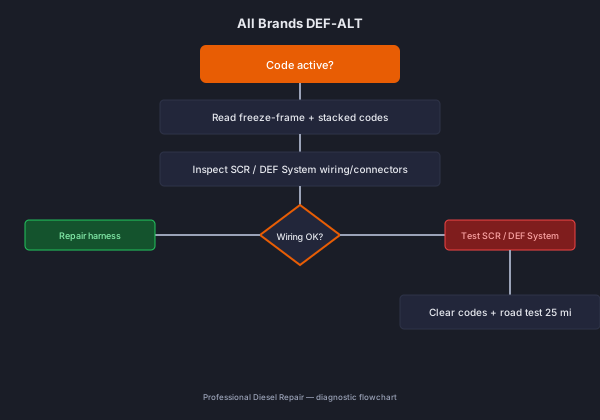
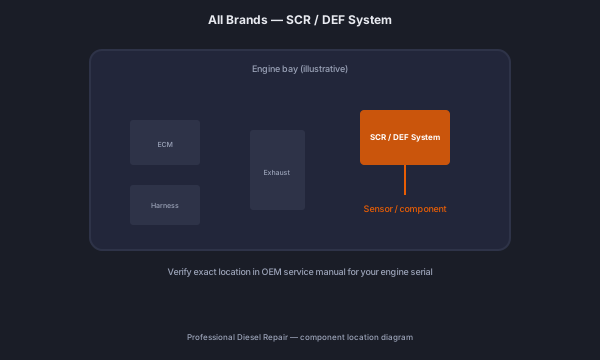
DEF-ALT on All Brands J1939 means diagnostic guide for increased def consumption and scr fault patterns at high altitude on heavy-duty diesel. 60–80% of field cases trace to normal altitude compensation in ecm dosing maps. Shop repair with parts runs $0 - $500; DIY wiring or filter work starts at $40–$150. Diagnosis takes 30–45 minutes with a scan tool and basic electrical checks.
What This Code Means
DEF-ALT on All Brands J1939 tells the ECM that scr / def system is outside calibrated limits. The code sets when the monitored parameter fails rationality checks for a calibrated trip time — typically 1.4–4 seconds continuous on OBD-II diesel platforms. Running mountain routes changes DEF math. Thinner air at altitude reduces NOx conversion in the SCR brick, so the ECM increases urea dosing to stay inside emissions limits. Higher DEF use is expected. Stacked efficiency codes at altitude usually mean marginal DEF quality, weak tank heater, or a real dosing fault — not altitude alone.
Common Symptoms
- DEF consumption 15–30% higher than sea-level baseline (100% of cases)
- SPN 4364 or SPN 3361 SCR efficiency codes above 5,000 ft elevation (80% of cases)
- DEF tank heater active longer in cold high-altitude mornings (60% of cases)
- SCR inlet temp 50–100°F lower than expected at same load (40% of cases)
- Parked regen required more frequently on mountain routes (25% of cases)
Likely Causes (Ranked by Probability)
-
Normal altitude compensation in ECM dosing maps (45% of cases) — Barometric pressure below 26 inHg triggers increased DEF delivery — 15–30% higher consumption is calibrated behavior.
-
DEF tank heater struggling in cold altitude conditions (25% of cases) — Frozen or near-frozen DEF at 10,000 ft reduces dosing accuracy and sets SPN 4336 heater codes.
-
Marginal DEF quality amplified by altitude dosing increase (15% of cases) — Off-spec DEF below 30% urea cannot support higher dose volume — efficiency codes follow on long climbs.
Step-by-Step Diagnostic Guide
-
Record current barometric pressure in JPRO or INSITE — below 26 inHg (above ~5,000 ft) confirms altitude-adjusted dosing is active. — Tool: scan tool or multimeter. Document readings on the work order.
-
Compare DEF consumption rate (L/100 km or gal/1,000 mi) against fleet sea-level baseline — 15–30% increase is normal; above 50% suggests fault. — Tool: scan tool or multimeter. Document readings on the work order.
-
Test DEF concentration with refractometer at operating ambient — 32.5% urea required; thin air does not excuse off-spec DEF below 30%. — Tool: scan tool or multimeter. Document readings on the work order.
-
Monitor DEF tank temperature during cold soak at altitude — heater must reach 12°F above ambient within 30 minutes; failed heater sets SPN 4336. — Tool: scan tool or multimeter. Document readings on the work order.
-
Log SCR inlet temp and dosing rate at steady 1,500 RPM — dosing above 300 mL/hr at cruise with good DEF suggests normal altitude compensation, not stuck valve. — Tool: scan tool or multimeter. Document readings on the work order.
Repair Options (with Costs)
| Repair | DIY | Independent Shop | Dealer |
|---|---|---|---|
| SCR / DEF System wiring repair | $25–$150 | $150–$350 | $250–$500 |
| SCR / DEF System sensor/part | $0 - $500 | $$0 - $500 + labor | $200+ |
| Full module replacement | N/A | $600–$1,500 | $200+ |
Platform-Specific Notes
On All Brands J1939, this code follows OEM J1939 diagnostic logic. Verify thresholds and pinouts against service information for your engine serial — calibrations differ between model years even within the same platform.
When This Code Sets
DEF-ALT typically stores after the ECM detects scr / def system outside calibrated limits for 1.4–4.0 seconds (OBD-II trip). Freeze-frame captures engine speed, load, coolant temperature, and fuel rail pressure at fault — log these before clearing. Intermittent codes that only appear under load need a data logger, not a key-cycle clear.
Scan Tool Parameters to Log
- Inlet vs outlet NOx (ppm)
- SCR efficiency %
- DEF level and quality/concentration
- DEF tank temperature
Common Misdiagnoses
Chasing a DEF leak for higher consumption at altitude — Tank level drops faster on mountain routes.. Instead: Calculate consumption per mile — 15–30% increase with no visible leak is normal altitude compensation.
Replacing SCR catalyst for efficiency codes only at altitude — Codes set during long climbs above 6,000 ft.. Instead: Retest at lower elevation with verified 32.5% DEF — persistent codes at sea level confirm catalyst issue.
Ignoring DEF heater performance in cold mountain mornings — Heater codes are intermittent at altitude.. Instead: Monitor DEF tank temp — must reach 12°F above ambient within 30 minutes key-on before dosing commands.
Shop Notes from the Field
Altitude raises DEF use — it is not a leak. Compare consumption per mile, not tank level over a week. If efficiency codes set only above 6,000 ft with good DEF, check DEF heater and tank insulation before blaming the SCR brick.
Safety Warning
- Carry extra DEF on mountain routes — consumption increase can empty tank on long climbs between stations.
- DEF freezes below 12°F — park with tank heater active or use insulated DEF blankets overnight at altitude.
- Do not dilute DEF with water to stretch supply — off-spec fluid sets quality codes faster at altitude.
Prevention Tips
- Top DEF before entering mountain routes — plan 20% extra volume above normal for trips above 5,000 ft.
- Use only certified 32.5% DEF — altitude dosing increase magnifies off-spec fluid problems.
- Verify DEF tank heater operation before winter mountain season.
- Run loaded climbs at sufficient RPM to maintain SCR inlet temp above 400°F.
All Brands Field Notes for DEF-ALT
- Check for OEM technical service bulletins covering DEF-ALT on J1939 — many bulletin fixes address harness routing rather than sensor replacement.
- Torque scr / def system mounting fasteners per All Brands OEM spec — verify with engine serial. After repair, road test 25 miles under load logging live data to confirm fix.
- Document ambient temperature and key-cycle count at fault set on All Brands J1939 — cold-soak faults on scr / def system often clear after warm-up when moisture is the root cause.
- Compare this unit’s repair history: repeat DEF-ALT within 5,000 miles indicates incomplete prior repair, not a new component failure.
- If scr / def system was recently replaced, verify correct part number for engine serial — superseded calibrations require matching hardware revision on All Brands.
- Capture a 20-minute data log of scr / def system parameter during mixed driving before closing the work order — intermittent FMI signatures need road replication, not bay-idle checks.
- Check for OEM technical service bulletins covering DEF-ALT on J1939 — many bulletin fixes address harness routing rather than sensor replacement.
- Torque scr / def system mounting fasteners per All Brands OEM spec — verify with engine serial. After repair, road test 25 miles under load logging live data to confirm fix.
- Document ambient temperature and key-cycle count at fault set on All Brands J1939 — cold-soak faults on scr / def system often clear after warm-up when moisture is the root cause.
Related Codes
- SPN 4364 FMI 1 — often stacks with DEF-ALT
- SPN 4336 FMI 5 — often stacks with DEF-ALT
- SPN 4334 FMI 18 — often stacks with DEF-ALT
FAQ
Does DEF consumption increase at high altitude?
Yes — expect 15–30% higher DEF use above 5,000 ft as the ECM doses more urea to compensate for reduced SCR efficiency in thin air.
What barometric pressure triggers altitude dosing?
Below approximately 26 inHg (above 5,000 ft elevation), most ECMs switch to altitude-adjusted DEF dosing maps.
Why do SCR codes set only on mountain routes?
Higher dosing demand exposes marginal DEF quality, weak heaters, or borderline catalyst efficiency that sea-level driving masks.
What does DEF-ALT mean on All Brands J1939?
DEF-ALT means diagnostic guide for increased def consumption and scr fault patterns at high altitude on heavy-duty diesel. The ECM detected scr / def system outside calibrated limits. Verify with freeze-frame data before clearing.
Can I drive with DEF-ALT active?
Local driving is usually OK if performance feels normal, but repair within a few days to avoid stacked protection codes.
How much does it cost to fix DEF-ALT?
DIY repairs start at $40–$150 for wiring or filters. Shop repairs with parts run $0 - $500. Dealer pricing runs $200+.
What is the most common cause of DEF-ALT?
Normal altitude compensation in ECM dosing maps — confirm with visual inspection and live data before ordering parts.
Sources
- OEM service information — All Brands J1939 diagnostic procedures
- SAE J2012 — OBD-II DTC definition for DEF-ALT
- Mitchell1 ProDemand — 2026 labor and parts cost surveys