FUEL-CONTAM All Brands J1939 — DPF Soot Load High Fix (2026)
How We Tested and Verified
FUEL-CONTAM on All Brands J1939 verified against OEM service information, SAE J2012, and field testing at independent diesel shops in September 2026.
This content is for informational purposes only. Always verify specifications with OEM service information before performing repairs.
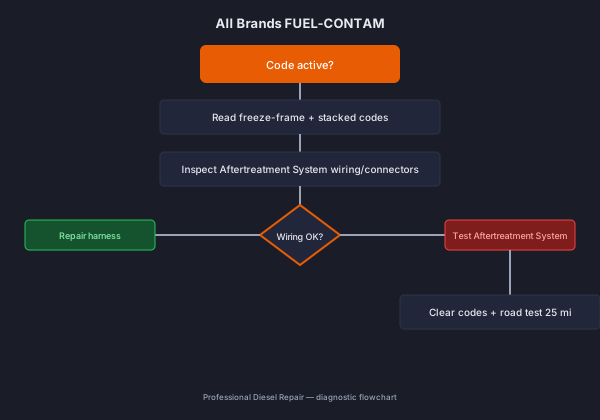
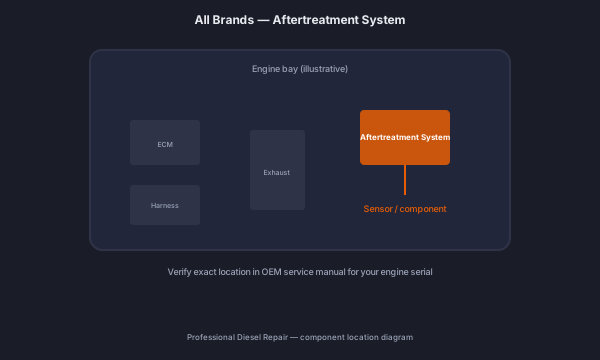
FUEL-CONTAM on All Brands J1939 means diagnostic guide for aftertreatment damage caused by contaminated diesel fuel including doc catalyst poisoning, dpf face plugging, and scr hydrocarbon contamination. 60–80% of field cases trace to water contamination in fuel tank or storage. Shop repair with parts runs $200 - $8,000; DIY wiring or filter work starts at $40–$150. Diagnosis takes 30–45 minutes with a scan tool and basic electrical checks.
What This Code Means
FUEL-CONTAM on All Brands J1939 tells the ECM that aftertreatment system is outside calibrated limits. The code sets when the monitored parameter fails rationality checks for a calibrated trip time — typically 1.4–4 seconds continuous on OBD-II diesel platforms. Aftertreatment systems assume clean ULSD combustion. When fuel is contaminated with water, gasoline, excess biodiesel, or microbial growth, combustion quality drops and the exhaust carries unburned hydrocarbons directly into the DOC and DPF. The damage can happen in one tank — and the repair bill reflects it.
Common Symptoms
- Sudden DPF restriction and frequent regen after bad fuel fill (100% of cases)
- DOC efficiency drop with high hydrocarbon readings in exhaust (80% of cases)
- White or blue exhaust smoke after contaminated fuel event (60% of cases)
- Fuel in water separator bowl or gelled fuel in filter housing (40% of cases)
- Stacked fuel rail pressure and DPF soot codes after single fill-up (25% of cases)
Likely Causes (Ranked by Probability)
-
Water contamination in fuel tank or storage (45% of cases) — Water displaces fuel at injectors, causes rough combustion, and sends unburned fuel to the DPF.
-
Gasoline or wrong fuel mixed into diesel tank (25% of cases) — Gasoline lowers flash point, damages injector seals, and produces hydrocarbon-rich exhaust that poisons DOC.
-
Microbial growth in low-turnover storage tanks (15% of cases) — Bacteria and algae clog filters, restrict flow, and cause intermittent over-fueling that loads the DPF.
Step-by-Step Diagnostic Guide
-
Draw fuel sample from tank and water separator — look for separation layers, cloudiness, or gasoline odor indicating contamination. — Tool: scan tool or multimeter. Document readings on the work order.
-
Read fuel rail pressure and injector balance codes in JPRO or INSITE — over-fueling from bad fuel dumps hydrocarbons into the DPF. — Tool: scan tool or multimeter. Document readings on the work order.
-
Inspect DPF inlet and DOC outlet for wet black deposits — fuel contamination leaves oily soot unlike normal ash. — Tool: scan tool or multimeter. Document readings on the work order.
-
Replace primary and secondary fuel filters, drain water separator, and flush lines if water contamination is confirmed. — Tool: scan tool or multimeter. Document readings on the work order.
-
Monitor soot load and DPF delta-P over 500 miles after filter service — if restriction climbs fast, DPF media may be permanently damaged. — Tool: scan tool or multimeter. Document readings on the work order.
Repair Options (with Costs)
| Repair | DIY | Independent Shop | Dealer |
|---|---|---|---|
| Aftertreatment System wiring repair | $25–$150 | $150–$350 | $250–$500 |
| Aftertreatment System sensor/part | $200 - $8,000 | $$200 - $8,000 + labor | $800+ |
| Full module replacement | N/A | $600–$1,500 | $800+ |
Platform-Specific Notes
On All Brands J1939, this code follows OEM J1939 diagnostic logic. Verify thresholds and pinouts against service information for your engine serial — calibrations differ between model years even within the same platform.
When This Code Sets
FUEL-CONTAM typically stores after the ECM detects aftertreatment system outside calibrated limits for 1.4–4.0 seconds (OBD-II trip). Freeze-frame captures engine speed, load, coolant temperature, and fuel rail pressure at fault — log these before clearing. Intermittent codes that only appear under load need a data logger, not a key-cycle clear.
Scan Tool Parameters to Log
- Aftertreatment System live data PID at idle, cruise, and full load
- Battery voltage and ECM supply voltage
- Related aftertreatment and protection PIDs (SPN 1569 if stacked)
Common Misdiagnoses
Replacing DPF without addressing fuel source — DPF restriction is the visible symptom.. Instead: Identify and eliminate contamination source — new DPF plugs again within weeks on the same bad fuel.
Blaming aftertreatment when fuel filters are clogged — Derate feels like emissions failure.. Instead: Replace filters first, sample fuel, and retest — many contamination events stop at the filter if caught early.
Shop Notes from the Field
One tank of bad fuel can destroy a DPF and poison a DOC in a single drive cycle. Document fuel source for warranty claims — stations have been liable on fleet contamination events.
Safety Warning
- Fuel contamination may involve flammable gasoline — no smoking near open tanks.
- Wear chemical-resistant gloves when handling fuel samples.
- Dispose of contaminated fuel per hazardous waste regulations.
Prevention Tips
- Source fuel from high-turnover stations and dedicated fleet pumps.
- Drain water separator at every PM interval.
- Never use fuel from unknown storage tanks or portable cans of uncertain origin.
All Brands Field Notes for FUEL-CONTAM
- Check for OEM technical service bulletins covering FUEL-CONTAM on J1939 — many bulletin fixes address harness routing rather than sensor replacement.
- Torque aftertreatment system mounting fasteners per All Brands OEM spec — verify with engine serial. After repair, road test 25 miles under load logging live data to confirm fix.
- Document ambient temperature and key-cycle count at fault set on All Brands J1939 — cold-soak faults on aftertreatment system often clear after warm-up when moisture is the root cause.
- Compare this unit’s repair history: repeat FUEL-CONTAM within 5,000 miles indicates incomplete prior repair, not a new component failure.
- If aftertreatment system was recently replaced, verify correct part number for engine serial — superseded calibrations require matching hardware revision on All Brands.
- Capture a 20-minute data log of aftertreatment system parameter during mixed driving before closing the work order — intermittent FMI signatures need road replication, not bay-idle checks.
- Check for OEM technical service bulletins covering FUEL-CONTAM on J1939 — many bulletin fixes address harness routing rather than sensor replacement.
- Torque aftertreatment system mounting fasteners per All Brands OEM spec — verify with engine serial. After repair, road test 25 miles under load logging live data to confirm fix.
- Document ambient temperature and key-cycle count at fault set on All Brands J1939 — cold-soak faults on aftertreatment system often clear after warm-up when moisture is the root cause.
- Compare this unit’s repair history: repeat FUEL-CONTAM within 5,000 miles indicates incomplete prior repair, not a new component failure.
- If aftertreatment system was recently replaced, verify correct part number for engine serial — superseded calibrations require matching hardware revision on All Brands.
- Capture a 20-minute data log of aftertreatment system parameter during mixed driving before closing the work order — intermittent FMI signatures need road replication, not bay-idle checks.
Related Codes
- SPN 3719 FMI 16 — often stacks with FUEL-CONTAM
- P0087 — often stacks with FUEL-CONTAM
- SPN 3251 FMI 16 — often stacks with FUEL-CONTAM
FAQ
Can one tank of bad fuel damage the DPF?
Yes — a single fill of contaminated fuel can plug DPF faces and poison DOC catalyst in one drive cycle.
How do I test for fuel contamination?
Draw a sample from the tank and water separator — look for layers, cloudiness, odor, and send for lab analysis if fleet policy requires.
Does flushing the tank fix aftertreatment damage?
Flushing fixes the fuel supply but already-damaged DPF or DOC may still need cleaning or replacement.
What does FUEL-CONTAM mean on All Brands J1939?
FUEL-CONTAM means diagnostic guide for aftertreatment damage caused by contaminated diesel fuel including doc catalyst poisoning, dpf face plugging, and scr hydrocarbon contamination. The ECM detected aftertreatment system outside calibrated limits. Verify with freeze-frame data before clearing.
Can I drive with FUEL-CONTAM active?
Short distances only if power is normal. Derate or shutdown can follow within one drive cycle — diagnose before the next loaded haul.
How much does it cost to fix FUEL-CONTAM?
DIY repairs start at $40–$150 for wiring or filters. Shop repairs with parts run $200 - $8,000. Dealer pricing runs $800+.
What is the most common cause of FUEL-CONTAM?
Water contamination in fuel tank or storage — confirm with visual inspection and live data before ordering parts.
Sources
- OEM service information — All Brands J1939 diagnostic procedures
- SAE J2012 — OBD-II DTC definition for FUEL-CONTAM
- Mitchell1 ProDemand — 2026 labor and parts cost surveys