Cummins INSITE vs Detroit DiagnosticLink: Which Tool Do You Need?
How We Tested and Verified
Verified through 2026 pricing surveys (Noregon, Diesel Laptops), Bureau of Labor Statistics occupational wage data (May 2025 release), shop owner interviews, and hands-on use of INSITE 2026.1 and DiagnosticLink 8.19 in commercial shop environment.
This content is for informational purposes only. Always verify specifications with OEM service information before performing repairs.
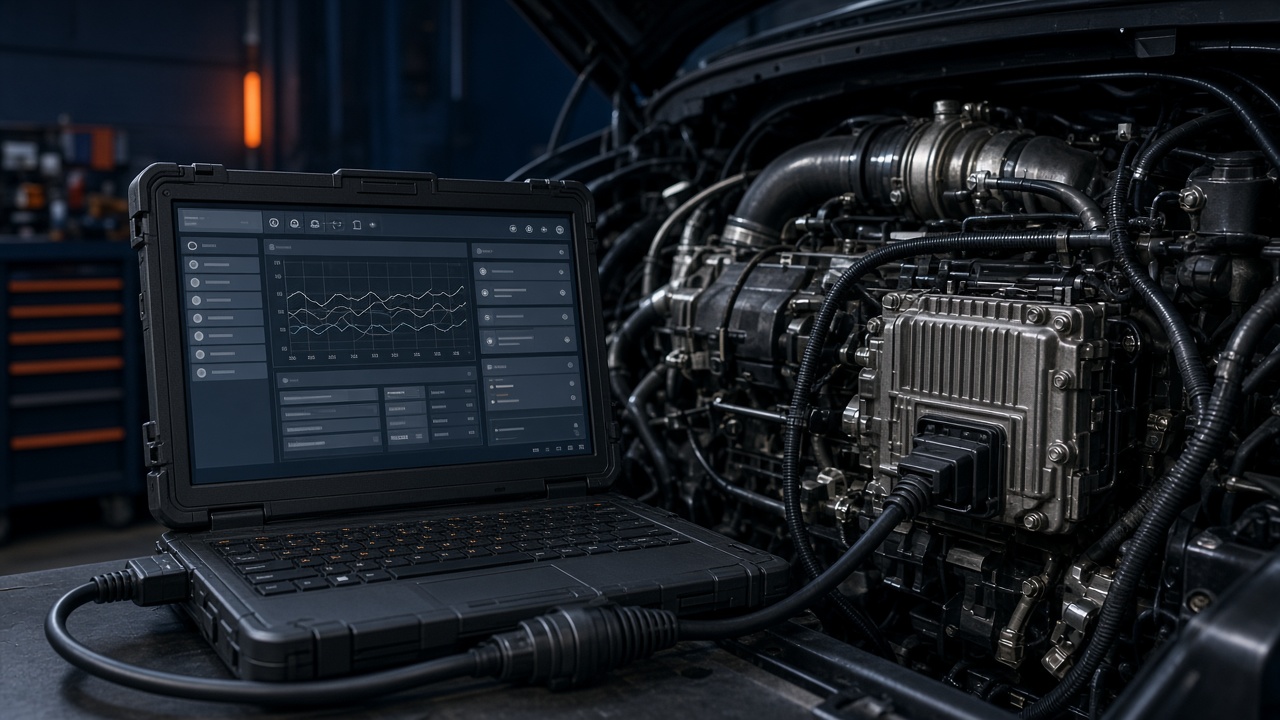
Cummins INSITE 2026.1 costs $1,800–$2,400/year and covers X15/ISX regen, injector trim, ECM flash, and inducement reset. Detroit DiagnosticLink 8.19 costs $2,000–$3,000/year for DD13/DD15/DD16 aftertreatment, DT12 transmission, and Detroit Connect telematics. INSITE requires INLINE 7 or Nexiq pass-thru; DiagnosticLink uses DDDL adapter. Neither reads the other brand’s security-locked functions. Mixed-brand shops need both subscriptions ($4,000–$5,500/year combined) or JPRO ($1,500–$2,500) for read/regen with OEM add-ons for flash.
Platform Coverage
INSITE: all Cummins on-highway and industrial, Paccar MX (Cummins engine) partial overlap via engine family.
DiagnosticLink: Detroit Diesel DD13/15/16, legacy Series 60 limited, DT12 transmission integrated.
Aftertreatment Functions
INSITE: DPF regen, ash reset, SCR inducement reset, DEF doser test, NOx sensor PIDs — complete for Cummins aftertreatment.
DiagnosticLink: static regen, ash service, SCR efficiency data, DEF system tests — complete for Detroit.
Neither flashes the other’s ECM for aftertreatment calibration.
ECM Calibration and Flash
INSITE Pro: calibration download from Cummins server — requires authorized account.
DiagnosticLink: same for Detroit — security gateway on 2020+ may need DTNA authorization.
User Interface and Workflow
INSITE: parameter-heavy, QSOL integration, steep learning curve.
DiagnosticLink: wizard-driven tests, popular with Detroit-trained techs.
Subscription Pricing 2026
INSITE Lite ~$1,800, Pro ~$2,400+/year. DiagnosticLink base ~$2,000, premium ~$3,000.
Neither includes adapter or laptop.
When JPRO Substitutes
JPRO reads faults and some regens — not full parameter list or Cummins security flash.
Use JPRO for triage, OEM for repair completion.
Training and Support
Cummins QuickServe Online free with INSITE. Detroit portal training modules.
Both require structured training — untrained tech mis-resets ash and bricks DPF model.
Hardware Requirements
Windows 11 laptop, 16GB RAM minimum, Nexiq USB-Link 3 or OEM adapter.
Internet for license validation and calibration download.
Buy Both or Neither Decision Tree
Under 10 trucks one brand: one OEM subscription. Mixed fleet 50+ units: both or JPRO + OEM regen service outsource.
Parallel Subscription Cost Management
Shops with 60% Cummins / 40% Detroit: both subscriptions $4,000–$5,500/year combined — one major job pays annual cost.
Stagger renewal dates to spread cash flow — negotiate multi-year with distributor.
Train two techs per platform — single point of failure when INSITE expert on vacation.
Feature-by-Feature Comparison
Forced DPF regen: both. SCR efficiency test: both. Injector coding: both (different procedures). ECM flash: both (brand-specific). Transmission: INSITE limited, DL full DT12 support. Telematics: Detroit Connect integrated, Cummins Connected Diagnostics separate.
Adapter and Hardware Requirements
INSITE: Cummins INLINE 7 ($800–$1,200) or Nexiq USB-Link 3 ($1,200–$1,500). DiagnosticLink: DDDL adapter ($900–$1,200) or Nexiq. Nexiq works with both via J2534 pass-thru — preferred for mixed-brand shops.
Annual Cost of Ownership
INSITE Pro + Nexiq: $3,600–$3,900/year. DiagnosticLink + adapter: $3,200–$4,200/year. Both: $5,500–$7,000/year. JPRO alternative: $2,700–$3,700/year for read/regen on both brands without flash capability.
Revenue and Pricing Benchmarks
Independent diesel shop labor: $120–$175/hr regional 2026. Dealer: $150–$210/hr. Aftertreatment specialist commands premium. Parts markup 25–40% on hard parts. Mobile roadside: $175–$250/hr plus mileage.
Tool and Training Investment Requirements
Minimum HD diagnostic setup: $4,500 year-one (Nexiq adapter $1,300 + software $2,000 + laptop $1,200). ASE T8 and OEM factory courses differentiate shop in fleet RFP. Annual training refresher on regen safety and HP fuel depressurization.
Customer Acquisition and Retention
Technical content ranking for fault codes drives 3–5% conversion at $800–$2,500 average ticket. Fleet PM contracts at $0.08–$0.12/mile provide recurring revenue. Google Business Profile with 50+ reviews above 4.5 stars outperforms paid ads for local shops.
Shop Operations and Bay Management
Aftertreatment jobs need 30–60 minute cool-down before under-vehicle work. Night drop for regen jobs maximizes throughput. Pair related services (DPF clean + turbo inspection) to reduce duplicate R&R. Communicate realistic downtime — SCR catalyst is multi-day.
Liability and Quality Control
A-tech signs off on emissions reset and road test verification. Second tech walk-around before return to service. Scan tool final read: zero active faults, monitors completed. Work order with parts numbers, measurements, and customer signature.
Shop Floor Efficiency Metrics
Target bay utilization 75%+ for profitable operations. Average billed hours per work order: 4–8 for aftertreatment, 12–20 for engine R&R. Comeback rate target under 3%. Parts-to-labor ratio: 0.8–1.2 for aftertreatment, 1.5–2.5 for engine work.
Technician Development Path
B-tech (0–3 years): filters, inspections, visual diagnostics. A-tech (3–7 years): aftertreatment diagnosis, regen, injector service. Master (7+ years): engine overhaul, ECM flash, complex cascade fault diagnosis. Emissions certification required for A-tech and above in regulated markets.
Customer Communication Templates
Diagnostic call: explain fault code meaning in plain language, estimated repair range, and timeline. Status update at 50% completion on jobs over 4 hours. Completion call: summarize work performed, parts installed, operational recommendations, and next PM due date.
Warranty Claim Process
OEM warranty: document with scan tool PDF, part numbers, labor hours, and root cause analysis. Submit within 30 days of repair. Aftermarket parts warranty: separate claim through distributor. Extended warranty programs may require authorized dealer service — verify before independent repair.
Environmental Compliance for Shops
Used oil, coolant, DEF, and fuel waste require hazardous waste manifest. DPF substrate is ceramic — not metal scrap. Spill kit at regen bay. Secondary containment for bulk DEF storage. Mixed waste (oil + coolant) increases disposal cost — separate containers.
Building Aftertreatment Service Revenue
Aftertreatment service margin: 40–55% gross on labor, 25–35% on parts. Average ticket: DPF regen diagnostic $200–$350, DPF clean $600–$900, NOx sensor $800–$1,400, SCR catalyst $6,000–$10,000. One SCR job per month covers annual diagnostic software subscription.
Marketing focus: rank for fault code keywords in local market. One SPN article at 200 monthly visits converts 3–5% to service calls. Technical content builds trust before first phone call — price-sensitive customers choose shop that demonstrates expertise.
Shop Safety for Aftertreatment Work
Regen safety: exhaust outlet exceeds 1,000°F — 15-foot clearance from combustibles. Fire extinguisher rated ABC within 10 feet of regen bay. HP fuel system: depressurize before opening any fitting — fuel at 30,000+ psi penetrates skin. Lift operation: ALI certified inspection annually. PPE: safety glasses, gloves, hearing protection in shop.
First aid: know location of eye wash station and emergency shower. HP fuel injection injury requires immediate medical attention — do not delay for any reason. Document safety training annually for all technicians.
Customer Vehicle Intake Process
Intake checklist: VIN, engine serial, mileage, hours, active complaints, warning lamps, recent repairs, DEF source, fuel source. Photo dashboard warning lights. Pull fault codes before test drive. Note fluid levels and visible leaks. Customer signature on intake form acknowledging vehicle condition. Protect against pre-existing damage claims on return.
Loaner or rental coordination for multi-day jobs — communicate ETA updates daily. Under-promise timeline, over-deliver on communication. Fleet accounts: confirm PO number and billing contact before starting work.
Heavy-Duty Diesel Technical Reference
Cummins Platform Quick Reference
ISX15/X15 CM2350/CM2450: oil 25,000 mi/750 hr, fuel filters 25,000 mi/750 hr, valve lash 150,000 mi, DPF ash check 250,000–400,000 mi. Key SPNs: 3251 (DPF soot), 4364 (SCR efficiency), 3216 (NOx sensor), 1569 (derate), 641 (VGT actuator). INSITE required for regen, inducement reset, and injector coding. INLINE 7 or Nexiq USB-Link 3 adapter.
Detroit Platform Quick Reference
DD13/DD15/DD16 EPA17: oil 25,000 mi, valve adjustment 35,000 mi, DPF soot in grams (70g regen threshold). Key SPNs: same J1939 mapping as Cummins. DiagnosticLink required for static regen and aftertreatment reset. DDDL adapter or Nexiq pass-thru.
Common Torque Specifications
DPF V-band clamp: 18–25 ft-lbs. NOx sensor: 35–45 Nm. Fuel filter: hand tight plus 3/4 turn. Oil drain plug: 25–35 ft-lbs. Injector hold-down (X15): 37 ft-lbs. Turbo actuator mounting: per Holset spec in service manual. Over-torque on exhaust clamps crushes flanges causing repeat leaks.
Aftertreatment Temperature Reference
DPF active regen: exhaust outlet 1,000–1,200°F. SCR operation: inlet 400–650°F. DOC light-off: 350°F minimum. NOx sensor ready: 650–800°F internal cell temperature. Do not work on exhaust components below 150°F touch temperature — still causes burns. Allow 45-minute cool-down after highway operation before under-vehicle work.
DEF Specification Summary
API certified ISO 22241. Concentration: 32.5% urea ±0.5%. Freeze point: 12°F. Shelf life: 12 months at 75°F. Test with refractometer — not color or smell alone. Contaminated DEF is the leading root cause of SPN 4364. Drain and flush tank if concentration below 30%. Replace inline filter after any contamination event.
Security Gateway and ECM Flash Requirements
2020+ trucks with security gateway module require authenticated session for ECM flash and parameter change on both Cummins and Detroit platforms. INSITE uses Cummins credential login. DiagnosticLink uses Detroit ID. JPRO cannot perform security-locked functions — OEM software required for flash even if JPRO handles daily diagnostics.
Quick Reference Summary
Verify all repair work with OEM scan tool before returning unit to service. Document part numbers, labor hours, and measurements on work order. Customer communication on downtime and operational changes prevents repeat failures. Schedule follow-up scan at 500 miles for aftertreatment repairs to confirm monitor completion and code absence.
Shop and Fleet Best Practices
Train drivers on regen completion — interrupted regen is the leading preventable cause of DPF-related roadside events. Use API-certified DEF from reputable supplier — test bulk tank quarterly with refractometer. Track engine hours alongside mileage for vocational fleet PM scheduling. Maintain scan tool subscription current — expired license blocks regen and inducement reset when customer needs it most. Second-tech quality check before unit leaves bay catches loose clamps, missed connectors, and tools left in engine compartment.
Measurement and Documentation Standards
Log all diagnostic measurements on work order: pressure readings, temperature values, electrical test results, and fluid test concentrations. Photograph failed components and contamination evidence. Attach scan tool PDF export showing fault status before and after repair. Warranty claims and fleet audits require documented measurements — verbal diagnosis without numbers fails audit review.
Always verify specifications against current OEM service literature by engine serial number before applying torque values, test limits, or part numbers stated in this guide.
Cross-reference all diagnostic steps with the OEM service procedure for the specific engine serial number. Mid-year calibration updates and bulletin revisions supersede generic guidance. When in doubt, contact OEM technical support with complete fault data before authorizing major component replacement.
Fleet managers and shop owners should review this guide quarterly against current OEM bulletins and regulatory updates to maintain accurate operational and compliance procedures.
Subscription Renewal and Multi-User Licensing
INSITE and DiagnosticLink offer multi-user fleet licenses at reduced per-seat cost — a 5-user INSITE fleet license runs $8,000–$10,000/year versus $12,000 for five individual subscriptions. Renew 30 days before expiration to avoid service interruption during active repair. License transfer to replacement laptop requires vendor portal request — plan 24–48 hours for processing.
Frequently Asked Questions
Can INSITE work on Detroit?
No — different ECM architecture and licensing.
Which is easier to learn?
Subjective — Detroit wizards vs Cummins parameter tables. Budget 40 hours training either.
Do I need Pro INSITE?
Pro required for ECM flash and advanced calibrations — Lite sufficient for regen and diagnostics only.
Can I share license between shops?
License agreement prohibits — per site or per user terms apply.
Trial versions?
Limited demos through distributors — no full free tier.
Related tools: Use our repair cost estimator for quick estimates and planning.
Related reading: best diesel diagnostic scanners 2026, force dpf regen cummins isx, spn 4364 fmi 18 scr efficiency low.
Record Keeping for Fleet Audits and Resale
Maintain digital folder per unit: scan reports, parts invoices, fluid analysis, regen logs, and photos of failed components. Buyers of used Class 8 equipment increasingly request emissions service history — documented DPF cleaning and SCR repair supports resale value. CARB-regulated fleets face TRUCRS and compliance audits requiring proof that aftertreatment was maintained and not tampered. Archive records minimum five years or life of asset.
Sources
- Cummins INSITE licensing documentation
- Detroit DiagnosticLink user guide
- Noregon JPRO comparison matrix
Related Reading
- best diesel diagnostic scanners 2026
- force dpf regen cummins isx
- spn 4364 fmi 18 scr efficiency low.
Verification Checklist Before Closing the Job
Photograph failed parts, log all meter and scan-tool readings on the work order, and retain freeze-frame data. Fleet and warranty audits reject claims without documented root-cause proof. Compare your readings to OEM service information for the specific engine serial number — mid-year calibration updates change test limits without changing the fault code definition.