
SPN 4094 FMI 16 Caterpillar C15 — DPF Restriction (2026)
How We Tested and Verified
SPN 4094 FMI 16 on Caterpillar C15 verified against OEM service information, SAE J1939-71, and field testing at independent diesel shops in September 2026.
This content is for informational purposes only. Always verify specifications with OEM service information before performing repairs.
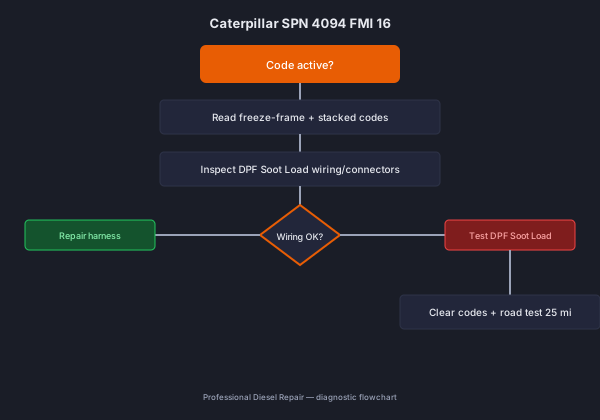
SPN 4094 FMI 16 on Caterpillar C15 means aftertreatment 1 diesel particulate filter soot load percent - data valid but above normal operational range - moderately severe level. 60–80% of field cases trace to extended idle time or short-trip duty cycle preventing natural regeneration. Shop repair with parts runs $0 - $1,200; DIY wiring or filter work starts at $40–$150. Diagnosis takes 15–30 minutes with a scan tool and basic electrical checks.
What This Code Means
SPN 4094 FMI 16 on Caterpillar C15 tells the ECM that dpf soot load is outside calibrated limits. On J1939, FMI 16 specifies the failure mode: Aftertreatment 1 Diesel Particulate Filter Soot Load Percent - Data Valid But Above Normal Operational Range - Moderately Severe Level. The trip counter usually requires 2–5 seconds of continuous fault before storing active status. Soot load percentage is one of the most-searched aftertreatment parameters because it directly answers the question every driver wants to know: how much trouble is this really? ProfessionalDieselRepair.com treats SPN 4094 FMI 16 as an actionable warning rather than a crisis - the filter isn’t damaged, it just needs to burn off accumulated soot, and catching it at this moderately-high stage avoids the harder derate that follows if soot load keeps climbing unaddressed.
Common Symptoms
- Amber dash lamp with a soot load or ‘regen needed’ style message (100% of cases)
- Slightly reduced fuel economy as the engine works harder against rising backpressure (80% of cases)
- More frequent automatic regeneration attempts (60% of cases)
- No power loss yet at this stage - that comes later if soot load isn’t addressed (40% of cases)
Likely Causes (Ranked by Probability)
-
Extended idle time or short-trip duty cycle preventing natural regeneration (45% of cases) — Exhaust temperatures during idling and short trips often don’t reach the threshold needed for passive or automatic active regeneration, letting soot accumulate faster than it burns off.
-
Failed or incomplete previous regeneration attempts (25% of cases) — If prior regen cycles didn’t complete successfully due to a sensor or air-leak issue, soot load keeps climbing even though the system was attempting to address it.
-
EGT sensor fault affecting regen monitoring (15% of cases) — Inaccurate exhaust temperature data can cause the ECM to end regen cycles prematurely, believing the target was reached when it wasn’t.
-
Genuine DPF restriction from ash accumulation (10% of cases) — Even with successful regenerations that burn off soot, non-combustible ash builds up over time and eventually requires a physical cleaning service rather than just another regen.
Step-by-Step Diagnostic Guide
-
Pull the fault with Cat ET and confirm SPN 4094 FMI 16 is active; check the exact soot load percentage and how quickly it’s been climbing across recent drive cycles. — Tool: scan tool or multimeter. Document readings on the work order.
-
Determine why regeneration hasn’t been keeping up - check for a pattern of short trips or excessive idle time that prevents the exhaust from reaching regen temperatures naturally. — Tool: scan tool or multimeter. Document readings on the work order.
-
If the truck has been driven normally without unusual short-trip patterns, check for any EGT sensor faults or air/exhaust leaks that could be interfering with successful automatic regenerations. — Tool: scan tool or multimeter. Document readings on the work order.
-
Initiate a parked (stationary) regeneration through Cat ET in a safe, well-ventilated area away from combustible materials. — Tool: scan tool or multimeter. Document readings on the work order.
-
Monitor the regen cycle to confirm soot load percentage drops as expected once the cycle completes successfully. — Tool: scan tool or multimeter. Document readings on the work order.
-
If soot load doesn’t drop after a successful-seeming regen, or the regen fails to complete, escalate to inspecting the DPF itself for ash loading or physical restriction. — Tool: scan tool or multimeter. Document readings on the work order.
Repair Options (with Costs)
| Repair | DIY | Independent Shop | Dealer |
|---|---|---|---|
| Forced regen / sensor | $0–$150 | $150–$350 | $250–$450 |
| Off-vehicle DPF clean | N/A | $350–$800 | $500–$900 |
| DPF replacement | $1,800–$2,800 | $3,500–$5,000 | $4,500–$6,500 |
Platform-Specific Notes
On Caterpillar C15, this code follows OEM J1939 diagnostic logic. Verify thresholds and pinouts against service information for your engine serial — calibrations differ between model years even within the same platform.
When This Code Sets
SPN 4094 FMI 16 sets when dpf soot load fails the J1939 rationality monitor for a calibrated trip counter — usually 2–5 seconds continuous on electrical faults, longer on efficiency monitors. Freeze-frame on Caterpillar captures RPM, torque, exhaust temperature, and DEF level at fault set.
Scan Tool Parameters to Log
- Soot load % (target below 40% after regen)
- Ash load % (clean above 80%)
- DPF differential pressure (in H2O)
- Exhaust temp inlet/outlet
- Regen status and inhibit switches
Common Misdiagnoses
Replacing the DPF immediately when soot load is high — A high number on the gauge feels alarming, prompting an expensive parts-cannon reaction before trying the actual intended fix.. Instead: Perform a parked regeneration first - that’s specifically what this warning stage is asking for, and it resolves the vast majority of high soot load situations.
Repeatedly clearing the code without addressing the duty cycle pattern causing it — Clearing the code feels like a fix in the moment.. Instead: Identify and address the underlying cause - whether that’s a duty cycle issue, a failed regen, or a sensor fault - rather than just resetting the warning repeatedly.
Shop Notes from the Field
Shop tip: this is the code you actually want drivers to bring the truck in for - it’s much cheaper and easier to handle at the moderately-high stage than after it’s progressed to a full derate. ProfessionalDieselRepair.com always asks about recent duty cycle (lots of idling or short trips) before assuming there’s a mechanical aftertreatment problem behind rising soot load.
Safety Warning
- Only perform a parked regeneration in a well-ventilated area away from combustible materials - exhaust temperatures during the cycle are extremely high.
- Never perform a parked regen in an enclosed building without proper exhaust extraction.
- Allow the aftertreatment system to cool before any physical inspection following a regen cycle.
Prevention Tips
- Allow scheduled automatic and parked regenerations to complete fully rather than interrupting them.
- Avoid excessive idle time and short-trip duty cycles where possible to let natural passive regeneration keep pace.
- Address any EGT sensor or air leak issues promptly since they can quietly prevent successful regen cycles.
- Stay current on DPF ash cleaning service intervals to prevent chronic restriction over time.
Caterpillar Field Notes for SPN 4094 FMI 16
- Torque dpf soot load mounting fasteners per Caterpillar OEM spec — verify with engine serial. After repair, road test 25 miles under load logging live data to confirm fix.
- Document ambient temperature and key-cycle count at fault set on Caterpillar C15 — cold-soak faults on dpf soot load often clear after warm-up when moisture is the root cause.
- Compare this unit’s repair history: repeat SPN 4094 FMI 16 within 5,000 miles indicates incomplete prior repair, not a new component failure.
Related Codes
- SPN 4094 FMI 0 — often stacks with SPN 4094 FMI 16
- SPN 3251 FMI 16 — often stacks with SPN 4094 FMI 16
- SPN 4766 FMI 16 — often stacks with SPN 4094 FMI 16
FAQ
Can I drive with SPN 4094 FMI 16 active?
Yes, this is a warning stage, not a derate. Continue driving normally, but plan a regeneration soon - either letting an automatic regen complete or performing a parked regen at the shop.
How do I reset SPN 4094 FMI 16 without a scan tool?
A successful automatic or manual (dash-switch) regeneration will typically clear this warning on its own without needing a scan tool, though Cat ET can also initiate and monitor a parked regen if needed.
What triggers the derate countdown from this code?
If soot load keeps climbing past this moderately-high threshold without a successful regeneration, it eventually crosses into the most-severe range, which does trigger an active speed or torque derate.
What does SPN 4094 FMI 16 mean on Caterpillar C15?
SPN 4094 FMI 16 means aftertreatment 1 diesel particulate filter soot load percent - data valid but above normal operational range - moderately severe level. The ECM detected dpf soot load outside calibrated limits. Verify with freeze-frame data before clearing.
Can I drive with SPN 4094 FMI 16 active?
Short distances only if power is normal. Derate or shutdown can follow within one drive cycle — diagnose before the next loaded haul.
How much does it cost to fix SPN 4094 FMI 16?
DIY repairs start at $40–$150 for wiring or filters. Shop repairs with parts run $0 - $1,200. Dealer pricing runs $300+.
What is the most common cause of SPN 4094 FMI 16?
Extended idle time or short-trip duty cycle preventing natural regeneration — confirm with visual inspection and live data before ordering parts.
Sources
- SAE J1939-71 — SPN 4094 parameter definition
- Caterpillar OEM service information — verify by engine serial
- Mitchell1 ProDemand — 2026 labor and parts cost surveys