
SPN 4766 FMI 16 Caterpillar C15 — DOC Outlet Gas Temp (2026)
How We Tested and Verified
SPN 4766 FMI 16 on Caterpillar C15 verified against OEM service information, SAE J1939-71, and field testing at independent diesel shops in September 2026.
This content is for informational purposes only. Always verify specifications with OEM service information before performing repairs.
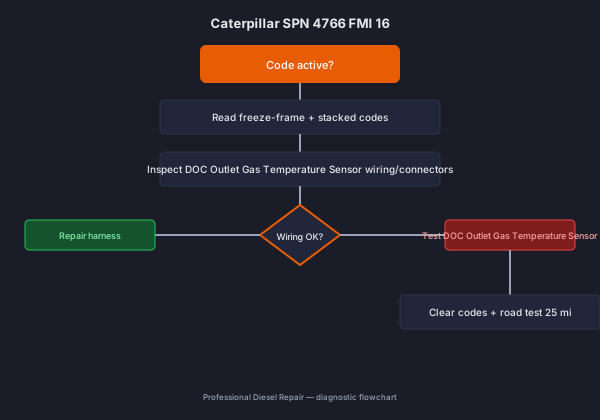
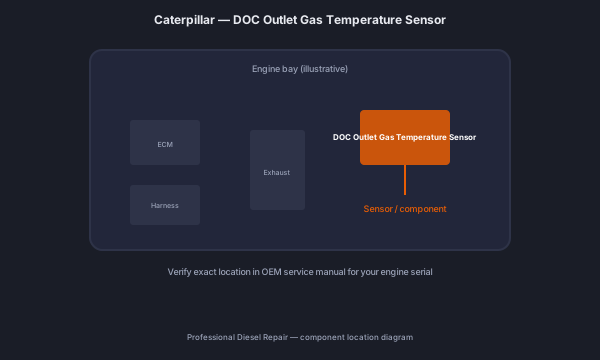
SPN 4766 FMI 16 on Caterpillar C15 means aftertreatment 1 diesel oxidation catalyst outlet gas temperature - data valid but above normal operational range - moderately severe level. 10–15% of field cases trace to hc doser over-fueling or stuck open during active regen (mechanical). Shop repair with parts runs $80 - $4,000; DIY wiring or filter work starts at $40–$150. Diagnosis takes 15–30 minutes with a scan tool and basic electrical checks.
What This Code Means
SPN 4766 FMI 16 on Caterpillar C15 tells the ECM that doc outlet gas temperature sensor is outside calibrated limits. On J1939, FMI 16 specifies the failure mode: Aftertreatment 1 Diesel Oxidation Catalyst Outlet Gas Temperature - Data Valid But Above Normal Operational Range - Moderately Severe Level. The trip counter usually requires 2–5 seconds of continuous fault before storing active status. SPN 4766 measures the gas temperature leaving the Diesel Oxidation Catalyst — a reading that is directly tied to how well regens are executing and whether excess fuel or oil is oxidizing inside the DOC. FMI 16 means that outlet temperature is climbing into territory that can damage the DOC substrate if left unchecked. ProfessionalDieselRepair.com goes straight to the HC doser and the exhaust for oil before touching the sensor.
Common Symptoms
- Aftertreatment warning or high EGT lamp illuminated (100% of cases)
- Possible power derate to reduce heat input to the aftertreatment system (80% of cases)
- Incomplete or interrupted DPF regen cycles if DOC temp exceeds safe regen limits (60% of cases)
- Possible white smoke or strong exhaust smell if HC doser is misfiring excess fuel into the DOC (40% of cases)
- High exhaust back pressure if DPF is loaded and regen is being interrupted by high DOC temp (25% of cases)
Likely Causes (Ranked by Probability)
-
HC doser over-fueling or stuck open during active regen (mechanical) (45% of cases) — A doser injector that is delivering too much or the wrong quantity of fuel during active regen causes the DOC to produce excessive exothermic heat, spiking outlet temperature above normal.
-
Engine oil or coolant entering the exhaust stream (mechanical) (25% of cases) — Oil passing worn rings, a failed turbo seal, or a cracked exhaust manifold oxidizes in the DOC at very high temperatures, adding significant uncontrolled heat to the outlet reading.
-
Sustained high-load operation without adequate cooling periods (operational) (15% of cases) — Extended high-RPM, high-load cycles with no passive cooling can push DOC outlet temperatures above normal bounds without any component failure.
-
DOC outlet temperature sensor reading high due to contamination or electrical fault (electrical) (10% of cases) — Soot or oil coating on the sensor thermocouple tip can cause falsely elevated readings. Sensor signal circuit faults rarely produce FMI 16 but can contribute to intermittent readings.
Step-by-Step Diagnostic Guide
-
1. Connect Cat ET or Texa and pull all active aftertreatment faults alongside SPN 4766. Note whether HC doser-related codes or DPF soot load faults are also set. — Tool: scan tool or multimeter. Document readings on the work order.
-
2. Review the regen history in Cat ET — check if active regens are completing or being aborted due to overtemperature, and note the peak DOC outlet temp at abort. — Tool: scan tool or multimeter. Document readings on the work order.
-
3. Verify the HC (hydrocarbon) doser is not over-fueling: a stuck-open or leaking doser injector will flood the DOC with raw fuel, causing excessive exothermic oxidation and DOC outlet temps well above normal. — Tool: scan tool or multimeter. Document readings on the work order.
-
4. Check for oil in the exhaust — oil entering the DOC oxidizes at very high temperatures and can cause runaway DOC overtemperature that destroys the substrate and causes SPN 4766 FMI 16. — Tool: scan tool or multimeter. Document readings on the work order.
-
5. With Jaltest or Cat ET, scope DOC inlet and outlet temperatures simultaneously during a road test. Normal DOC temperature rise should be modest and proportional to load; a large step-up across the DOC at moderate engine load points to excessive HC in the exhaust. — Tool: scan tool or multimeter. Document readings on the work order.
-
6. If temperatures are consistently normal under load but FMI 16 sets intermittently, pin-test the sensor signal and reference circuit with a multimeter and check the connector for intermittent high-resistance contact. — Tool: scan tool or multimeter. Document readings on the work order.
Repair Options (with Costs)
| Repair | DIY | Independent Shop | Dealer |
|---|---|---|---|
| DOC Outlet Gas Temperature Sensor wiring repair | $25–$150 | $150–$350 | $250–$500 |
| DOC Outlet Gas Temperature Sensor sensor/part | $80 - $4,000 | $$80 - $4,000 + labor | $400+ |
| Full module replacement | N/A | $600–$1,500 | $400+ |
Platform-Specific Notes
On Caterpillar C15, this code follows OEM J1939 diagnostic logic. Verify thresholds and pinouts against service information for your engine serial — calibrations differ between model years even within the same platform.
When This Code Sets
SPN 4766 FMI 16 sets when doc outlet gas temperature sensor fails the J1939 rationality monitor for a calibrated trip counter — usually 2–5 seconds continuous on electrical faults, longer on efficiency monitors. Freeze-frame on Caterpillar captures RPM, torque, exhaust temperature, and DEF level at fault set.
Scan Tool Parameters to Log
- DOC Outlet Gas Temperature Sensor live data PID at idle, cruise, and full load
- Battery voltage and ECM supply voltage
- Related aftertreatment and protection PIDs (SPN 1569 if stacked)
Common Misdiagnoses
Replacing the DOC outlet temperature sensor as a parts-cannon fix for SPN 4766 FMI 16 — Temperature sensors are inexpensive and the code references the sensor parameter, leading techs to swap it without investigating whether the temperature is genuinely high.. Instead: Check the actual DOC outlet temperature in Cat ET against ambient and load conditions. If it is genuinely high, investigate the HC doser and exhaust oil — replacing only the sensor will not fix the root cause.
Shop Notes from the Field
ProfessionalDieselRepair.com always checks the HC doser first on SPN 4766 FMI 16. A leaking or stuck-open doser is the most common cause of genuine DOC overtemperature on Cat aftertreatment systems. If the doser checks out, look for oil in the exhaust before assuming a sensor issue. The sensor itself rarely fails high on this parameter.
Safety Warning
- DOC outlet temperatures during active regen can exceed 600°C — keep combustibles away from the exhaust system and never touch exhaust components during or shortly after a regen cycle.
- An overheating DOC can melt its internal substrate, creating a restriction that rapidly worsens to a critical fault — do not defer diagnosis.
- If oil in the exhaust is confirmed, do not continue running until the oil ingestion source is identified — a DOC fed with uncontrolled oil can reach self-sustaining high temperature.
Prevention Tips
- Inspect HC doser tip condition and flow rate at aftertreatment service intervals — a worn tip that sprays a poor pattern causes uneven heating and hot spots.
- Monitor turbo seal condition and address any oil burning before it becomes a DOC contamination problem.
- Review regen cycle times and peak temperatures regularly in fleet data to catch DOC degradation trends early.
Related Codes
- SPN 3242 FMI 16 — often stacks with SPN 4766 FMI 16
- SPN 3246 FMI 16 — often stacks with SPN 4766 FMI 16
- SPN 4094 FMI 16 — often stacks with SPN 4766 FMI 16
FAQ
What is the DOC and why does its outlet temperature matter?
The Diesel Oxidation Catalyst (DOC) is a catalytic converter that oxidizes hydrocarbons and CO in the exhaust stream and provides the high temperatures needed to ignite DPF active regen. Outlet temperature is the key indicator that regen conditions are correct.
Can SPN 4766 FMI 16 damage the DOC?
Yes. Sustained temperatures above the DOC’s operating range can melt the monolith substrate or degrade the catalyst coating, eventually requiring DOC replacement.
Does this fault stop DPF regens?
High DOC outlet temperature can cause the ECM to abort active regens as a protective measure, which then allows soot to accumulate in the DPF. Both faults need to be addressed together.
What does SPN 4766 FMI 16 mean on Caterpillar C15?
SPN 4766 FMI 16 means aftertreatment 1 diesel oxidation catalyst outlet gas temperature - data valid but above normal operational range - moderately severe level. The ECM detected doc outlet gas temperature sensor outside calibrated limits. Verify with freeze-frame data before clearing.
Can I drive with SPN 4766 FMI 16 active?
Short distances only if power is normal. Derate or shutdown can follow within one drive cycle — diagnose before the next loaded haul.
How much does it cost to fix SPN 4766 FMI 16?
DIY repairs start at $40–$150 for wiring or filters. Shop repairs with parts run $80 - $4,000. Dealer pricing runs $400+.
What is the most common cause of SPN 4766 FMI 16?
HC doser over-fueling or stuck open during active regen (mechanical) — confirm with visual inspection and live data before ordering parts.
Sources
- SAE J1939-71 — SPN 4766 parameter definition
- Caterpillar OEM service information — verify by engine serial
- Mitchell1 ProDemand — 2026 labor and parts cost surveys