
SPN 175 FMI 0 Detroit Diesel DD15 — Engine Oil Temper (2026)
How We Tested and Verified
SPN 175 FMI 0 on Detroit Diesel DD15 verified against OEM service information, SAE J1939-71, and field testing at independent diesel shops in September 2026.
This content is for informational purposes only. Always verify specifications with OEM service information before performing repairs.
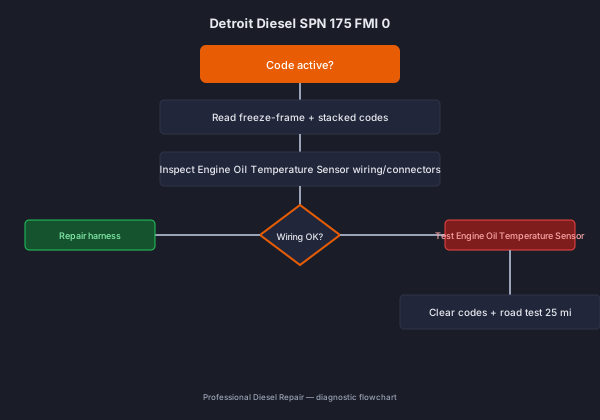
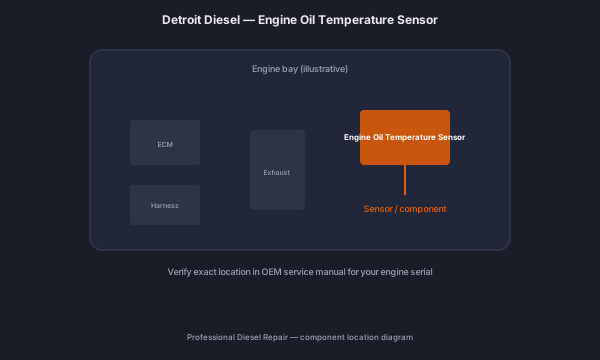
SPN 175 FMI 0 on Detroit Diesel DD15 means engine oil temperature 1 - data valid but above normal operational range - most severe level. 10–15% of field cases trace to restricted or fouled engine oil cooler (mechanical). Shop repair with parts runs $50 - $2,500; DIY wiring or filter work starts at $40–$150. Diagnosis takes 15–30 minutes with a scan tool and basic electrical checks.
What This Code Means
SPN 175 FMI 0 on Detroit Diesel DD15 tells the ECM that engine oil temperature sensor is outside calibrated limits. On J1939, FMI 0 specifies the failure mode: Engine Oil Temperature 1 - Data Valid But Above Normal Operational Range - Most Severe Level. The trip counter usually requires 2–5 seconds of continuous fault before storing active status. FMI 0 on SPN 175 is Detroit’s hardest oil temperature alarm — the ECM has received a valid sensor signal above the critical maximum threshold and has likely initiated engine protection. ProfessionalDieselRepair.com does not speculate on whether this might be a sensor issue when FMI 0 is active. The oil cooler, the bypass valve, and the oil itself get checked first.
Common Symptoms
- Oil temperature gauge in the danger zone on the cluster (100% of cases)
- High oil temperature warning lamp or Stop Engine indication (80% of cases)
- Hard derate or automatic shutdown sequence engaged (60% of cases)
- Possible burning oil smell if the condition is real (40% of cases)
- Engine may exhibit reduced oil pressure as viscosity breaks down at extreme temperatures (25% of cases)
Likely Causes (Ranked by Probability)
-
Restricted or fouled engine oil cooler (mechanical) (45% of cases) — Scale, sludge, and deposit buildup inside the oil cooler passages reduces heat rejection capacity and allows oil temperatures to climb above the critical threshold under sustained load.
-
Stuck-open oil cooler bypass valve (mechanical) (25% of cases) — The bypass valve routes cold oil through the cooler during warm-up but must close once operating temperature is reached. A stuck-open bypass sends hot oil past the cooler, losing all cooling capacity.
-
Coolant system problems reducing oil cooler effectiveness (mechanical) (15% of cases) — Low coolant level, a plugged coolant side of the oil cooler, or degraded coolant with low heat capacity all reduce the cooler’s ability to transfer heat from oil to coolant.
-
Failed oil temperature sensor reporting false maximum (electrical) (10% of cases) — A sensor with an internal short can report high temperatures even when oil is normal. Always verify via at least one additional temperature indicator before assuming mechanical failure.
Step-by-Step Diagnostic Guide
-
1. Stop the engine if a Stop Engine lamp is on — FMI 0 is the most severe high oil temperature condition. — Tool: scan tool or multimeter. Document readings on the work order.
-
2. Connect DDDL or Jaltest and read SPN 175 live data alongside SPN 100 oil pressure, SPN 110 coolant temperature, and engine load history. — Tool: scan tool or multimeter. Document readings on the work order.
-
3. Let the engine cool and check oil level and condition — discolored, foamy, or milky oil indicates coolant contamination or combustion blow-by, both of which dramatically raise oil temperature. — Tool: scan tool or multimeter. Document readings on the work order.
-
4. Verify the oil cooler is not restricted — a plugged oil cooler is a primary cause of genuine high oil temperature and will not respond to a sensor replacement. — Tool: scan tool or multimeter. Document readings on the work order.
-
5. If oil level and condition are normal and coolant temperature is not elevated, suspect the sensor itself: disconnect it, measure resistance vs the expected temperature-resistance curve with a multimeter, and compare to spec. — Tool: scan tool or multimeter. Document readings on the work order.
-
6. Inspect the engine oil cooler bypass valve — a stuck-open bypass sends oil past the cooler and can produce genuine high oil temperature without corresponding high coolant temperature. — Tool: scan tool or multimeter. Document readings on the work order.
Repair Options (with Costs)
| Repair | DIY | Independent Shop | Dealer |
|---|---|---|---|
| Engine Oil Temperature Sensor wiring repair | $25–$150 | $150–$350 | $250–$500 |
| Engine Oil Temperature Sensor sensor/part | $50 - $2,500 | $$50 - $2,500 + labor | $400+ |
| Full module replacement | N/A | $600–$1,500 | $400+ |
Platform-Specific Notes
On Detroit Diesel DD15, this code follows OEM J1939 diagnostic logic. Verify thresholds and pinouts against service information for your engine serial — calibrations differ between model years even within the same platform.
When This Code Sets
SPN 175 FMI 0 sets when engine oil temperature sensor fails the J1939 rationality monitor for a calibrated trip counter — usually 2–5 seconds continuous on electrical faults, longer on efficiency monitors. Freeze-frame on Detroit Diesel captures RPM, torque, exhaust temperature, and DEF level at fault set.
Scan Tool Parameters to Log
- Engine Oil Temperature Sensor live data PID at idle, cruise, and full load
- Battery voltage and ECM supply voltage
- Related aftertreatment and protection PIDs (SPN 1569 if stacked)
Common Misdiagnoses
Replacing the oil temperature sensor as a parts-cannon shortcut when FMI 0 is active — Oil temperature sensors are cheap and accessible, and techs hope the problem is electrical rather than a $1,000+ oil cooler job.. Instead: Let the engine cool, check oil level and condition, then verify oil cooler flow before condemning the sensor. A new sensor in a truck with a blocked cooler will set FMI 0 again within hours.
Shop Notes from the Field
ProfessionalDieselRepair.com treats SPN 175 FMI 0 as a real oil overtemperature event until confirmed otherwise. On DD15/DD13 engines, a plugged oil cooler or stuck cooler bypass valve is far more common than a bad sensor on FMI 0. Verify the cooler flow path first and check coolant condition for any sign of oil-coolant mixing.
Safety Warning
- Stop the engine if a Stop Engine lamp is active with this code — continued operation with critically high oil temperature risks permanent engine damage.
- Do not open the oil cooler or drain oil with the engine hot — pressurized hot oil causes severe burns.
- Check oil condition for coolant contamination (milky appearance or foam) before restarting after this fault — coolant in the oil is an additional critical failure requiring immediate shutdown.
Prevention Tips
- Flush the oil cooler at major overhaul intervals or when coolant condition degrades, using the OEM-specified cooler cleaning procedure.
- Inspect the oil cooler bypass valve at oil cooler service time — replace if there is any hesitation or wear in the valve seat.
- Use quality full-synthetic or heavy-duty diesel oil meeting Detroit’s specifications to maximize thermal stability.
Detroit Diesel Field Notes for SPN 175 FMI 0
- Capture a 20-minute data log of engine oil temperature sensor parameter during mixed driving before closing the work order — intermittent FMI signatures need road replication, not bay-idle checks.
- Check for OEM technical service bulletins covering SPN 175 FMI 0 on DD15 — many bulletin fixes address harness routing rather than sensor replacement.
- Torque engine oil temperature sensor mounting fasteners per Detroit Diesel OEM spec — verify with engine serial. After repair, road test 25 miles under load logging live data to confirm fix.
Related Codes
- SPN 175 FMI 3 — often stacks with SPN 175 FMI 0
- SPN 100 FMI 1 — often stacks with SPN 175 FMI 0
- SPN 110 FMI 0 — often stacks with SPN 175 FMI 0
FAQ
Is SPN 175 FMI 0 a sensor fault or a real overtemperature?
FMI 0 means the sensor is returning a valid but critically high reading. Treat it as a real overtemperature condition until you verify oil cooler flow and oil condition. Assume sensor failure only after ruling out mechanical causes.
Will a Stop Engine command activate on SPN 175 FMI 0?
Detroit Diesel typically escalates to a Stop Engine or hard derate when oil temperature reaches the FMI 0 threshold. The specific response depends on the ECM calibration version.
What temperature does FMI 0 on SPN 175 represent?
The exact threshold varies by engine calibration, but critical oil temperature on DD13/DD15 engines is typically above approximately 130°C (266°F). Check your engine’s service documentation for the precise limit.
What does SPN 175 FMI 0 mean on Detroit Diesel DD15?
SPN 175 FMI 0 means engine oil temperature 1 - data valid but above normal operational range - most severe level. The ECM detected engine oil temperature sensor outside calibrated limits. Verify with freeze-frame data before clearing.
Can I drive with SPN 175 FMI 0 active?
Short distances only if power is normal. Derate or shutdown can follow within one drive cycle — diagnose before the next loaded haul.
How much does it cost to fix SPN 175 FMI 0?
DIY repairs start at $40–$150 for wiring or filters. Shop repairs with parts run $50 - $2,500. Dealer pricing runs $400+.
What is the most common cause of SPN 175 FMI 0?
Restricted or fouled engine oil cooler (mechanical) — confirm with visual inspection and live data before ordering parts.
Sources
- SAE J1939-71 — SPN 175 parameter definition
- Detroit Diesel OEM service information — verify by engine serial
- Mitchell1 ProDemand — 2026 labor and parts cost surveys