
2031 Duramax LB7/L5P — Exhaust Gas Temperature Sensor (2026)
How We Tested and Verified
2031 on Duramax LML verified against OEM service information, SAE J2012, and field testing at independent diesel shops in September 2026.
This content is for informational purposes only. Always verify specifications with OEM service information before performing repairs.
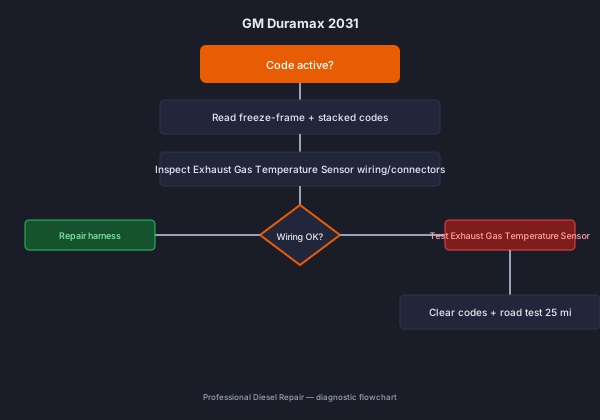
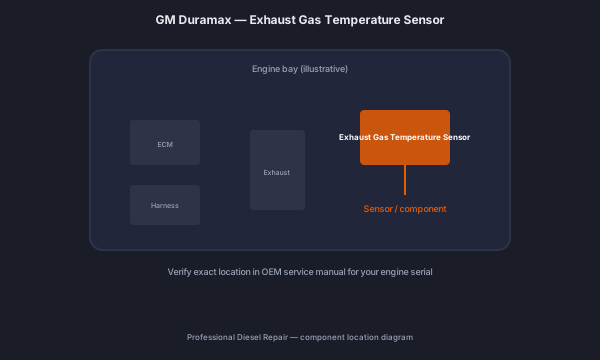
2031 on Duramax LML means exhaust gas temperature sensor circuit range/performance bank 1 sensor 2. 10–15% of field cases trace to heat-damaged wiring harness near the post-dpf egt sensor. Shop repair with parts runs $40 - $180; DIY wiring or filter work starts at $40–$150. Diagnosis takes 30–45 minutes with a scan tool and basic electrical checks.
What This Code Means
2031 on Duramax LML tells the ECM that exhaust gas temperature sensor is outside calibrated limits. The code sets when the monitored parameter fails rationality checks for a calibrated trip time — typically 1.4–4 seconds continuous on OBD-II diesel platforms. The GM Duramax aftertreatment system relies on multiple exhaust gas temperature sensors to manage DPF regeneration and SCR catalyst efficiency, and P2031 signals that one of the most important downstream sensors — Bank 1 Sensor 2 — is not providing reliable data. At ProfessionalDieselRepair.com, P2031 on LML and L5P Duramaxes most frequently results from heat-damaged wiring near the DPF outlet, where the exhaust temperature environment is severe enough to crack sensor harness insulation over time. The sensor itself can also fail internally due to thermal fatigue, particularly on trucks with a high frequency of DPF regen cycles. Because this sensor’s data feeds into regen scheduling and SCR efficiency calculations, an inaccurate reading has compounding effects on the entire aftertreatment system.
Common Symptoms
- Check engine light, sometimes with reduced DPF regen frequency (100% of cases)
- Possible DPF soot load accumulation above normal if regen temperature calculations are compromised (80% of cases)
- No significant drivability symptoms in most cases — EGT sensors are primarily emissions controls (60% of cases)
- Jaltest or scan tool showing EGT Bank 1 Sensor 2 reading below ambient temperature or spiking erratically (40% of cases)
- Possible co-setting of aftertreatment efficiency codes if EGT data is used in SCR NOx reduction calculations (25% of cases)
Likely Causes (Ranked by Probability)
-
Heat-damaged wiring harness near the post-DPF EGT sensor (45% of cases) — The Bank 1 Sensor 2 EGT sensor is mounted in a high-temperature exhaust zone. Harness insulation deteriorates from radiant heat cycling, causing resistance increases or intermittent opens that trigger the range/performance fault P2031.
-
Failed EGT sensor thermistor element (25% of cases) — The NTC thermistor element inside the EGT sensor can fracture from thermal cycling stress, resulting in an open circuit that reads -40°F (minimum clamp value) or an erratic resistance value that does not track actual exhaust temperature.
-
Corroded EGT sensor connector exposed to exhaust condensate or road water (15% of cases) — The EGT sensor connector on the post-DPF section of the exhaust can be exposed to condensate and road splash, causing pin corrosion that increases circuit resistance and causes P2031 to set.
Step-by-Step Diagnostic Guide
-
Connect Jaltest or Diesel Laptops and pull the EGT Bank 1 Sensor 2 live temperature value. With a cold engine (below 60°F ambient), the EGT sensor should read within 10–15°F of ambient temperature. A reading at -40°F, 0°C, or stuck at a fixed offset indicates a circuit fault or failed sensor element. — Tool: scan tool or multimeter. Document readings on the work order.
-
Locate the Bank 1 Sensor 2 EGT sensor on the Duramax exhaust system — on LML and L5P, this is typically the post-DPF outlet sensor mounted in the downpipe section. Inspect the sensor connector and wiring for heat damage, melted insulation, or corrosion at the pins. — Tool: scan tool or multimeter. Document readings on the work order.
-
Using a multimeter, measure the EGT sensor thermistor resistance with the engine cold. Disconnect the sensor connector and measure across the sensor terminals. A healthy NTC (negative temperature coefficient) EGT thermistor will read several hundred kilohms at room temperature (typically 250–800 kΩ at 68°F). An open or very-low reading confirms sensor failure. — Tool: scan tool or multimeter. Document readings on the work order.
-
Inspect the exhaust system in the Sensor 2 area for damage, cracks, or previous repairs that may have disturbed the sensor wiring. Heat wrapping or rerouting that puts the harness in contact with hot exhaust surfaces is a common cause of P2031 on Duramax trucks. — Tool: scan tool or multimeter. Document readings on the work order.
-
Replace the EGT Bank 1 Sensor 2 with a GM OEM or OEM-equivalent sensor, apply anti-seize to the sensor threads, and torque to spec (typically 30–35 Nm). Verify with Jaltest that the new sensor reads ambient temperature at cold key-on before a test drive. — Tool: scan tool or multimeter. Document readings on the work order.
Repair Options (with Costs)
| Repair | DIY | Independent Shop | Dealer |
|---|---|---|---|
| Exhaust Gas Temperature Sensor wiring repair | $25–$150 | $150–$350 | $250–$500 |
| Exhaust Gas Temperature Sensor sensor/part | $40 - $180 | $$40 - $180 + labor | $250+ |
| Full module replacement | N/A | $600–$1,500 | $250+ |
Platform-Specific Notes
LB7 (2001–2004): CP3 — Follow gm-duramax OEM diagnostic tree for 2031 on LB7.
LLY (2004–2006): CP3 — Follow gm-duramax OEM diagnostic tree for 2031 on LLY.
LBZ (2006–2007): CP3 — Follow gm-duramax OEM diagnostic tree for 2031 on LBZ.
LMM (2007–2010): CP3 + DPF — Follow gm-duramax OEM diagnostic tree for 2031 on LMM.
LML (2011–2016): CP4.2 — Follow gm-duramax OEM diagnostic tree for 2031 on LML.
L5P (2017–2026): CP4.2 updated — Follow gm-duramax OEM diagnostic tree for 2031 on L5P.
When This Code Sets
2031 typically stores after the ECM detects exhaust gas temperature sensor outside calibrated limits for 1.4–4.0 seconds (OBD-II trip). Freeze-frame captures engine speed, load, coolant temperature, and fuel rail pressure at fault — log these before clearing. Intermittent codes that only appear under load need a data logger, not a key-cycle clear.
Scan Tool Parameters to Log
- Exhaust Gas Temperature Sensor live data PID at idle, cruise, and full load
- Battery voltage and ECM supply voltage
- Related aftertreatment and protection PIDs (SPN 1569 if stacked)
Common Misdiagnoses
Replacing the DPF when P2031 EGT inaccuracy is causing false soot load calculations — An incorrect Bank 1 Sensor 2 reading can cause premature DPF-related codes by skewing the ECM’s regeneration calculations, leading technicians to focus on the DPF rather than the sensor circuit.. Instead: Verify all EGT sensors are reading accurately on Jaltest live data before any aftertreatment component is condemned. A $60 sensor repair is far better than a premature parts-cannon DPF replacement.
Replacing the EGT sensor without inspecting the wiring — The sensor itself is inexpensive and easy to swap, leading technicians to replace it without identifying an underlying harness problem that will degrade or break the new sensor’s wiring.. Instead: Inspect the full harness run from the sensor connector to the ECM connector before replacing the sensor. Any sections with cracked insulation or chafe against exhaust components must be repaired.
Shop Notes from the Field
Shop tip: EGT sensor resistance is highly temperature-dependent — always test at a known, stable temperature and compare against the temperature-versus-resistance chart in the Duramax service manual. ProfessionalDieselRepair.com has seen P2031 misdiagnosed as a DPF problem because the incorrect EGT reading causes premature or missed regen cycles. Verify EGT sensor accuracy first with Jaltest live data before investigating the DPF. Snap-on NEXIQ’s signal trace function is useful for identifying intermittent P2031 faults that only appear when the harness reaches operating temperature.
Safety Warning
- Allow the exhaust system to fully cool before handling EGT sensors — post-DPF exhaust components retain heat for 30–60 minutes after shutdown.
- Apply anti-seize compound to EGT sensor threads to prevent seizure and thread damage during future removal.
- Wear heat-resistant gloves when working near the DPF and exhaust components, even after apparent cooldown.
- Do not use power tools to remove EGT sensors — use a six-point socket and hand torque to avoid damaging the sensor housing.
Prevention Tips
- Inspect EGT sensor wiring and connectors for heat damage at each major service interval on Duramaxes over 100,000 miles.
- Use heat-reflective sleeve on any EGT harness sections that pass close to exhaust components as a long-term protective measure.
- Monitor EGT live data via Jaltest or Diesel Laptops at annual service intervals to detect sensor drift before P2031 sets.
- Replace EGT sensors preventively at 150,000-mile intervals on high-cycle trucks to avoid unexpected failures during DPF regen events.
Related Codes
FAQ
What does P2031 mean on a GM Duramax?
P2031 means the Bank 1 Sensor 2 exhaust gas temperature sensor is reporting a value outside its expected range or not responding as predicted for the current operating conditions on the LML or L5P Duramax.
Where is the Bank 1 Sensor 2 EGT sensor on a Duramax?
On the LML and L5P Duramax, Bank 1 Sensor 2 is typically the post-DPF outlet EGT sensor mounted in the exhaust downpipe section downstream of the diesel particulate filter.
Can I drive my Duramax with P2031 active?
Yes, the engine will continue to run normally, but aftertreatment management — particularly DPF regen scheduling — will be degraded. Address P2031 within a week or two to prevent secondary aftertreatment faults from developing.
What does 2031 mean on Duramax LML?
2031 means exhaust gas temperature sensor circuit range/performance bank 1 sensor 2. The ECM detected exhaust gas temperature sensor outside calibrated limits. Verify with freeze-frame data before clearing.
Can I drive with 2031 active?
Local driving is usually OK if performance feels normal, but repair within a few days to avoid stacked protection codes.
How much does it cost to fix 2031?
DIY repairs start at $40–$150 for wiring or filters. Shop repairs with parts run $40 - $180. Dealer pricing runs $250+.
What is the most common cause of 2031?
Heat-damaged wiring harness near the post-DPF EGT sensor — confirm with visual inspection and live data before ordering parts.
Sources
- OEM service information — Duramax LML diagnostic procedures
- SAE J2012 — OBD-II DTC definition for 2031
- Mitchell1 ProDemand — 2026 labor and parts cost surveys